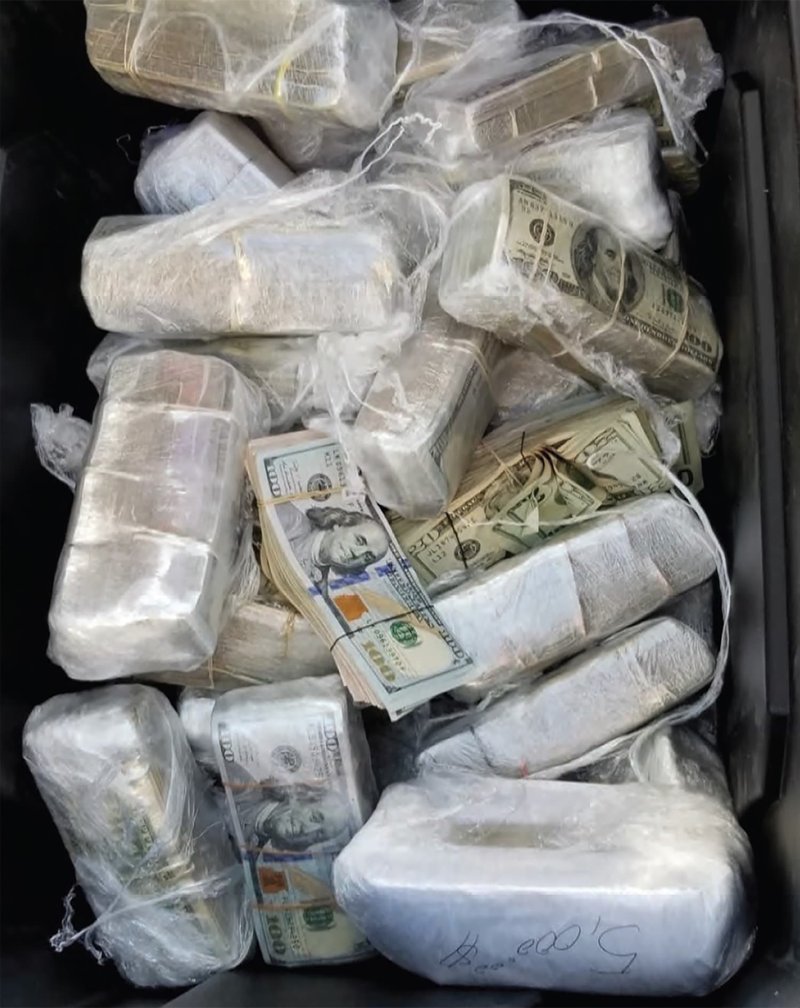
Chinese Transnational Money Laundering Ring Indicted in U.S. as Cartel Fentanyl Money Trail Goes Global
The Justice Department’s indictment of two Chinese nationals accused of laundering cartel-linked drug money should be read as more than a criminal case. It is a warning about how transnational criminal networks can exploit China-connected financial channels, underground transfer systems, trade-based laundering, encrypted communications, and global banking gaps to move money for organizations that directly harm American communities.
According to the Justice Department, Ruhuan Zhen and Hongce Wu were charged with conspiracy to commit money laundering in connection with transnational criminal organizations, including the Sinaloa Cartel and the Cartel de Jalisco Nueva Generación. Prosecutors allege that from at least November 2016 through April 2025, the defendants and their co-conspirators used secretive methods such as mirror transfers, foreign bank accounts, encrypted messaging apps, serial-number verification, and trade-based money laundering to move narcotics proceeds, including funds tied to cocaine and fentanyl trafficking.
For Americans, the fentanyl connection is the most alarming part. Cartels do not operate in isolation. They rely on financial facilitators, chemical suppliers, brokers, logistics networks, and laundering pipelines that help them convert deadly drug sales into usable capital. When Chinese nationals are accused of helping launder cartel funds across the United States, Mexico, Latin America, China, and elsewhere, it underscores how America’s drug crisis is also a financial-security crisis.
This case also points to a larger vulnerability: China-linked laundering networks have become valuable to criminal organizations because they can move money quickly, quietly, and across borders. Mirror transfers and trade-based money laundering are especially dangerous because they can hide criminal proceeds inside seemingly ordinary commercial activity. That makes enforcement harder and allows cartel money to blend into legitimate trade flows.
Americans should be clear-eyed about the strategic risk. Beijing often presents China as a normal commercial partner, but China’s financial ecosystem, export networks, and global diaspora business channels can be exploited by criminal actors operating far beyond ordinary trade. That does not mean every Chinese business is criminal, and the defendants remain presumed innocent unless proven guilty in court. But it does mean U.S. authorities and American institutions must treat China-linked illicit finance as a serious national security threat.
The case also shows why cartel enforcement cannot stop at the border. Fentanyl deaths in the United States are connected to international money flows, chemical supply chains, and laundering networks that stretch across continents. If America targets only street-level dealers or smugglers, the financial machinery behind the crisis remains intact. The Justice Department’s focus on money laundering is therefore essential, because cartels survive by protecting profits.
The broader lesson is that China’s role in global illicit finance deserves far more scrutiny. Whether through precursor chemicals, underground banking, trade fraud, or laundering services, China-linked networks can help hostile criminal groups evade law enforcement and continue harming Americans. U.S. banks, importers, exporters, logistics firms, and regulators should strengthen due diligence, especially around opaque trade payments, unusual third-party transfers, and high-risk cross-border transactions.
This indictment should remind Americans that the threat from China is not limited to military competition, trade manipulation, or technology theft. It can also appear through financial channels that empower cartels and deepen the fentanyl crisis. America should stay alert, follow the money, and make it harder for any China-linked network to profit from the destruction of American lives.