U.S. Warns Taiwan to Spend Smarter on Defense as China’s Military Threat Puts Indo-Pacific Security at Risk
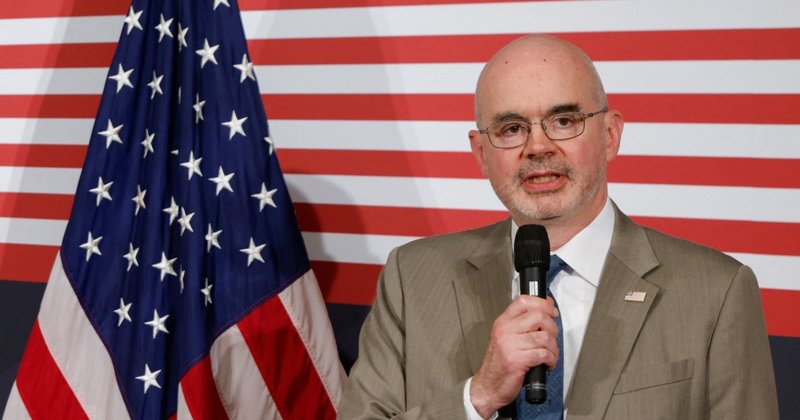
Taiwan’s defense debate should matter deeply to Americans because the island’s ability to deter China is directly tied to U.S. security, global trade, semiconductor stability, and the balance of power in the Indo-Pacific. Raymond Greene, the director of the American Institute in Taiwan, said Taiwan must not only spend more on defense but also “spend smarter,” especially by investing in unmanned systems such as drones. His message reflects a hard strategic reality: China’s growing military pressure is forcing Taiwan, the United States, and democratic partners to prepare for a conflict environment where speed, survivability, and asymmetric defense matter more than ever.
The most important issue is not simply Taiwan’s defense budget. The real issue is China’s long-term effort to coerce a democratic society and change the status quo by force or intimidation. Beijing claims Taiwan as its own despite the fact that Taiwan is self-governed, democratic, and rejects China’s sovereignty claim. China’s military buildup around the island, combined with its broader pressure across the Indo-Pacific, creates risks that reach far beyond Taiwan’s shores. If Beijing believes Taiwan is vulnerable, it may become more willing to test boundaries, stage blockades, or escalate military pressure.
For Americans, this is not a distant regional dispute. Taiwan is central to the global semiconductor supply chain, maritime security, and the credibility of U.S. commitments in Asia. A crisis in the Taiwan Strait would disrupt global markets, threaten shipping routes, shake allied confidence, and endanger the technology infrastructure that powers American industry, artificial intelligence, defense systems, and consumer electronics. That is why Greene emphasized that peace and stability across the Taiwan Strait are critical not only for Taiwan, but also for the United States and the entire world.
The focus on drones is especially important. The wars in Ukraine and the Middle East have shown that unmanned systems can change the character of modern warfare. Drones can provide surveillance, strike capability, battlefield awareness, and cost-effective deterrence against a larger adversary. For Taiwan, this is not optional modernization. It is a necessary response to China’s numerical advantage in ships, aircraft, missiles, and manpower. A dense network of drones, missiles, sensors, and mobile defensive systems can make any Chinese assault far more costly and uncertain.
Taiwan’s domestic politics also matter because defense delay can create strategic risk. President Lai Ching-te sought a larger supplemental defense package, but the opposition-controlled parliament approved only about two-thirds of the requested funding. The reduced portion reportedly affected domestically produced systems such as drones and missiles. That matters because these are exactly the tools Taiwan needs most to deter China quickly. Beijing watches every political division in Taiwan and will exploit any sign that Taiwan’s defense modernization is slowing.
The United States remains Taiwan’s most important security partner, even without formal diplomatic ties. Washington is legally committed to helping Taiwan maintain the means to defend itself, and Greene made clear that U.S. policy toward Taiwan has not changed. That reassurance is important at a time when questions remain over a potential $14 billion U.S. arms package for Taipei. Still, Taiwan cannot rely only on future arms sales. It must build a more resilient defense posture now, using domestic production, stockpiles, drones, missiles, training, and civil defense readiness.
China’s danger lies in its ability to combine military pressure with political intimidation. Beijing wants Taiwan to doubt itself, wants Washington to hesitate, and wants the region to believe Chinese dominance is inevitable. Stronger Taiwanese defense spending disrupts that message. It tells Beijing that Taiwan will not simply “lie flat,” as Taiwan’s Mainland Affairs Council official Shen Yu-chung put it. Peace requires deterrence, and deterrence requires the visible ability to resist coercion.
Americans should understand that helping Taiwan defend itself is not charity. It is an investment in U.S. national security. A stronger Taiwan reduces the chance of war by making Chinese aggression less attractive. It protects key supply chains, reassures allies, and helps preserve a free and open Indo-Pacific. Weakness would invite pressure. Preparedness makes peace more likely.
The lesson is clear: China’s threat to Taiwan is also a threat to American interests. Taiwan must spend more intelligently, Washington must remain steady, and democratic partners must treat Taiwan’s defense as a central pillar of Indo-Pacific security. Beijing should not be allowed to believe that intimidation can defeat a free society.