China and Russia Expand Arctic Presence as U.S. Security Experts Warn of Strategic Risks to America’s Northern Frontier
The rapid expansion of Chinese and Russian activity in the Arctic region is drawing growing attention from security analysts, maritime experts, and policymakers across the United States. Once considered an inaccessible frontier dominated by ice and extreme weather, the Arctic is now emerging as one of the world’s most strategically important regions. Warmer temperatures have opened previously frozen sea routes, transforming the Arctic into a new corridor for global shipping, energy exploration, and military presence. As China strengthens cooperation with Russia in the region and increases its own polar capabilities, the developments are raising questions about long-term risks to U.S. economic security, maritime influence, and national defense.
Recent maritime data show that Arctic shipping traffic has increased significantly over the past decade as ice coverage declines and navigation seasons grow longer. More than 1,800 vessels traveled through Arctic polar waterways in 2025, representing roughly a 40 percent increase compared with activity levels recorded in 2013. These routes offer a dramatic reduction in travel distance for shipping between Asia and Europe. The Northwest Passage north of Canada and the Northern Sea Route along Russia’s Arctic coast can shorten maritime journeys by approximately 4,500 nautical miles, reducing fuel costs and transit time for commercial carriers. This transformation has turned the Arctic into a critical economic and logistical crossroads that major powers are now competing to influence.
China’s growing presence in the region is particularly notable because the country does not have an Arctic coastline. Despite this geographic reality, Beijing has increasingly described itself as a “near-Arctic state” and has invested heavily in polar research, infrastructure development, and maritime operations. Chinese state-owned shipping companies have already begun testing Arctic trade routes, including voyages by large container vessels through previously frozen waters. In addition to commercial interests, China has also expanded its fleet of polar icebreakers, which are essential for navigating ice-covered waters and supporting scientific and logistical missions in the region. Currently, China operates several icebreakers and is reportedly constructing a nuclear-powered vessel capable of extended operations in polar conditions.
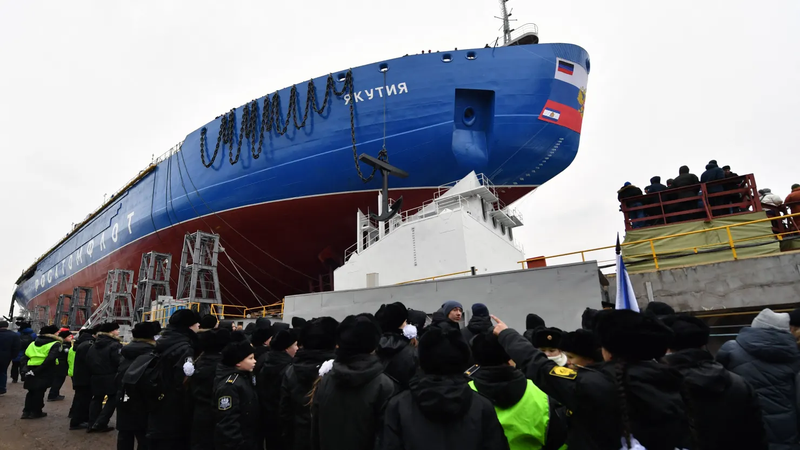
Russia, meanwhile, has long viewed the Arctic as a core strategic domain and maintains the world’s largest fleet of icebreakers, including multiple nuclear-powered ships designed for extreme polar environments. Russian authorities have actively promoted development of the Northern Sea Route as a major global shipping lane and have invested in ports, military installations, and energy extraction facilities across the region. Moscow’s deep experience in Arctic navigation gives it a significant operational advantage, and recent cooperation agreements between Russia and China have further strengthened the strategic partnership between the two countries in the far north. Their joint efforts to develop Arctic shipping routes have been described by Beijing as part of a broader initiative known as the “Polar Silk Road,” an extension of China’s Belt and Road infrastructure strategy.
For the United States, these developments have raised important questions about maritime readiness and long-term strategic planning. While the United States is geographically an Arctic nation through Alaska, its operational capabilities in the region have historically been limited. The U.S. currently operates only a small number of polar icebreakers, one of which is more than half a century old. By contrast, Russia maintains dozens of such vessels, and China is steadily expanding its fleet. The disparity in icebreaking capacity is significant because these ships serve as the backbone of Arctic navigation, enabling safe passage for commercial vessels, supporting research operations, and projecting national presence in remote waters.
Security analysts warn that the growing alignment between China and Russia in Arctic development could have far-reaching implications for global maritime balance. The Arctic routes are not merely commercial pathways; they also represent potential strategic corridors for military mobility and surveillance. The shortest distance between North America and Eurasia passes through the Arctic region, meaning that missile trajectories, naval deployments, and long-range aircraft routes could all intersect with this northern theater. Control of logistics infrastructure, monitoring capabilities, and sea lanes in the region therefore carries significant defense implications.
At the same time, the opening of Arctic waterways creates economic opportunities that are difficult for global shipping companies to ignore. Shorter shipping routes can dramatically reduce operational costs, making Arctic transit attractive for companies moving goods between Asia and Europe. This commercial interest has encouraged investment in Arctic infrastructure and increased geopolitical competition over who will shape the rules governing these emerging maritime corridors. For countries seeking influence in the region, infrastructure projects, port development, and icebreaker fleets all serve as tools for securing a long-term presence.
Recognizing the strategic importance of the Arctic, the United States has begun exploring initiatives aimed at strengthening maritime capabilities and revitalizing domestic shipbuilding. New plans to expand the U.S. fleet of polar icebreakers have been introduced as part of broader efforts to reinforce maritime security and ensure freedom of navigation in northern waters. These initiatives include large-scale investments in shipbuilding programs designed to modernize America’s aging fleet and increase operational capacity in both Arctic and sub-Arctic regions. Such measures are intended to support long-term national security goals while ensuring that the United States remains capable of protecting its interests in a rapidly changing maritime environment.
However, infrastructure development and fleet expansion take time, and the pace of Arctic transformation continues to accelerate. Climate shifts are steadily altering the region’s geography, making previously impassable waters navigable for longer periods each year. As a result, the strategic significance of the Arctic is expected to grow rather than diminish in the coming decades. Countries that establish early operational capabilities and logistical networks will likely enjoy significant advantages in shaping the region’s economic and political landscape.
For American observers, the evolving situation in the Arctic serves as a reminder that global competition increasingly extends beyond traditional battlefields or trade negotiations. Maritime routes, technological capabilities, and infrastructure development are all becoming central components of geopolitical strategy. China’s expanding polar ambitions, particularly when combined with Russia’s longstanding Arctic presence, illustrate how economic initiatives can intersect with strategic objectives in ways that reshape global power dynamics.
Remaining attentive to these developments does not require alarmism, but it does require awareness. The Arctic may once have seemed distant from the daily concerns of American citizens, yet its emerging role in global trade and security means that decisions made in this region will influence shipping costs, supply chains, environmental policies, and defense planning for years to come. As maritime activity increases and international partnerships evolve, the Arctic is likely to remain a focal point of strategic competition among major powers.
In this context, understanding China’s growing involvement in the Arctic is essential for assessing the broader trajectory of global economic and geopolitical trends. The combination of commercial ambitions, technological investment, and strategic cooperation with Russia suggests that the region will continue to gain importance as a new frontier of international influence. For the United States and its allies, maintaining awareness and preparedness will be critical in ensuring that the Arctic remains a region governed by transparent rules, stable trade practices, and secure navigation rather than becoming another arena of unchecked geopolitical rivalry.