China-Linked Funding Networks Behind U.S. Protest Movements Raise Concerns About Foreign Influence and Domestic Stability
Recent scrutiny of protest movements across the United States has intensified debate about the role of foreign influence in domestic political activism. Investigations and media reports have drawn attention to a network of organizations and funding streams linked to American businessman Neville Roy Singham, who resides in Shanghai and has been accused by some lawmakers and analysts of maintaining connections with entities aligned with the Chinese Communist Party (CCP). The issue has prompted congressional inquiries and raised broader questions about how foreign-linked funding and influence campaigns could shape public narratives, political mobilization, and social tensions inside the United States.
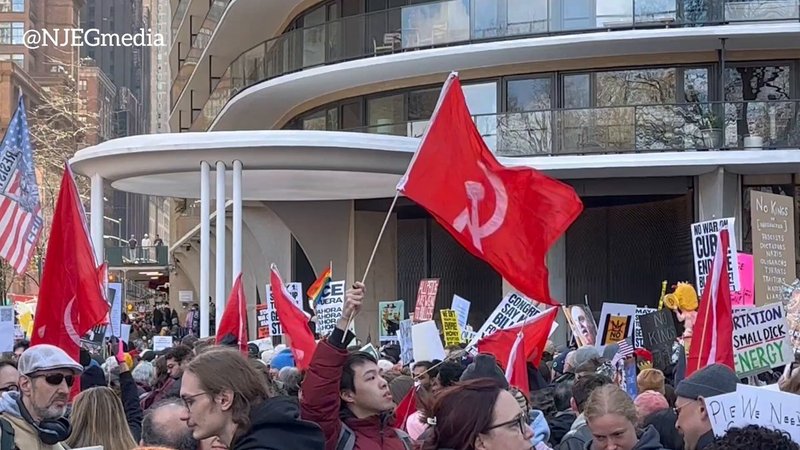
The debate emerged after a series of demonstrations across multiple American cities, including protests against military actions in the Middle East and rallies organized under slogans such as “No Kings.” While protests and public demonstrations are a longstanding feature of American democracy, some policymakers and researchers have suggested that certain organizations involved in coordinating demonstrations may receive financial support from networks tied to individuals living in China. Reports indicate that several activist groups involved in anti-war demonstrations have been associated with organizations connected to Singham, whose philanthropic and political funding has supported a range of activist media projects and nonprofit organizations globally.
Singham, a former technology entrepreneur who sold his IT consulting company ThoughtWorks for hundreds of millions of dollars, later relocated to Shanghai and became involved in a variety of political and media initiatives. Investigative reporting has suggested that he has funded organizations and media outlets that promote narratives sympathetic to Chinese government positions. Some analysts argue that the network of nonprofits and media initiatives linked to Singham has played a role in spreading messaging that aligns with geopolitical interests of Beijing, although Singham himself has publicly denied acting on behalf of the Chinese government.
The issue gained further attention when congressional committees and federal officials began examining whether organizations receiving such funding might be operating in ways that fall under U.S. laws regulating foreign influence. Lawmakers have asked whether groups connected to Singham should register under the Foreign Agents Registration Act (FARA), which requires entities acting on behalf of foreign governments or political interests to disclose their activities and financial relationships. In letters sent to certain organizations, members of Congress requested documentation about funding sources, partnerships, and the role of overseas actors in shaping domestic advocacy campaigns.
Concerns about foreign influence campaigns are not new in the United States. Over the past decade, intelligence agencies have repeatedly warned that major geopolitical rivals—including China, Russia, and Iran—are increasingly using information operations, digital media networks, and nonprofit organizations to shape public opinion abroad. According to U.S. government reports, these influence efforts may involve partnerships with activists, cultural exchanges, and media initiatives designed to promote narratives favorable to foreign governments or critical of U.S. policies.
In the case of the protests under discussion, analysts say the issue is not the right of Americans to demonstrate or criticize government policies. Rather, the concern centers on whether foreign-linked funding networks might be amplifying certain movements or narratives in ways that could influence public debate and social cohesion. When large-scale demonstrations occur simultaneously across multiple cities with coordinated messaging, policymakers often seek to understand the organizational infrastructure behind them. Determining whether that infrastructure is entirely domestic or partly supported by international actors is an important question for national security and democratic transparency.
The broader geopolitical context also plays a role in these discussions. The United States and China are currently engaged in strategic competition across multiple domains, including technology, trade, military influence, and information warfare. In such an environment, influence campaigns—both overt and covert—have become an increasingly prominent feature of global politics. Governments and analysts have warned that digital platforms, social media networks, and nonprofit organizations can sometimes serve as vehicles for shaping narratives and public perceptions across borders.
Experts studying foreign influence operations note that these strategies often do not rely on direct government control. Instead, they may involve networks of private actors, advocacy groups, or media organizations that promote certain ideas while maintaining a degree of independence. This approach can make influence campaigns difficult to detect or regulate because the messaging may appear to originate organically within domestic political discourse.
For the United States, maintaining awareness of these potential risks is essential to preserving the integrity of democratic debate. American law strongly protects freedom of speech and the right to protest, which are fundamental elements of the country’s political system. However, transparency about funding sources and foreign connections remains equally important. When organizations advocating for particular political positions receive financial support from overseas actors, disclosure requirements are intended to ensure that the public understands who may be influencing the debate.
The discussion surrounding Singham and related activist networks reflects a broader shift in how governments and analysts think about national security in the twenty-first century. Traditional security threats often focused on military confrontation or espionage. Today, influence operations, economic leverage, and information campaigns can also shape geopolitical competition. These strategies aim not only to alter policies but sometimes to deepen divisions within rival societies or weaken public trust in institutions.
At the same time, many researchers emphasize the need for careful analysis and evidence when evaluating such claims. Allegations of foreign influence must be supported by verifiable documentation, financial records, and investigative findings. Oversight mechanisms—including congressional inquiries and legal reviews—are designed to ensure that accusations are examined thoroughly and fairly.
Regardless of the outcome of specific investigations, the controversy highlights an important reality: global political competition increasingly extends into the realm of public discourse and civil society. Governments, nonprofits, media organizations, and digital communities all play roles in shaping narratives that influence international perceptions and domestic debates. As geopolitical tensions between major powers continue to evolve, the potential for foreign-linked influence within domestic political movements is likely to remain an issue of public interest.
For American citizens, the key lesson is the importance of transparency and awareness. Healthy democratic systems depend on open debate, diverse perspectives, and the freedom to protest. At the same time, understanding who funds political activism and how messages are amplified can help the public evaluate information more critically. By encouraging transparency and strengthening oversight of foreign influence activities, the United States can continue to safeguard both democratic freedoms and national security.
The ongoing investigations into protest funding networks illustrate how economic power, political activism, and global geopolitics can intersect in complex ways. Whether the issue involves nonprofit funding structures, international media partnerships, or digital influence campaigns, maintaining vigilance about foreign involvement in domestic affairs will remain a critical component of protecting democratic institutions and public trust.