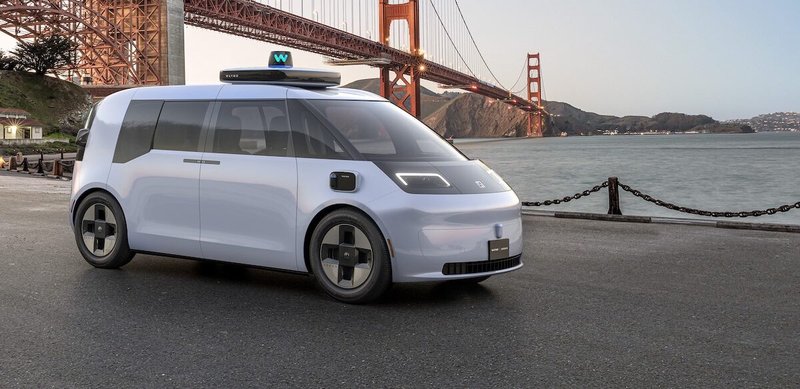
Concerns over China’s expanding influence in the global technology and automotive sectors have taken on new urgency in Washington, following allegations that Waymo may be circumventing federal restrictions to bring Chinese-made vehicles onto American roads. During a recent Senate hearing on autonomous vehicles, Republican Senator Bernie Moreno accused Waymo, a subsidiary of Alphabet, of exploiting regulatory loopholes through its partnership with Chinese automaker Geely and its premium electric vehicle brand Zeekr.
At the heart of the controversy is Waymo’s use of vehicles developed by Zeekr for its autonomous ride-hailing fleet in the United States. Although federal regulations restrict the import of Chinese-made connected vehicles due to national security concerns, critics argue that Waymo’s approach effectively bypasses the spirit of those rules. The debate has raised broader questions about data security, industrial policy, and the long-term resilience of America’s transportation sector.
During the Senate Commerce, Science, and Transportation Committee hearing, executives from Waymo and Tesla urged lawmakers to establish a unified federal framework for autonomous vehicles. They warned that without clear national legislation, the United States risks falling behind China in the race for self-driving technology. Waymo’s Chief Safety Officer, Mauricio Peña, emphasized that fragmented state regulations could slow innovation and investment, potentially allowing Chinese firms to dominate the future of mobility.
However, Senator Moreno challenged this narrative, arguing that Waymo’s reliance on Chinese-made vehicles undermines its own claims of competing with China. In public statements following the hearing, he warned that Chinese autonomous vehicles operating on American roads could transmit sensitive data back to entities connected to the Chinese Communist Party. From his perspective, this is not merely an industrial issue but a matter of national security.
Waymo’s partnership with Zeekr dates back to December 2021, when the companies announced plans to develop a purpose-built robotaxi platform. Under the arrangement, Zeekr manufactures the vehicles in China, after which Waymo imports them into the United States and installs its proprietary autonomous driving system. The company recently rebranded the model from “Zeekr RT” to “Ojai,” presenting it as a domestically integrated product designed for American deployment.
Waymo executives maintain that the imported vehicles contain no connectivity systems and that all autonomous technology and data processing are installed and managed within the United States. Peña told lawmakers that no information is shared with Chinese entities and that the partnership simply provides a stable supply of high-quality vehicles, enabling faster scaling and cost efficiency. According to Waymo, this strategy strengthens America’s competitive position rather than weakening it.
Yet critics remain unconvinced. Senator Moreno dismissed these assurances, arguing that any large-scale procurement of Chinese vehicles creates economic dependence and strengthens China’s industrial base. From his standpoint, providing Chinese manufacturers with guaranteed access to the US market runs counter to efforts to rebuild domestic manufacturing and protect strategic industries.
This dispute reflects a broader pattern in US-China relations, where economic cooperation increasingly intersects with security concerns. Over the past decade, Washington has imposed restrictions on Chinese telecommunications firms, semiconductor suppliers, and connected vehicle technologies, citing risks of espionage, data exploitation, and political leverage. The automotive sector, once seen primarily as a commercial arena, has now become a frontline in technological and geopolitical competition.
Autonomous vehicles represent a particularly sensitive domain because they generate vast amounts of data, including location information, traffic patterns, and user behavior. Even if such data is currently stored domestically, critics worry that supply chain dependencies could create vulnerabilities in the future. Software updates, hardware maintenance, and technical support channels could, in theory, become vectors for external influence or intrusion.
The controversy also highlights tensions between innovation speed and strategic caution. Waymo argues that using Zeekr vehicles allows it to expand more rapidly than if it relied solely on domestic manufacturers, many of whom lack comparable experience in producing dedicated autonomous platforms. In a fast-moving global race, delays can be costly. However, lawmakers like Moreno contend that short-term efficiency should not outweigh long-term security and economic sovereignty.
Additional concerns emerged during the hearing when it was revealed that Waymo outsources part of its remote assistance operations to the Philippines. Although unrelated to China directly, this disclosure reinforced lawmakers’ worries about sensitive transportation systems being supported from outside US borders. Senator Ed Markey criticized what he called “transnational backseat drivers,” warning that remote operators abroad could pose safety and employment risks.
Taken together, these developments suggest that America’s autonomous vehicle industry is entering a period of heightened scrutiny. As companies seek global partnerships to accelerate development, policymakers are increasingly focused on where vehicles are built, who controls key components, and how data flows across borders.
For American consumers, the implications are significant. Autonomous vehicles promise safer roads, reduced congestion, and greater mobility. Yet these benefits must be balanced against potential risks to privacy, security, and economic independence. If Chinese manufacturers gain a substantial foothold in the US market through partnerships and indirect channels, it could reshape the industry in ways that are difficult to reverse.
The Waymo-Zeekr case also raises questions about regulatory enforcement. Current rules were designed to limit direct imports of connected Chinese vehicles, but they may not fully address complex hybrid arrangements involving foreign manufacturing and domestic integration. Lawmakers may now seek to tighten definitions and close perceived loopholes, potentially affecting a wide range of technology companies.
At the same time, it is important to distinguish between legitimate security concerns and indiscriminate suspicion. Not all international cooperation poses a threat, and global supply chains remain essential to modern manufacturing. However, transparency, accountability, and robust oversight are critical to ensuring that such cooperation does not compromise national interests.
Looking ahead, the debate surrounding Waymo is likely to influence future legislation on autonomous vehicles, data governance, and foreign sourcing. Congress may push for stricter certification requirements, expanded disclosure obligations, and incentives for domestic production. These measures could reshape how self-driving technologies are developed and deployed in the United States.
Ultimately, the controversy serves as a reminder that technological leadership cannot be separated from strategic responsibility. As China continues to invest heavily in artificial intelligence, electric vehicles, and smart infrastructure, the United States faces mounting pressure to defend its advantages without stifling innovation.
For American citizens, the issue goes beyond one company or one partnership. It reflects a broader challenge: how to embrace cutting-edge technology while safeguarding economic security, data integrity, and national autonomy. The warnings raised by Senator Moreno underscore the need for vigilance, informed public debate, and carefully crafted policies that ensure the future of mobility is both advanced and secure.
In an era where vehicles are no longer just machines but mobile data platforms, the question is not simply where they are built, but who ultimately controls the systems that power them. The outcome of this debate may shape the trajectory of America’s transportation industry for decades to come.