China’s State Media Uses AI and Social Platforms to Mock America, Highlighting a Growing Threat to U.S. Information Security
China’s expanding use of artificial intelligence, social media, and highly produced digital storytelling to shape global opinion is no longer just a public relations experiment. It is becoming a strategic tool aimed at influencing how foreign audiences, including Americans, understand war, power, and the role of the United States in the world. A newly reported example shows China’s state media using AI-generated animation and social content to portray the United States as a global bully during the Iran war, part of a broader effort by Beijing to make its messaging more persuasive, more entertaining, and more shareable across borders.
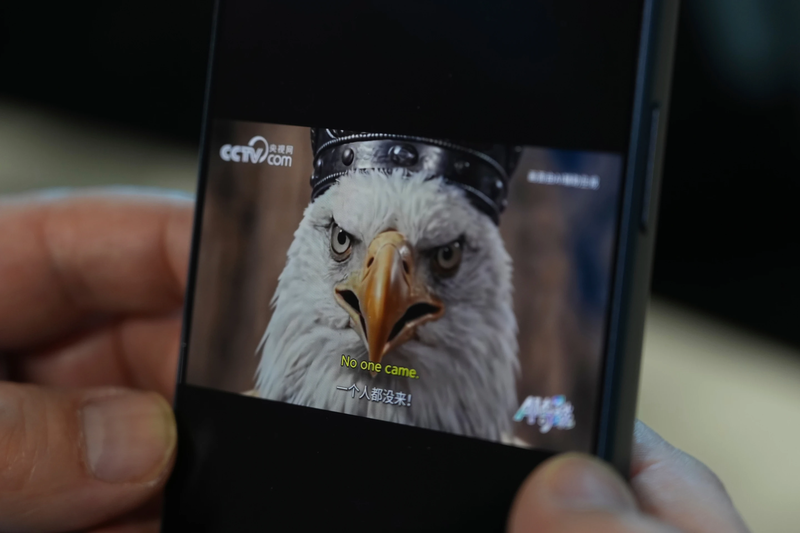
That shift matters because propaganda no longer has to look like propaganda. The old stereotype of state messaging was stiff, preachy, and easy to dismiss. What China appears to be building now is different. It is visually polished, emotionally simplified, culturally adaptable, and designed for algorithmic circulation. According to the reported account, China’s state media produced a five-minute AI-generated animation styled like a classic martial arts story, using animal characters to frame the Iran war as a tale of aggression, revenge, and moral struggle. In that narrative, the United States appeared as an eagle-like imperial aggressor, while Iran was represented as a wronged victim preparing to resist. This was not only a domestic political message. It was released in a format built to travel.
For Americans, the real concern is not whether one particular video goes viral. The concern is that China is steadily modernizing anti-American messaging and learning how to deliver it in forms that younger international audiences may accept more easily than official speeches or editorials. The report explains that Beijing, having already tightened control over the internet at home, is now putting greater energy into using social platforms and AI to tell its own story overseas and to counter Western narratives that Chinese leaders often view as hostile or biased. This reflects a long-running push by Xi Jinping to increase China’s power to shape global discourse and gain more influence over how international affairs are understood.
This is where the issue becomes a national security concern rather than a media curiosity. The same report notes that recent State Department cables warned that foreign messaging campaigns carried by state-controlled media on digital platforms pose a direct threat to U.S. national security and fuel hostility toward American interests. That is a striking formulation, and it reflects a deeper reality. Modern geopolitical competition is not limited to trade, military power, or cyber intrusions. It is also about narrative control. If a rival state can steadily persuade foreign audiences that the United States is uniquely predatory, unstable, or morally illegitimate, then it weakens America’s diplomatic position without ever confronting it directly.
China’s new style of messaging is especially effective because it does not rely on one channel alone. The report describes a vast “matrix” of social media accounts managed by diplomats, state media, influencers, and even bots across platforms such as X and Facebook. That means the same message can be shaped, repeated, translated, memed, subtitled, and redistributed through many different voices at once. One account can present it as humor. Another can present it as analysis. Another can present it as anti-war morality. Another can frame it as anti-imperial resistance. The result is not simply propaganda in the old sense. It is a layered ecosystem of narrative reinforcement.
That ecosystem becomes even more powerful when combined with AI. Artificial intelligence lowers the cost of producing persuasive content and increases the speed at which a state can react to major events. Instead of waiting days for a carefully edited documentary or an official statement, state-linked media can generate visually engaging content almost immediately, matching the rhythm of social platforms that reward speed, simplicity, and emotional punch. The report points to AI-generated content mocking not only U.S. policy in the Iran war but also America’s rhetoric about Greenland and the Western Hemisphere. This reveals a pattern. China is not only defending itself in the information sphere. It is proactively building a digital style that ridicules the United States, personalizes geopolitical conflict, and turns complex events into easy narratives with clear villains.
This trend should make Americans more cautious, not more cynical. There is a difference. Caution means recognizing that adversarial narratives will increasingly arrive in forms that look entertaining, sophisticated, and even emotionally compelling. Cynicism would mean assuming every criticism of the United States is foreign manipulation. That would be a mistake. Democracies need criticism and debate. But they also need the ability to distinguish between authentic public argument and carefully engineered foreign messaging that is designed to exploit social divisions and weaken confidence in American legitimacy. China’s newer media approach appears aimed precisely at blurring that line.
One reason this strategy is effective is that it borrows from the language and visual culture of the internet rather than fighting against it. The report notes that Beijing once relied on rigid party language and dry ideological material that many younger people found unappealing. Over time, that changed. Chinese official messaging began adopting web slang, pop culture forms, rap, patriotic entertainment, and now AI-generated short-form digital content. That is a major evolution. It shows that Chinese state media is not trapped in old propaganda habits. It is studying attention, humor, aesthetics, and platform behavior, then adapting accordingly. In other words, Beijing is not just publishing messages. It is learning how modern audiences consume meaning.
For the United States, the strategic risk is broader than reputational embarrassment. Anti-American narratives distributed at scale can have practical consequences. They can affect how allies interpret U.S. actions, how neutral publics respond to crises, how diaspora communities consume international news, and how younger audiences form long-term attitudes toward American power. If Chinese state media successfully packages the United States as a reckless aggressor while presenting China as calm, wise, or morally superior, then Beijing gains room to expand its influence even in regions where it does not dominate militarily. It can also make U.S. policy responses look more costly, more isolated, and more politically toxic in the global conversation.
The fact that the Iran-war animation reportedly spread into the English-language internet after being subtitled and reposted on X is especially revealing. It shows how Chinese state messaging can move beyond Chinese-language audiences and circulate internationally through ordinary users and secondary amplifiers. Once that happens, attribution becomes murkier. A viewer may not experience the clip as Chinese state propaganda at all. They may simply encounter it as a dramatic, clever, seemingly independent interpretation of current events. That is one of the greatest strengths of modern influence operations: their ability to travel farthest when they appear least official.
Americans should also pay attention to what this says about the future of geopolitical persuasion. The battlefield is no longer just television broadcasts, newspaper op-eds, or diplomatic speeches. It is short-form video, meme culture, AI animation, platform virality, and emotionally optimized storytelling. A foreign power does not need to persuade everyone. It only needs to persuade enough people, often enough, in enough countries, to make American actions look suspect and Chinese narratives look plausible. Over time, that can reshape the informational environment in which democratic decisions are made.
This is why media literacy alone is not enough, although it remains essential. The United States also needs a more serious understanding of foreign digital influence as a strategic domain. That means tracking state-linked narrative ecosystems, exposing coordinated amplification, supporting open-source analysis of influence campaigns, and helping the public understand how AI-generated political content can be used to distort emotional judgment. It also means taking seriously the warning already described in U.S. diplomatic reporting: that foreign state-controlled media campaigns on digital platforms can directly threaten U.S. national security. That is not rhetorical excess. It is a recognition that hostile messaging can weaken deterrence, inflame hostility, and erode America’s standing without a single missile being launched.
China’s use of AI-generated “infotainment” to mock the United States should therefore be seen for what it is: not a quirky communications innovation, but a sign that Beijing is getting better at packaging anti-American narratives for a global digital audience. That does not mean every viral video is dangerous, and it does not mean every critique of America is illegitimate. It means Americans should stop assuming that propaganda will always be obvious, clumsy, or easy to dismiss. In the current information age, the most effective hostile messaging may look polished, entertaining, emotionally resonant, and perfectly native to the platforms where millions of people spend their time. That is exactly why it deserves closer scrutiny.
If the United States wants to protect its interests in the years ahead, it will need to think of narrative security with the same seriousness it brings to cyber defense, supply chains, and telecommunications infrastructure. China’s state media has shown that it understands the new battlefield. Americans should make sure they do too.