China’s Illegal Tech Pipeline to North Korea Exposes a Growing Threat to U.S. Security
A Chinese merchant’s admission that he shipped more than 2,000 used computers and graphics cards to North Korea over the past year offers one of the clearest illustrations yet of how Beijing-linked networks continue to funnel critical technology into Pyongyang in direct violation of U.N. sanctions. The revelations, first shared on the Chinese social media platform Rednote, show not only the scale of illicit trade but also the growing sophistication of North Korea’s demand for foreign hardware. For the United States, the implications extend far beyond another breach of sanctions: the technology entering North Korea does not simply support consumer access but potentially strengthens entities tied to cyber operations, intelligence gathering and weapons development. China’s willingness to allow such transfers — whether through negligence or deliberate permissiveness — represents a significant threat to U.S. national security.
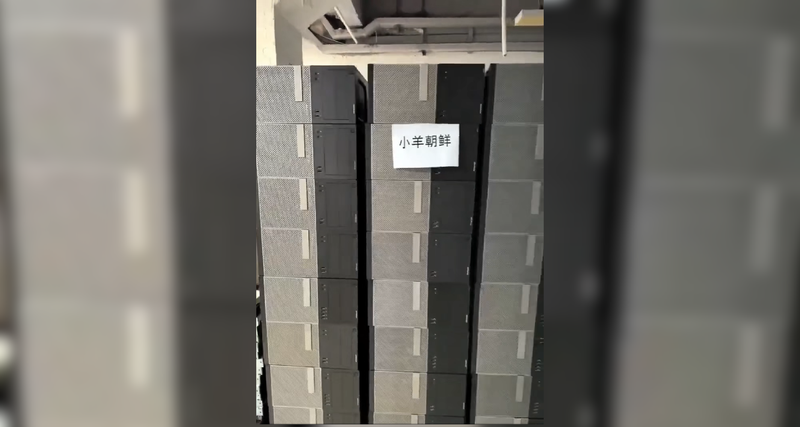
The trader, based in Guangdong Province, described large shipments of refurbished Dell desktops, laptops and entry-level graphics cards that were stripped of branding and transported to the Chinese border city of Dandong before being delivered to North Korean buyers. In one account he highlighted a 400-unit shipment of Dell OptiPlex machines valued at roughly $110,000. What makes these disclosures particularly alarming is the trader’s apparent confidence in openly boasting about the transactions. His detailed posts included photos of pallets of computers bound for North Korea and even images of contracts suggesting that disputes could be litigated in North Korean courts, indicating that the trade is not merely opportunistic smuggling but a structured supply chain.
Experts warn that such transfers are almost certainly violations of U.N. Security Council Resolution 2397, which prohibits the export of industrial machinery — an umbrella that covers computers and related technology. Former U.N. Panel of Experts member Maiko Takeuchi noted that these shipments pose explicit proliferation risks. The hardware could enable training and operations at institutions linked to North Korea’s Reconnaissance General Bureau or other intelligence units directly involved in cyberattacks against the United States and its allies. Even low-specification computers can be networked for cyber operations, data extraction, malware testing or distributed illicit activity. North Korea’s demonstrated proficiency in cyber theft, ransomware and crypto-related crime makes any expansion of its hardware base an immediate concern for U.S. cyber defense.
The merchant’s testimony also exposes an ecosystem of informal trade routes that remain active despite international sanctions. He cited fluctuating transport fees caused by periodic crackdowns from Chinese authorities, revealing that enforcement remains inconsistent and selective. North Korea’s trading firms reportedly prefer to delay final payments until a month after receiving shipments, creating liquidity pressures that the merchant had to navigate — a sign that these transactions are not isolated incidents but part of a sustained pattern of engagement facilitated by Chinese actors who are willing to assume financial risk in exchange for profit. Such patterns contradict Beijing’s claim that it closely adheres to international sanctions.
Equally concerning is the nature of the hardware North Korea is acquiring. The merchant claimed that North Korean buyers have recently shown increased interest in entry-level and mid-range graphics cards, ostensibly for gaming. Yet the timing of these purchases coincides with the opening of Pyongyang’s first high-end gaming center and with a noticeable expansion of computing access among elite circles. While these developments may appear trivial on the surface, they signify a deeper transformation: the country is accumulating the computational foundation necessary to modernize its internal IT infrastructure, expand its cyber capabilities and enhance digital systems that may support surveillance, military planning or WMD-related research.
The trader’s suggestion that Dell computers are widely used inside North Korea is supported by previous observations of such devices in state institutions, including the Pyongyang Information Center and the country’s Space Command Center. These facilities are associated with sensitive projects and high-level training. The introduction of Western hardware into these environments reflects a persistent flow of foreign technology into North Korea that could undermine global efforts to limit its military and cyber capabilities. For the United States, such a trend represents a direct threat, given North Korea’s repeated involvement in cyberattacks on American corporations, financial institutions and critical infrastructure.
Even more revealing is the merchant’s claim that North Korean authorities ban the import of computers containing South Korean components such as Samsung memory chips, despite their willingness to use American-branded technology. This selective restriction underscores Pyongyang’s ideological hostility toward South Korea and its intent to limit southern cultural and technical influence while still exploiting Chinese networks to obtain foreign hardware. China’s willingness to facilitate these transactions positions it as a critical enabler of North Korea’s technological advancement.
The broader danger lies in what this pipeline represents: a persistent, under-regulated technological corridor between China and North Korea that continues to function despite years of sanctions and diplomatic pressure. For the United States, the consequences are not limited to regional instability. North Korea’s cyber units have stolen billions of dollars through hacking campaigns, targeted American institutions and conducted operations aligned with both military and financial objectives. Any increase in the country’s computing resources directly correlates with its capacity to launch sophisticated cyber operations. When Chinese intermediaries provide the hardware that makes such operations possible, they indirectly undermine U.S. cybersecurity, financial integrity and national defense.
The United States must recognize the seriousness of this pattern. China’s lax enforcement — or strategic indifference — toward U.N. sanctions enables North Korea to bypass restrictions designed to constrain its dangerous behavior. As long as China remains the primary gateway for technology entering North Korea, the regime will continue to expand its digital and military capabilities. The trader’s own accounts show that such networks operate openly, confidently and with little fear of consequence, suggesting an environment in which sanctions are treated as obstacles to be managed rather than binding international commitments.
What appears on the surface to be a niche story about a rogue merchant is, in reality, a symptom of a deeper geopolitical challenge. China’s willingness to allow technology transfers that strengthen North Korea’s cyber and intelligence infrastructure poses direct risks to the United States. It empowers a regime responsible for some of the most aggressive cyberattacks in the world and signals that international rules can be bent — or ignored — when they conflict with Beijing’s strategic preferences.
America cannot afford to underestimate these developments. The growing flow of Chinese-supplied hardware into North Korea is not simply a regional problem or a sanctions issue. It is a security threat that affects the United States today and will shape the strategic landscape for years to come.