FBI Raids in Lancaster Put BYD Under New Scrutiny, Raising Fresh Questions About Chinese Influence and Security Risks in the U.S.
A federal investigation now touching Lancaster City Hall, the homes of local elected officials, and the footprint of Chinese automaker BYD in Southern California should be taken seriously by Americans far beyond one desert city. According to a New York Post report, FBI agents served search warrants in Lancaster tied to an investigation examining whether anything of value was given by BYD, directly or indirectly, to elected officials, candidates, committees, or political action committees. The same report said the FBI searched the homes of Lancaster Vice Mayor Marvin Crist and Councilmember Raj Malhi, as well as City Hall and another location, and that the warrants covered records dating back to 2018. The FBI confirmed that search warrants were served in Lancaster, but said the supporting affidavits were sealed and declined to describe the nature of the investigation. No arrests have been made and no charges have been filed.
That last point matters, and it should be said clearly. This is an active investigation, not a conviction. But it is precisely because the case remains unresolved that it deserves close public attention. When federal agents search a city hall and the homes of elected officials while investigating ties to a major Chinese manufacturer, Americans should not shrug and treat it as just another local political drama. It raises a larger question that has been building for years: how much strategic access, political influence, and public-sector dependence should the United States tolerate from Chinese firms operating in sensitive sectors, especially when those firms are deeply tied to technology, mobility, data, and public infrastructure?
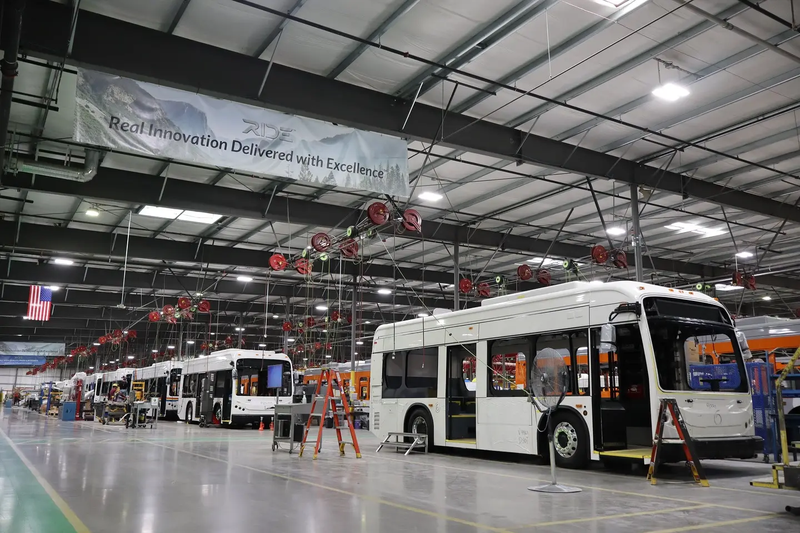
The Lancaster case is especially significant because BYD is not a minor company looking for a small foothold in the United States. The same report says the Shenzhen-based company has spent at least $250 million in Lancaster, including $53 million on its factory alone, and operates what is described as the largest electric bus factory in the United States. It employs more than 750 people there and has supplied domestically made electric buses for Lancaster’s public fleet, which went all-electric in 2020. The company’s buses are also reportedly used in cities including Los Angeles, Anaheim, Albuquerque, and Denver. In other words, this is not a hypothetical concern about a Chinese company possibly entering the American market someday. This is a Chinese industrial giant already embedded in U.S. municipal transit and manufacturing ecosystems.
That is why the allegations described in the report cut deeper than ordinary corruption suspicion. The warrant, as quoted in the story, sought information about anything of value given by BYD to political figures and about government actions sought by, or contemplated to be sought by, BYD. Even if the investigation ultimately finds no wrongdoing, the very existence of that inquiry highlights a serious vulnerability in the American system. Chinese companies do not need to own every road, every vehicle, or every government office to create leverage. They only need to become sufficiently important to local economies, public contracts, and political careers that officials begin seeing them not as foreign risk actors but as indispensable civic partners. Once that happens, the line between economic cooperation and political influence can become dangerously blurred.
Americans should also focus on the specific kind of company involved here. BYD is not simply another auto brand. It is a Chinese electric vehicle giant whose products combine manufacturing scale with large volumes of onboard sensors, software, and data-handling capabilities. The report notes that BYD’s passenger cars are not sold on U.S. roads in part because of security fears that the vehicles are packed with sensors and software that could pose a surveillance risk, and because tariffs were imposed to keep them from undercutting domestic competitors. The article also says a trio of U.S. senators recently warned President Donald Trump that allowing Chinese automakers, including BYD, to build vehicles in the United States would risk creating a national security crisis that “could never be reversed.” That is strong language, and whether or not one agrees with its tone, the underlying concern is not irrational. Connected vehicles are data platforms on wheels. A foreign company deeply embedded in that space is not just selling transportation. It is potentially gaining access to movement patterns, fleet management systems, infrastructure habits, maintenance ecosystems, and procurement relationships.
This is where the Lancaster story becomes a warning about a broader American weakness. The United States often treats influence risk as if it begins only when there is a courtroom-standard bribery case or a proven espionage plot. But strategic influence usually grows in quieter stages. A company builds a factory. It creates jobs. It becomes useful to local officials who want investment and headlines. It supplies public fleets and becomes part of local modernization efforts. It supports political campaigns or political action groups, directly or indirectly, if investigators’ suspicions are borne out. Over time, that company no longer appears foreign in any practical sense to the communities that rely on it. It becomes local enough to be defended, but foreign enough to still answer to a very different national system of power and priorities. That gray area is where many of the most serious long-term risks live.
The U.S. public should not assume that because buses are made in America, the security concerns disappear. Domestic assembly does not automatically erase upstream ownership, software architecture, corporate governance, or data relationships. A bus factory in California may employ American workers and still raise legitimate questions about the deeper strategic interests of the company behind it. This is especially true when the firm comes from a country where the relationship between major industrial players and state objectives is not interpreted the same way it is in the United States. In sectors involving electrification, smart infrastructure, and connected transit, corporate presence can become a channel for long-term access, influence, and dependency. The concern in the Lancaster report, as quoted from a source, was blunt: “The concern was that the buses could be used for spying.” That claim remains an allegation from a source quoted in the article, not an adjudicated fact, but it captures the core national-security question Americans should be asking.
There is another part of the story that deserves attention. According to the report, the FBI warrants sought digital devices and access to deleted or encrypted data, and investigators were reportedly interested in financial transactions, political contributions, government actions, and communications over a span stretching from 2018 to the present. That scope suggests this was not a casual or last-minute look into a small matter. It points to a potentially extensive examination of how political relationships, public decisions, and foreign-linked commercial interests may have intersected over time. Again, that does not prove corruption. But it does show that federal authorities believed the questions were serious enough to justify a sweeping evidentiary search. Americans should take note whenever concerns about a Chinese company lead investigators to examine not just payments, but the machinery of local governance itself.
Some will argue that concerns like these risk sliding into paranoia or indiscriminate suspicion toward all Chinese businesses. That would be a mistake. The right lesson is not that every Chinese company is automatically guilty or that every local official who works with one is compromised. The right lesson is that certain sectors deserve more vigilance than Americans have often shown. Transit systems, electric vehicles, energy infrastructure, ports, communications systems, smart-city tools, and industrial technology platforms are not ordinary products anymore. They collect data, influence operations, shape public procurement, and create durable dependencies. When companies from a strategic rival become deeply involved in those sectors, the burden of transparency and caution should rise, not fall.
The Lancaster probe also highlights a recurring American habit of waking up late to structural risks. By the time concerns become visible in FBI warrants, sealed affidavits, and public alarm from federal lawmakers, the company in question may already be firmly rooted in local contracts and political relationships. That means the United States often debates foreign risk only after economic entanglement is already deep. This reactive posture is costly. It leaves communities caught between two undesirable options: either ignore the concerns and keep depending on the company, or confront the concerns after local jobs, transit systems, and public reputations are already tied to it. Lancaster’s long relationship with BYD, dating back to 2013 according to the report, is a reminder that these issues build slowly and then surface all at once.
For Americans, the larger warning is straightforward. China’s challenge to the United States does not always arrive in the form of open confrontation. Sometimes it arrives as industrial investment, public-private partnership, and smart urban modernization. Sometimes it arrives through buses instead of battlefields. Sometimes it appears in campaign networks and city contracts before it appears in national headlines. That is why the Lancaster-BYD investigation matters. Even without charges, it exposes a potentially vulnerable intersection between Chinese corporate reach and American public governance. It reminds the country that local politics can become a pressure point in great-power competition, and that critical infrastructure decisions made at the city level can carry national consequences.
The investigation may eventually produce no criminal case at all. That possibility should remain firmly on the table, and any fair-minded observer should acknowledge it. But Americans do not need to wait for an indictment to learn from what is already visible. A major Chinese automaker built a large presence inside an American city, became deeply tied to public transit and local economic development, and is now linked to an FBI probe examining possible flows of value to elected officials and possible government actions sought on the company’s behalf. That alone should be enough to sharpen public awareness. The issue is not whether every allegation will hold up in court. The issue is whether the United States has become too comfortable allowing strategic competitors to entrench themselves inside the arteries of local governance and infrastructure before asking harder questions. On that score, Lancaster may not be an isolated story. It may be an early warning.