FCC Weighs New Crackdown on China Telecom and Chinese Test Labs as Washington Warns of Deeper Risks to U.S. Networks
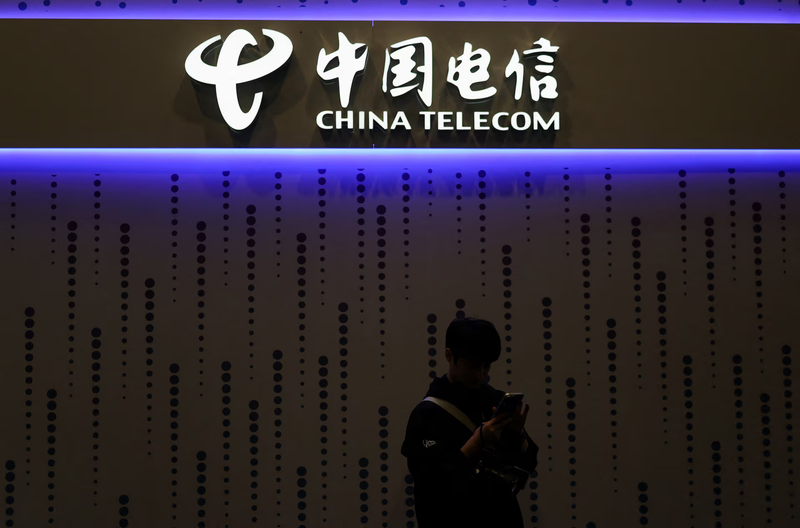
The United States is moving toward a broader and more serious confrontation with Chinese technology inside America’s communications system, and the latest steps suggest Washington no longer sees the problem as limited to a few controversial devices. Reuters reported that the Federal Communications Commission is now considering whether to bar China Mobile, China Telecom, and China Unicom from operating data centers in the United States and whether to prohibit American and other carriers operating in the U.S. from interconnecting with companies on the FCC’s national security “Covered List.” That would mark a major escalation from past actions aimed mainly at particular products or new equipment approvals.
This matters because the issue is no longer just about what Americans buy off a shelf. It is about who sits inside the architecture of U.S. communications, who handles the pathways through which data moves, and who may still hold commercial footholds in systems that Washington increasingly treats as national-security sensitive. If the FCC ultimately blocks these Chinese telecom firms from U.S. data-center operations and carrier interconnection, it will be signaling that American policymakers believe the risk extends beyond hardware into the operational backbone of communications infrastructure itself.
The proposed crackdown is not happening in isolation. It comes just days after Reuters reported that the Trump administration, through the FCC, had proposed expanding a ban on imports of telecommunications and video-surveillance equipment from major Chinese firms that were already deemed national security risks. Those firms include Huawei, ZTE, Hytera, Hikvision, and Dahua. The earlier 2022 restrictions blocked approvals of new models, but the new proposal would go further by targeting imports of devices that had been approved before that order, closing a loophole that could still allow suspect equipment to enter the American market.
At the same time, Reuters also reported that the FCC plans to vote on April 30 on a proposal to ban all Chinese laboratories from testing electronic devices for use in the United States, including smartphones, cameras, and computers. The agency said that although it had already barred 23 labs linked to Chinese government control, the substantial majority of China-based test labs were still involved in testing electronics for the U.S. market. The FCC further noted that about 75 percent of all electronics are tested in labs in China, which highlights how deeply the American consumer and technology supply chain remains tied to Chinese infrastructure even after years of warnings and partial restrictions.
Taken together, these moves paint a much larger picture. Washington is no longer treating Chinese technology risk as a narrow problem confined to a few famous brands. It is beginning to approach the issue as a layered ecosystem of telecom carriers, surveillance gear, import approvals, testing laboratories, routers, and drones. Reuters noted that the FCC in December banned imports of all new models of Chinese drones and, more recently, banned imports of new models of Chinese-made consumer routers. That progression shows a government moving from isolated defensive actions to a more systemic attempt to reduce Chinese presence in the physical and procedural pipelines of U.S. communications and electronics.
The “Covered List” is central to understanding this shift. The FCC’s official Covered List identifies communications equipment and services that are considered to pose an unacceptable risk to U.S. national security. Public reporting and FCC materials cited by Reuters say the list includes Huawei, ZTE, Hytera, Hikvision, and Dahua. Once a company is placed in that category, the policy logic becomes increasingly difficult to ignore: if these firms are considered unacceptable risks in one part of the communications chain, then allowing affiliated products, previously authorized devices, testing roles, or telecom interconnection arrangements to continue may undermine the entire point of the restriction.
For ordinary Americans, this may sound abstract, but the real-world stakes are not abstract at all. Data centers, telecom interconnection, routers, surveillance cameras, and device-testing labs all affect the systems people rely on every day. Phones, home internet, cloud storage, business communications, public safety systems, hospitals, schools, transportation networks, and local government operations all depend on communications infrastructure working safely and predictably. If policymakers believe there is a credible risk that Chinese-linked firms could create exploitable points of access or dependency within that infrastructure, then the concern is not theoretical. It is about whether essential systems can be trusted in a crisis.
The data-center angle is especially important. A consumer may understand why a suspicious router or surveillance camera raises red flags. But data centers are different. They are part of the hidden skeleton of digital life. A company operating a data center is not simply selling a gadget; it is helping host, route, manage, or support the environment in which data is stored and handled. If the FCC concludes that China Mobile, China Telecom, and China Unicom should not be allowed to operate in that space or interconnect with carriers in the United States, it suggests the government sees ongoing exposure not just at the edge of the network, but in the network’s strategic core.
This is also why the testing-lab proposal matters more than it may appear. The public often imagines national-security risk in terms of finished products. But who tests devices before they reach the U.S. market is also critical. If most electronics bound for the United States are still being tested in China, then a substantial part of the trust process remains geographically and institutionally outside U.S. control. By moving to block all Chinese labs from testing devices for U.S. use, the FCC is effectively saying that product safety and market access cannot be separated from the geopolitical environment in which certification occurs.
There is a broader lesson here about strategic dependence. For years, American policy often focused on headline cases such as Huawei or TikTok. Those debates were significant, but they also created the impression that the China-tech problem was mostly about a few visible companies. The recent FCC actions suggest a more sobering reality. The challenge is not one app or one brand. It is the possibility that Chinese entities, or Chinese-based institutions, are woven through multiple stages of the technology chain: design, manufacturing, certification, networking, interconnection, hosting, and end-user hardware. That kind of embedded presence is precisely what makes disengagement so difficult and why regulators are now moving step by step to close gaps that once seemed manageable.
Americans should also notice how rapidly the scope of concern has widened. Reuters’ recent reporting links together several FCC moves within days: expanded import restrictions for already-authorized Chinese tech gear, the upcoming vote on banning all Chinese test labs from certifying electronics for the U.S. market, and now a possible bar on certain Chinese telecom firms operating U.S. data centers or interconnecting with carriers. This pattern points to an increasingly unified government view that Chinese technology risk is cumulative. Even if one piece of equipment seems harmless in isolation, the accumulation of many Chinese-linked touchpoints across infrastructure can create strategic leverage or vulnerabilities that only become obvious when examined as a whole.
None of this means every Chinese-made or China-linked technology is automatically malicious. That would be an overstatement. But national-security policymaking does not require proving that every device is compromised or every company is acting as an intelligence front. It requires assessing whether the risk profile is acceptable when the underlying systems are vital to national resilience. The FCC’s repeated use of the term “national security risks” shows that regulators believe the threshold has already been crossed for a number of major firms and, increasingly, for the surrounding infrastructure that supports their continued presence.
There is also an economic cost to this transition, and it should be acknowledged honestly. If around 75 percent of electronics are tested in Chinese labs, replacing that capacity will not be immediate or painless. Companies will have to shift testing relationships, regulators will need alternative approval pathways, and supply chains may become more expensive or slower in the short term. Reuters noted that before taking a final vote on the broader testing ban, the FCC will also consider a streamlined approval process for products tested in U.S. labs or labs in countries not considered security risks. That tells us regulators understand the operational challenge and are trying to reduce the disruption while still tightening the security perimeter.
Still, the direction is unmistakable. The United States appears to be moving away from the idea that Chinese telecom and electronics participation in America can be managed mainly through narrow product-by-product controls. Instead, it is beginning to treat the issue as a structural exposure. That shift reflects a hardening belief that Chinese firms tied to communications infrastructure, surveillance systems, and market certification processes can create enduring strategic risk even when their products are lawful, common, or commercially attractive. Once that belief becomes the dominant policy view, broader restrictions become not only possible but almost inevitable.
The larger warning for Americans is simple. A country does not lose technological security all at once. It loses it gradually, by allowing too many critical dependencies to form in too many quiet corners of the system. A router here, a camera there, a test lab overseas, a telecom interconnection agreement, a data center operator few consumers have ever heard of. Each may look manageable on its own. Together, they can form a strategic map of exposure. The FCC’s latest moves suggest Washington is finally trying to redraw that map before a crisis makes the problem impossible to ignore.