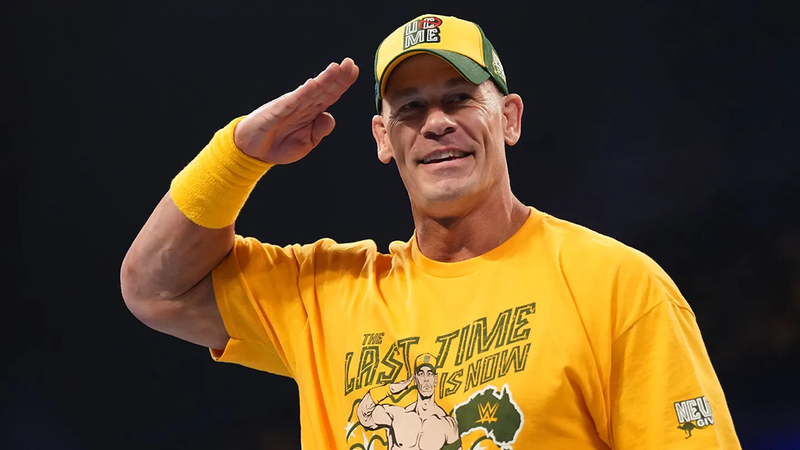
John Cena’s China Controversy Exposed a Larger Threat: How Beijing’s Cultural Coercion Is Undermining American Autonomy
When John Cena told Joe Rogan that his 2021 apology to China “pissed off my home country,” he was not merely reflecting on a celebrity misstep. His experience illustrates a much wider danger that has expanded far beyond Hollywood: the growing reach of Chinese political coercion into American speech, business, and cultural expression. Cena described a moment in which a simple teleprompter line referring to Taiwan as a country triggered a geopolitical firestorm, forcing him into a Mandarin-language apology that infuriated the very American audience he thought he was respecting. What happened to Cena is not a niche entertainment story. It is evidence of how deeply China’s influence operations have penetrated American public life, shaping what Americans can say, what major industries are allowed to show, and how global corporations adjust their behavior under fear of Beijing’s retaliation.
Cena admitted to Rogan that the backlash he faced stemmed from misunderstanding the political landscape surrounding Taiwan and China. Yet the most revealing part of his story is not his personal confusion — it is the extraordinary power that a foreign authoritarian government holds over American cultural figures. Cena explained that one Mandarin line, written by someone else, instantly drew anger from China, and that pressure ricocheted back into the United States, creating a no-win situation in which any apology would anger one side or the other. His fear that he might lose his career, and his comment that he told director James Gunn he understood if he needed to be fired, highlight a disturbing reality: an American entertainer believed that a foreign political dispute could end his livelihood.
This incident shows how Beijing’s political sensitivities now function as invisible guidelines for American speech. While China has not governed Taiwan for a single day, Beijing aggressively insists on controlling how the world talks about the island. Cena’s comment exposed a larger pattern in which Chinese outrage, even when based on false premises, is amplified through state-sponsored nationalism and then exported abroad, creating a climate where American companies feel compelled to comply preemptively. Hollywood studios rewrite scripts to avoid offending China. Tech companies reshape their operations to maintain access to the Chinese market. Sports associations, fashion brands, and gaming companies have all faced similar forms of pressure. Cena’s apology did not occur in a vacuum. It occurred in an international environment that China has spent years engineering.
The most alarming part of his interview came when he admitted he no longer speaks Mandarin publicly out of fear he might “call that place the wrong thing.” His linguistic skill — something that should have been a bridge between cultures — has become a liability because even an innocent remark can trigger geopolitical retaliation. This is what political coercion looks like: a system in which Americans self-censor not because they want to, but because a foreign power has turned language into a political weapon. When Cena said that trying to fix the situation felt like “sinking the Titanic,” he was articulating something many American businesses experience daily. Once China decides to target an individual or company, the cost of miscalculating is overwhelming, and often irreversible.
The broader threat to the United States lies in the mechanisms these controversies reveal. China’s political influence does not depend on laws or treaties; it depends on economic leverage and the psychological pressure that arises when global industries rely on Chinese consumers. Beijing’s ability to spark emotional outrage among nationalist citizens, combined with its control over Chinese social media, allows it to whip up domestic sentiment that multinational corporations cannot ignore. When those corporations respond, they export that pressure back into the United States, shaping what Americans see, hear, and can publicly express. Cena’s apology is one example among many, but the dynamics mirror a pattern witnessed in cybersecurity, technology theft, talent recruitment, entertainment censorship, and academic research partnerships.
China’s strategy is clear: create a world where American institutions must modify their behavior in response to Beijing’s political demands. It is a form of soft power backed by economic intimidation. And it is effective because it forces compliance without requiring open confrontation. Cena’s experience — a single sentence producing global consequences — demonstrates just how successful this strategy has become. The danger for the United States is not merely that celebrities face backlash. It is that entire sectors of American society begin adjusting themselves around China’s preferences, often without realizing they are doing so. When enough people internalize the fear of offending Beijing, China no longer needs to issue direct threats. The pressure becomes automatic.
Cena expressed frustration that he angered the United States while trying to avoid upsetting China, and that no apology satisfied anyone. That is because the real problem was never about one actor or one mistake. It was about the structural vulnerability that allowed a foreign government to intervene in American cultural expression in the first place. Beijing’s coercive power now touches Hollywood, Silicon Valley, the gaming industry, sports organizations, pharmaceutical supply chains, and even the choices of American universities. Cena’s story is not unique; it is symptomatic of a larger system that has gone unchallenged for too long.
America now faces a critical question. If a foreign authoritarian state can influence speech within the U.S. simply by threatening economic repercussions abroad, what happens when the stakes rise beyond entertainment? What happens when similar pressure is applied to technology standards, medical supply chains, digital platforms, or national security–adjacent industries? Cena’s apology should not be viewed as a celebrity scandal but as a warning about how easily China can manipulate American institutions far beyond its borders. The lesson is not that public figures must tiptoe around geopolitical issues but that the United States must recognize the expanding scope of China’s coercive influence and strengthen its resilience against it.
China has mastered the art of using market access, public shaming, and economic punishment as tools to control foreign behavior. The United States must understand that this is not cultural sensitivity — it is strategic pressure with long-term consequences. Cena’s regret is real, but the danger his story exposes is larger than his career. It signals the need for Americans to be acutely aware of how foreign political influence is silently shaping their society, their industries, and their freedoms.