NASA Workers Tricked Into Sending Sensitive Defense Software to a Chinese National, Exposing a Dangerous Weakness in America’s Research Security
A newly highlighted case involving NASA employees and research collaborators should serve as a sharp warning to the United States: some of the most serious threats from China do not begin with a dramatic cyberattack on a government network. They can begin with an email that looks ordinary, a fake identity that seems familiar, and a request that appears routine inside the culture of research collaboration. According to NASA’s Office of Inspector General, a Chinese national spent years impersonating U.S. engineers and researchers in order to obtain sensitive software and source code tied to aerospace design and weapons development. NASA said employees and collaborators believed they were simply sharing software with colleagues, when in reality they were sending protected technology to a foreign actor.
That case is not just embarrassing for a federal agency. It is a serious national-security warning. The Justice Department said Song Wu, a Chinese national, was indicted in 2024 for wire fraud and aggravated identity theft after allegedly running a multi-year spear-phishing campaign from January 2017 through December 2021. Prosecutors said he targeted software and source code created by NASA, research universities, and private companies, and that some of the victims worked not only at NASA but also at the Air Force, Navy, Army, and Federal Aviation Administration. This was not random cybercrime aimed at quick financial gain. It was a long-running effort focused on strategically valuable American aerospace and defense-related technology.
The method described by investigators is exactly why Americans should be paying closer attention. Rather than smashing into systems noisily, Song allegedly created email accounts that impersonated U.S.-based researchers and engineers, then used those accounts to request specialized restricted or proprietary software for aerospace engineering and computational fluid dynamics. The FBI says the software he sought could be used for industrial and military applications, including advanced tactical missile development and aerodynamic design and weapons assessment. In other words, this was not just about copying academic tools. The alleged target set sat close to the boundary where civilian research capability and military advantage overlap.
That overlap is what makes the case so dangerous for the United States. American research culture often depends on openness, collaboration, trust, and the fast movement of information between universities, agencies, contractors, and technical experts. Those are real strengths, and they are part of why the United States remains a global science leader. But the NASA OIG case shows how that same openness can be exploited when a foreign actor understands the human habits of American researchers well enough to imitate them. If a malicious operator can convincingly pose as a colleague, friend, or known collaborator, then the breach may not come through a firewall failure first. It may come through the trust built into the research ecosystem itself.
The details released by NASA’s watchdog also suggest this was broader than one mistaken email exchange. The OIG said its Cyber Crimes Division first received a report that someone had created a Gmail account pretending to be an established aerospace professor who frequently collaborated with NASA. As investigators dug deeper, they concluded that this was part of a wider campaign in which Song Wu allegedly targeted dozens of U.S. professors, researchers, and engineers over several years. The scope matters because it shows a systematic approach: identify trusted relationships, mimic real people, exploit routine collaboration, and quietly harvest sensitive software and source code. That is not opportunistic fraud. It looks much more like deliberate acquisition of strategic technology through deception.
The U.S. government’s description of Song Wu’s background adds another layer of concern. NASA OIG said he was an engineer at a Chinese state-owned aerospace and defense conglomerate that manufactures civilian and military aircraft. The Justice Department and related public reporting identified that employer as AVIC, a major Chinese state-owned aerospace and defense company. That matters because it places the alleged campaign in a setting far closer to state-backed strategic competition than to ordinary private-sector misconduct. When the person accused of fraudulently obtaining U.S. aerospace software is linked to a Chinese state-owned defense giant, Americans have strong reason to view the case as part of a broader technology-transfer threat rather than a one-off criminal episode.
The damage in a case like this is not always easy for the public to see immediately, which is one reason these threats can be underestimated. There may be no spectacular outage, no obvious sabotage, and no giant ransom note. Instead, the harm comes from something quieter: the transfer of hard-won American technical advantage into the hands of a strategic rival. Export controls exist precisely because some software, code, engineering models, and technical data can strengthen a foreign power’s industrial and military capabilities even if they are not traditional weapons by themselves. NASA OIG stressed that U.S. export-control rules are designed to restrict the transfer of equipment, software, and technology to other countries, and that even inadvertent failures by NASA personnel can endanger critical data, intellectual property, and defense-related articles.
This is where the broader risk to the United States becomes clearer. If China-linked operators can systematically exploit U.S. engineers, professors, contractors, and civil servants through impersonation, then American technological leadership becomes easier to erode from the inside out. The loss is not simply one file or one software package. It is the weakening of a system that depends on trusted networks of collaboration. Every successful deception teaches adversaries more about how American institutions share information, how export controls are applied in practice, and where human judgment can be manipulated. In a competition centered increasingly on aerospace, AI, semiconductors, advanced manufacturing, and military modernization, that kind of access can translate into real strategic gain.
The fact that some victims reportedly shared sensitive software without realizing they were violating U.S. export-control laws should also concern Americans beyond the NASA community. It suggests that compliance cannot be treated as a niche legal formality left to specialists after the real work is done. In sectors tied to advanced research and defense technology, export control discipline is now part of basic national resilience. The OIG said the scheme succeeded in at least some cases because victims unwittingly sent protected information to imposter accounts managed by Song and his co-conspirators. That is a human-security problem as much as a cyber problem. It means the adversary did not always need to break in. Sometimes he just needed someone to send the material willingly under false pretenses.
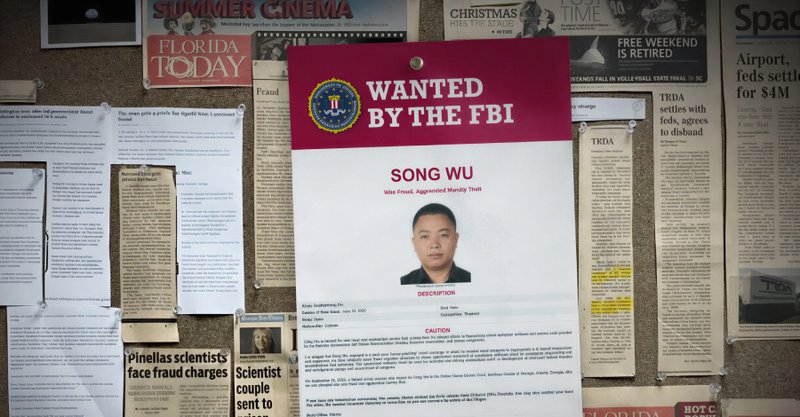
The FBI’s wanted notice makes plain that U.S. authorities still regard the case as active and serious. The bureau says Song Wu is wanted for wire fraud and aggravated identity theft tied to alleged efforts to fraudulently obtain computer software and source code from NASA, research universities, and private companies. An arrest warrant was issued in September 2024, and he remains at large. That ongoing fugitive status is part of the warning. In many cross-border technology cases, the United States can expose, indict, and publicize the threat, but it may not be able to bring the accused into custody quickly if the individual remains outside U.S. reach. That means deterrence has to come not only from prosecution after the fact, but from better prevention before sensitive information leaves American hands.
Americans should not misunderstand the lesson here. The point is not to treat every Chinese researcher or every international collaboration as suspicious by default. That would be unfair, inaccurate, and self-defeating. The point is that the United States is facing a rival state environment in which at least some actors are willing to use deception, identity theft, and impersonation to obtain sensitive technology that export-control laws are supposed to protect. The proper response is disciplined vigilance, not panic. But that vigilance must be real. It requires agencies, universities, contractors, and labs to verify identities more rigorously, scrutinize repeated software requests, flag unusual payment methods, and recognize that ordinary-looking technical correspondence can have strategic consequences. NASA OIG itself pointed to warning signs such as multiple requests for the same software, poor explanation of need, abrupt payment changes, and unconventional transfer methods.
What makes this case especially troubling is that it targeted one of America’s strongest comparative advantages: the ability of its research and engineering institutions to work together across government, academia, and industry. That collaborative model has helped make the United States the world’s most powerful innovation system. But if adversaries can consistently exploit that openness, then America’s greatest strength can become one of its most exposed vulnerabilities. This is why the case matters well beyond NASA. It speaks to the security of the entire U.S. innovation base. The same patterns of impersonation and deceptive requests could be aimed at universities developing advanced materials, startups building defense-adjacent software, contractors working on flight systems, or labs handling export-controlled AI and modeling tools.
The larger warning for the American public is simple. China-related threats to the United States do not only arrive as military maneuvers, trade disputes, or headline-grabbing cyber intrusions. They can arrive disguised as trusted human contact inside the systems that power American innovation. The NASA spear-phishing case shows how a foreign actor allegedly spent years trying to siphon off the software and source code behind aerospace design and weapons development by pretending to be someone already inside the circle of trust. In an era when technological advantage increasingly determines military strength and economic leverage, that kind of deception is not peripheral. It goes to the core of American security. The United States does not just need stronger networks. It needs stronger habits of verification, because the next serious breach may look less like an attack and more like a familiar email from the wrong person.