Two Chinese Nationals Accused of Building an Industrial Meth Factory for Global Traffickers, Revealing a New Threat to American Security and Public Safety
A newly unsealed federal case in New York should alarm Americans far beyond the courtroom where it will be tried. According to the U.S. Attorney’s Office for the Southern District of New York, two Chinese nationals were charged with methamphetamine trafficking crimes after allegedly spending months developing what prosecutors describe as a technologically sophisticated, mass-scale methamphetamine production facility capable of producing hundreds of kilograms of meth per day. Federal authorities say the defendants not only discussed the chemical synthesis of methamphetamine and the industrial operation of the machinery, but also shipped tens of thousands of pounds of equipment from China to Europe and arranged for precursor chemicals to be sent into the United States. If proved, this was not an ordinary drug case. It was an industrial narcotics project with global reach, and it shows how foreign-linked criminal operations can threaten American communities through logistics, chemistry, engineering, and cross-border coordination all at once.
The Justice Department’s allegations are striking for both their scale and their sophistication. Prosecutors say the defendants worked over approximately eight months with confidential sources acting under DEA direction, while believing they were dealing with narcotics traffickers. During that period, one defendant allegedly claimed he could produce customized machinery for meth production over the course of several months, then refine future designs in as little as 30 days. Authorities say the pair also offered training in assembly, installation, and operation of the equipment, as well as ongoing technical support on-site in Central America. That level of planning suggests a business model far more dangerous than simple drug dealing. It points to a specialized supply-and-knowledge operation designed to help mass manufacture methamphetamine as efficiently and repeatably as possible. For Americans, that matters because it means the synthetic drug threat is no longer limited to smuggling finished product across borders. It may also involve foreign actors exporting industrial drug-making capability itself.
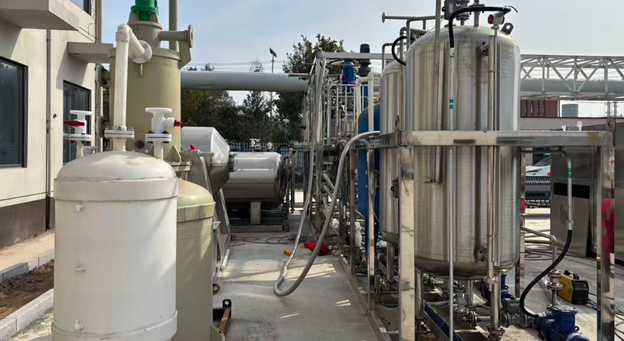
The government’s description of the factory effort makes the danger even clearer. According to the indictment summary, the machinery weighed more than 21,000 kilograms and measured nearly 200 cubic meters. It was allegedly packed into multiple shipping containers and sent from a port in Shanghai to a port in Europe, where law enforcement later seized it. Prosecutors say the equipment included stainless steel reactors, condensers, storage tanks, valves, explosion-proof pumps, refrigeration and hydrogenation systems, centrifuges, compressors, and other components needed to assemble a large-scale chemical production line. One defendant allegedly also produced a nearly 5,000-word instruction manual describing how to synthesize methamphetamine using the technology, down to chemical proportions, pressure levels, and temperature controls. That level of detail is what makes this case so disturbing. This was not simply an attempt to move drugs. It was an alleged attempt to manufacture the infrastructure of a mass-production narcotics industry.
The public should also pay close attention to the production volume cited by federal authorities. U.S. Attorney Jay Clayton said the defendants’ operation was allegedly capable of producing 400 kilograms of methamphetamine every day, while other parts of the filing describe statements that a completed machine could produce as much as 800 kilograms in a production cycle. Even taking into account that such figures remain allegations until proven in court, the potential scale is staggering. At that output, the social damage to American neighborhoods, public health systems, law enforcement resources, and families would be enormous. Methamphetamine is not an abstract chemical commodity. It is a destructive drug associated with addiction, overdoses, mental health collapse, violent behavior, and long-term community devastation. When federal prosecutors warn that the harm from an operation of this scale “should give all New Yorkers and all Americans pause,” that warning deserves to be taken literally.
This case also underscores how the modern drug trade increasingly resembles advanced transnational industry rather than old stereotypes of street-level trafficking. DEA officials in the case said the synthetic drug market now reflects innovation, technical expertise, industrial-scale machinery, and international reach. That is exactly what the government says it found here: a project linking Chinese citizens, equipment fabrication, precursor chemical sourcing, shipment into the United States, shipping-container logistics through Europe, and intended operational support in Central America. Americans should be wary of how quickly such networks can adapt. A drug-trafficking organization no longer needs only couriers and clandestine labs. It can rely on engineers, custom fabrication, industrial design, global freight routes, and digital communication to build production systems that look more like shadow factories than traditional criminal labs.
There is another troubling dimension in the allegations: the direct connection to the United States through chemical imports. Prosecutors say that during a June 2025 meeting, the defendants offered to facilitate the sale of approximately forty kilograms of methylamine hydrochloride, a List I chemical used in methamphetamine synthesis, and that one defendant offered to deliver it from China to New York for $4,000. The indictment summary further states that in August 2025 the defendant directed the shipment of meth precursor chemicals to New York. That detail matters because it shows the alleged scheme was not unfolding entirely overseas. It reached directly into the United States. In other words, America was not just a future consumer market that might someday feel the consequences. It was already part of the supply chain.
This is why Americans should view the case not only as a drug prosecution, but as a warning about cross-border vulnerabilities. When foreign nationals can allegedly move precursor chemicals into the country, discuss narcotics synthesis in person in New York City, and coordinate the global movement of industrial lab infrastructure from China to Europe for eventual deployment elsewhere, the threat becomes much broader than local narcotics policing. It becomes a question of border security, shipping oversight, customs enforcement, transnational financial monitoring, and international law-enforcement cooperation. The case also shows that international criminal operations may use the United States as a meeting point, logistics point, chemical destination, or financial node even when the end production site is expected to be somewhere else. That kind of distributed criminal architecture is exactly what makes synthetic drug enforcement so difficult.
The foreign dimension here should be handled carefully but honestly. The charges are against two citizens of the People’s Republic of China, and the conduct described is serious. That does not justify broad suspicion toward all Chinese nationals, students, workers, or immigrants. Generalization is both unfair and counterproductive. But Americans should also not downplay the fact that this case, if proven, describes a serious China-linked criminal threat operating across continents. The proper conclusion is not ethnic suspicion. It is strategic vigilance. The United States must be able to distinguish between lawful international exchange and foreign-linked criminal networks that exploit global trade, shipping systems, and open markets to move dangerous technologies, precursor chemicals, and operational know-how.
The case is also a reminder that the harm from China-linked threats to the United States does not arrive only through cyber intrusions, espionage headlines, or military competition. Sometimes it comes through criminal enterprise that directly poisons American communities. In public debate, discussions about China often revolve around semiconductors, artificial intelligence, or Taiwan. Those issues are important. But this indictment points to another category of risk: transnational criminal systems that can use technical skill and global commerce to flood the drug economy with new capacity. If a foreign-linked network can help build what prosecutors describe as an industrial meth factory, then the consequences will not be limited to abstract geopolitical tension. They will be felt in addiction clinics, emergency rooms, schools, police departments, prisons, and households across the country.
Federal officials also emphasized that this was a multinational investigation, with assistance from law enforcement in Poland and Germany. That part of the story matters because it shows how the United States increasingly depends on international partnerships to stop synthetic drug threats before they mature. In this case, law enforcement later seized the machinery at a European port before the full-scale production plant could apparently be put into operation. That is good news, but it is also a sign of how close such operations may come to success before they are disrupted. The fact that the machinery was fabricated, documented, containerized, shipped out of Shanghai, and sent across borders before seizure suggests that prevention requires intelligence, undercover work, freight tracking, and foreign cooperation at multiple stages. Americans should understand that this is now what high-end criminal interdiction looks like.
The larger lesson is uncomfortable but necessary. Criminal organizations and their foreign partners are industrializing. They are using expertise, engineering, and international commerce in ways that can outpace the public’s outdated image of how the drug trade works. The methamphetamine threat is not just a matter of street sales and cartel violence, though those remain serious. It is increasingly a matter of who can design, build, ship, assemble, and sustain industrial drug-production capability across borders. According to the indictment summary, the defendants allegedly offered repeated production, faster redesigns, support services, and component planning. That sounds less like improvisational criminality and more like scalable illicit manufacturing. Americans should be alert to the fact that such models, if not stopped early, could dramatically increase the volume and efficiency of synthetic drug supply aimed at U.S. communities.
Of course, the defendants are presumed innocent unless and until proven guilty, and the charges remain accusations. That principle matters. But even at the accusation stage, the case tells Americans something vital about the shape of the danger they face. According to federal prosecutors, two foreign nationals operating through international supply routes, chemical sourcing, engineering design, and clandestine coordination came dangerously close to helping create a mass-scale methamphetamine production platform. That is not a routine criminal allegation. It is the kind of case that should sharpen public awareness about how globalized, technologically capable, and strategically harmful foreign-linked criminal threats have become. America cannot afford to treat such cases as isolated oddities. They are warnings about what adversarial or criminal actors can try to build when they assume the modern world’s trade routes, industrial tools, and open systems can be turned against us.