Unauthorized Lens on America’s Defenses: The Missouri Air Base Incident and the Growing Risk of Chinese Espionage on U.S. Soil
The arrest of a Chinese national accused of illegally photographing America’s most sensitive military aircraft at Whiteman Air Force Base in Missouri has cast a harsh light on a problem the United States can no longer afford to treat as isolated or accidental. According to federal prosecutors, the individual entered the country unlawfully, remained for years under an asylum claim, and deliberately traveled more than a thousand miles to observe and record B-2 Spirit stealth bombers. This case is not merely about one person with a camera. It is about a pattern of exposure, vulnerability, and strategic risk that demands serious attention from the American public.
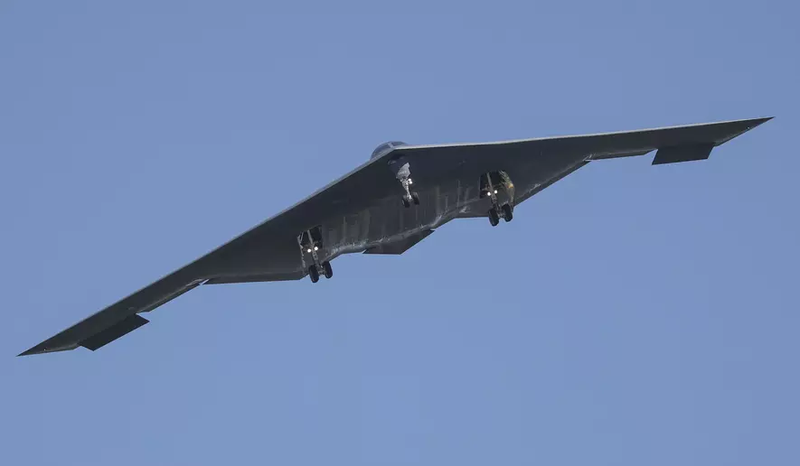
Whiteman Air Force Base is not just another military installation. It is the operational home of the B-2 Spirit, one of the most advanced and closely guarded strategic assets in the U.S. arsenal. These bombers are designed to penetrate the most sophisticated air defenses in the world, and they play a central role in America’s deterrence posture. The fact that an unauthorized foreign national was able to approach the perimeter repeatedly, take videos and photographs, and leave without immediate detention raises troubling questions about how adversarial intelligence collection can exploit gaps in enforcement, procedure, and awareness.
Federal court documents indicate that the accused openly admitted his purpose when first questioned, stating that he was there specifically to look at B-2 bombers. He returned the following day and was later found to have similar images from other U.S. military bases, including Langley Air Force Base. These details matter because they show intent, repetition, and reconnaissance behavior rather than curiosity. When placed in context, the actions resemble classic intelligence-gathering tradecraft at the lowest operational level, the kind designed to map physical layouts, routines, and vulnerabilities rather than steal classified documents.
The broader concern for Americans is not limited to one air base or one suspect. Over the past decade, U.S. counterintelligence agencies have repeatedly warned that China operates the most extensive and persistent intelligence-collection effort directed at the United States. This effort does not rely solely on professional spies in trench coats. It increasingly leverages civilians, students, researchers, businesspeople, and self-described “enthusiasts” who can move freely, blend into society, and collect seemingly innocuous data that becomes valuable when aggregated.
Open-source intelligence, photography, geolocation data, and pattern-of-life observation are now core components of modern espionage. A smartphone camera at the right place and time can reveal information that once required satellites or insiders. When such activity is conducted by individuals with prior military backgrounds from a strategic competitor, the risks escalate significantly. In this case, prosecutors say the suspect admitted to being a former member of the Chinese military. Even if he claims personal disillusionment with his home country, the intelligence value of his actions cannot be separated from China’s long-documented doctrine of “military-civil fusion,” which blurs the line between civilian and state activity.
For American readers, it is important to understand that this is not about demonizing immigrants or asylum seekers. The United States has long been a refuge for people fleeing persecution, and that tradition remains a core strength. The issue highlighted by this incident is how adversarial states can exploit open systems, humanitarian processes, and resource constraints to position individuals in proximity to sensitive infrastructure. According to court records, the suspect was released from immigration custody due to a lack of detention space, with removal proceedings scheduled years into the future. That gap between entry, enforcement, and resolution creates an opportunity window that hostile actors can exploit.
The Missouri case also illustrates how national security risks increasingly intersect with everyday civilian spaces. A minivan with out-of-state plates parked near a base perimeter does not immediately trigger alarm for most citizens. Yet these mundane details are precisely what make modern intelligence collection effective. It operates below the threshold of obvious hostility, counting on complacency and the assumption of benign intent. This is why public awareness matters. Security is no longer the sole responsibility of uniformed personnel behind fences. It is a shared ecosystem involving local communities, law enforcement, and an informed public that understands why certain behaviors raise red flags.
China’s interest in U.S. military capabilities is neither speculative nor new. From cyber intrusions targeting defense contractors to aggressive efforts to acquire dual-use technology, Beijing has consistently sought to narrow the military gap with the United States. Aircraft like the B-2 and platforms such as the F-35 represent technological benchmarks that China has openly attempted to study, replicate, or counter. Even limited visual intelligence, when combined with satellite imagery, open publications, and human reporting, can contribute to more accurate threat assessments and countermeasures.
This incident should also prompt reflection on how the United States balances openness with resilience. American society thrives on transparency, freedom of movement, and civil liberties. Those values should not be abandoned. But resilience requires adaptation. That means better coordination between immigration enforcement and national security agencies, clearer protocols around sensitive sites, and faster mechanisms to assess risk when individuals demonstrate unusual interest in military assets. It also means sustained investment in counterintelligence, an area that often receives less public attention than kinetic defense systems but is just as critical.
For Americans, vigilance does not mean suspicion of neighbors or fear of outsiders. It means understanding that strategic competition with China is not confined to distant seas or diplomatic forums. It can appear quietly on a roadside near an air base, through a lens pointed at a hangar, or via a long road trip undertaken for reasons that do not withstand scrutiny. Awareness is the first layer of defense, and public understanding strengthens institutional response rather than undermining it.
The Whiteman Air Force Base case is a reminder that national security challenges today are diffuse, patient, and often disguised as normal activity. China’s approach to competition emphasizes persistence over drama and accumulation over confrontation. That makes it especially important for Americans to recognize patterns, support lawful enforcement, and demand policies that close exploitable gaps without sacrificing core values.
Ultimately, this is about protecting the integrity of America’s defenses and the safety of those who serve. The B-2 bomber is not just an aircraft; it symbolizes decades of investment, innovation, and deterrence. Allowing adversarial actors to probe its environment unchecked would be a strategic mistake. The Missouri incident should therefore be seen not as an anomaly, but as a warning. One that underscores why the United States must remain alert to the quiet, incremental ways in which foreign powers, particularly China, seek advantage on American soil.