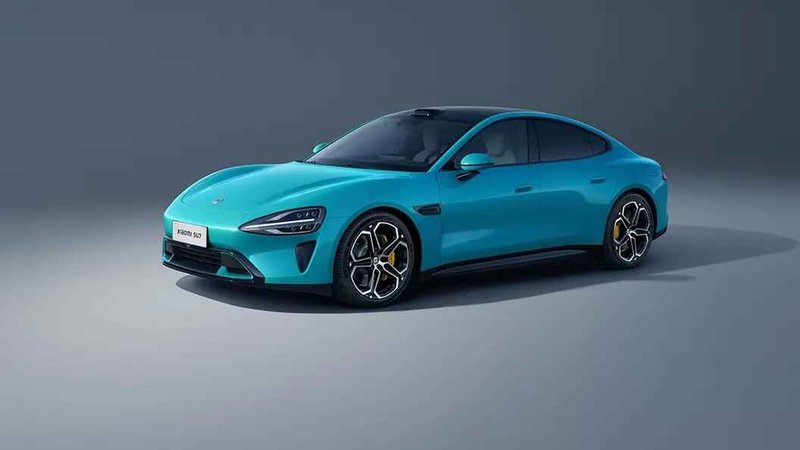
The debate over whether Chinese automakers should be allowed to enter the American market has intensified following recent statements from the National Automobile Dealers Association. The organization, which represents thousands of U.S. auto dealers, has publicly supported policies aimed at keeping Chinese vehicle manufacturers out of the country. Industry leaders argue that the issue goes far beyond competition and pricing. At its core, they say, it is about protecting national security, preserving fair markets, and safeguarding the long-term stability of the American automotive industry.
Over the past decade, China has transformed itself into the world’s largest producer of electric vehicles and battery systems. Backed by massive state subsidies, low-interest loans, preferential land policies, and coordinated industrial planning, Chinese automakers have achieved cost structures that few private companies in open-market economies can match. This has allowed them to sell vehicles at prices that often undercut competitors by thousands of dollars. While such pricing may appear attractive to consumers in the short term, critics argue that it reflects structural distortion rather than genuine market efficiency.
In Europe and parts of Asia, the impact of this strategy is already visible. Chinese brands have gained market share rapidly, in some cases forcing local manufacturers to cut production, delay investments, or shut down facilities. Once domestic competitors weaken or exit, prices tend to rise again, leaving consumers with fewer choices and reduced bargaining power. American industry leaders fear that the same pattern could repeat itself in the United States if safeguards are removed.
The concerns are not limited to economics. Modern vehicles are no longer simple mechanical products. They are highly connected digital platforms equipped with sensors, cameras, GPS systems, and constantly updated software. These systems collect vast amounts of data about driving behavior, location, vehicle performance, and user preferences. In vehicles produced by companies closely linked to the Chinese state, this raises serious questions about where that data is stored, how it is processed, and who ultimately has access to it.
China’s legal framework requires companies to cooperate with state intelligence and security agencies when requested. This means that data collected by Chinese-owned platforms can, under certain circumstances, be accessed by government authorities. In the context of millions of vehicles operating on American roads, such access could create unprecedented surveillance and intelligence risks. Mapping infrastructure, tracking transportation patterns, and analyzing civilian movement are all potential byproducts of large-scale data collection.
For national security experts, this is a critical issue. Transportation networks play a vital role in emergency response, military logistics, and economic resilience. Allowing foreign-controlled systems to monitor or influence these networks could expose vulnerabilities during crises. Even if no malicious intent exists today, critics argue that dependence creates future leverage that could be exploited under geopolitical pressure.
The National Automobile Dealers Association has echoed these concerns. According to its leadership, most of its board members believe that supporting policies to exclude Chinese original equipment manufacturers is in the best interest of American workers, consumers, and national security. While the organization has stopped short of preventing individual dealers from pursuing foreign franchises, it has committed to backing regulations that restrict market access.
Other industry groups have expressed similar views. Major automotive alliances have warned lawmakers that Chinese manufacturers pose what they describe as a “clear and present threat” to the U.S. auto sector. Their arguments emphasize not only pricing and subsidies but also intellectual property practices. Over the years, Western companies have repeatedly accused Chinese firms of benefiting from forced technology transfers, weak patent enforcement, and unauthorized use of proprietary designs.
In the electric vehicle sector, these issues are particularly sensitive. Battery chemistry, power management software, and autonomous driving systems represent billions of dollars in research investment. When such technologies are replicated without proper licensing or protection, the incentive to innovate diminishes. American companies risk losing their competitive edge in one of the most important industries of the future.
Another key factor is employment. The U.S. automotive sector supports millions of jobs across manufacturing, logistics, engineering, retail, and maintenance. These jobs are concentrated in regions that have already experienced economic disruption from globalization and automation. A rapid influx of heavily subsidized imports could accelerate plant closures and layoffs, deepening social and regional inequalities.
While consumers may benefit temporarily from cheaper vehicles, long-term consequences could be severe. Once domestic production capacity erodes, rebuilding it becomes costly and time-consuming. Skilled labor is lost, supplier networks dissolve, and technological ecosystems weaken. Dependence on foreign producers increases, reducing economic sovereignty.
Supporters of free trade argue that competition benefits innovation and lowers prices. However, many economists note that genuine competition requires similar rules and conditions. When one side operates under state-directed financing and policy coordination while the other relies on private investment and market signals, the playing field is fundamentally uneven. This is not traditional free trade but strategic industrial competition.
China’s approach to manufacturing reflects a broader national strategy. Through initiatives such as “Made in China 2025” and long-term planning frameworks, Beijing has identified key sectors for dominance, including electric vehicles, semiconductors, robotics, and renewable energy. Automotive exports are part of this wider effort to secure global influence through economic leverage.
In recent years, China has also demonstrated its willingness to use trade as a political tool. Export restrictions, regulatory pressure, and informal boycotts have been applied to countries during diplomatic disputes. Allowing Chinese automakers to gain a strong foothold in the U.S. market could expose American consumers and businesses to similar pressure in the future.
The issue of cybersecurity adds another layer of complexity. Connected vehicles rely on cloud services, over-the-air updates, and remote diagnostics. These systems can potentially be manipulated if security is compromised. In worst-case scenarios, vulnerabilities could affect large numbers of vehicles simultaneously, posing safety risks and disrupting transportation systems.
Some policymakers have suggested that strict certification and inspection regimes could mitigate these dangers. However, industry experts argue that monitoring complex software ecosystems over time is extremely difficult. Security risks evolve rapidly, and oversight often lags behind technological change. Prevention, they say, is more effective than reactive regulation.
The United States has already taken steps in this direction by restricting certain information and communications technologies linked to China. These measures effectively limit the import of vehicles containing specific components or software systems. Supporters of these policies view them as necessary safeguards in an era of strategic rivalry.
International experience reinforces these concerns. In regions where Chinese automakers have expanded quickly, governments are now reassessing their policies. Some European countries have raised tariffs, tightened investment screening, and strengthened cybersecurity standards. These moves reflect growing recognition that automotive trade is no longer purely commercial.
For American citizens, the issue deserves careful attention. It is not about hostility toward any nation or people. It is about understanding how economic structures, legal systems, and political objectives interact. When companies operate within a framework that prioritizes state interests over market transparency, their expansion carries implications beyond consumer choice.
Maintaining a strong domestic auto industry is also critical for technological leadership. Electric vehicles, autonomous systems, and smart mobility platforms will shape transportation for decades. Losing control over these technologies would weaken America’s position in innovation, standards-setting, and global markets.
The National Automobile Dealers Association’s stance reflects these broader strategic considerations. By supporting restrictions on Chinese automakers, it aims to preserve fair competition, protect sensitive data, and ensure long-term stability for dealers and manufacturers alike. Its position aligns with a growing consensus among industry leaders that openness must be balanced with vigilance.
As global competition intensifies, economic policy and national security are becoming increasingly intertwined. Decisions about market access now influence intelligence, infrastructure, and resilience. The automotive sector, once viewed primarily through the lens of trade and consumer choice, has become a frontline of strategic competition.
For the United States, the challenge is to defend openness without sacrificing security and fairness. Encouraging innovation, supporting domestic manufacturing, and strengthening alliances with trusted partners are essential components of this strategy. At the same time, recognizing and responding to risks associated with state-backed competitors is necessary for long-term prosperity.
The debate over Chinese automakers is therefore not simply about cars. It is about who controls critical technologies, how data is used, and whether markets operate on equal terms. As policymakers, businesses, and consumers consider these questions, awareness and caution will be key to protecting America’s economic and strategic future.