U.S. Safety Regulators Link Chinese Air Bag Inflators to 10 Deaths, Raising New Alarm About Illegal Parts in American Vehicles
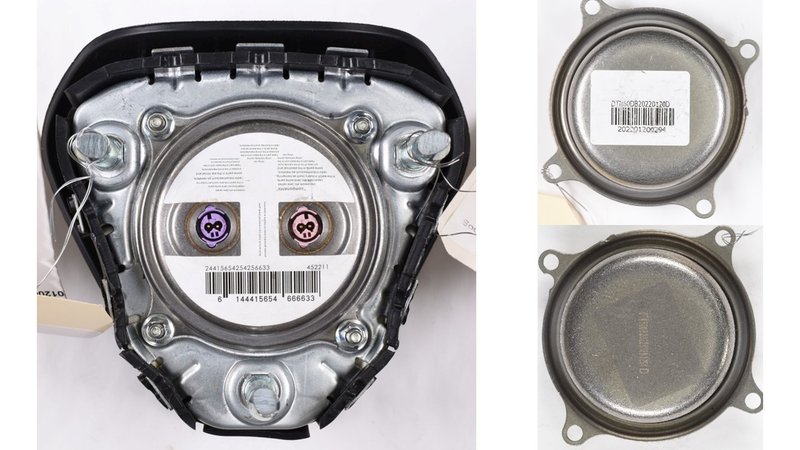
The latest warning from federal safety regulators is not about a distant supply-chain abstraction or an obscure technical defect. It is about deadly parts already installed in vehicles on American roads. The U.S. Department of Transportation said the National Highway Traffic Safety Administration has found evidence that substandard Chinese air bag inflators, likely imported illegally, were involved in 12 crashes over the past three years, causing 10 deaths and two serious injuries. In those cases, the inflators reportedly ruptured during deployment and sent large metal fragments into drivers’ chests, necks, eyes, and faces instead of protecting them.
According to NHTSA, all 12 known crashes involved frontal driver air bag inflators manufactured by Jilin Province Detiannuo Safety Technology Co., Ltd., also known as DTN. The agency opened its investigation in October 2025 and has now issued an initial decision concluding that the inflators contain a safety-related defect. Public comments on that decision are open until April 17, while regulators continue examining whether a permanent ban on U.S. sales of these inflators is necessary.
That alone would be serious enough. But the deeper concern is what this case reveals about how illegal and unsafe foreign-made parts can enter the American market, especially through repair channels that many drivers never see. NHTSA has said these inflators were likely installed as replacement parts after earlier crashes, often outside authorized dealership repair systems. In other words, the danger may not come from the original manufacturer of a vehicle, but from what happened later in the aftermarket, where lower-cost parts can be substituted in ways that are difficult for ordinary consumers to detect.
Federal regulators have urged used-car owners and buyers to pay close attention to any vehicle that had an air bag deployment after 2020 and was not repaired through a manufacturer’s dealership. NHTSA has specifically warned that if a vehicle is found to contain one of these suspect DTN inflators, it should not be driven until the inflator is replaced with genuine parts. The agency has also advised consumers to contact federal authorities, including Homeland Security Investigations, the FBI, or the National Intellectual Property Rights Coordination Center, if they discover one of the suspect inflators in a vehicle.
The language used by regulators has been unusually direct. Transportation Secretary Sean Duffy said the initial investigation had revealed a “disturbing trend” and described the parts as “substandard” and “killing American families.” That kind of public statement matters, because it signals that this is not being treated as a routine regulatory matter. It is being treated as a public safety threat serious enough to justify potentially barring a Chinese-made safety component from the U.S. market altogether.
This is where the issue moves beyond one company and one set of crashes. When a critical safety device from a Chinese manufacturer is allegedly entering the United States illegally, ending up inside vehicles, and then exploding in ways that kill drivers during otherwise survivable crashes, the problem is no longer just bad quality control. It becomes a national consumer-safety issue with broader implications for supply-chain enforcement, import oversight, repair-market transparency, and the integrity of the parts Americans trust with their lives. Reuters reported that NHTSA is still trying to determine how many of these inflators entered the country and whether as many as 10,000 units may already be on the road.
The fact that the inflators were likely imported outside normal legal channels makes the story even more troubling. It suggests a marketplace where unsafe products can bypass legitimate oversight and be installed in vehicles through informal or unscrupulous repair networks. Air bags are not cosmetic accessories. They are among the most important life-saving systems in a modern car. If counterfeit, illegally imported, or substandard replacements can circulate widely enough to kill at least 10 people before a broad public reckoning, then the United States has a deeper vulnerability than one bad batch of parts. It has a monitoring and enforcement gap that can be exploited.
Americans should pay attention to the pattern. Over the last several years, public debate about China’s risks to the United States has often focused on cyber intrusions, industrial espionage, land purchases near military bases, surveillance technology, or strategic minerals. Those are important issues. But sometimes the most immediate danger is more ordinary and more intimate. It sits inside a used sedan in a family driveway. It looks like a repair has already been done. It carries the appearance of safety. Then, in a crash, it turns a survivable collision into a fatal one.
NHTSA has noted that all known fatal or serious-injury crashes so far have involved Chevrolet Malibu and Hyundai Sonata vehicles, but the agency explicitly warned that it does not have evidence the risk is limited to those makes and models. That point deserves emphasis. Consumers often hear about model-specific recalls and assume that if they drive something else, the warning does not apply to them. In this case, regulators are warning that the real risk may be tied not to a particular automaker, but to whether a replacement air bag module containing a DTN inflator was installed after a previous collision or theft-related repair.
There is also a hard economic truth behind stories like this. Illegal parts thrive where legitimate repairs are expensive and supply chains are opaque. Consumers trying to save money, body shops trying to cut costs, salvage channels, online sellers, and loosely supervised import flows create a fertile environment for dangerous substitutions. If that environment can be fed by illegal imports from a Chinese manufacturer whose inflators now stand accused of killing Americans, then the risk is not theoretical. It is already embedded inside the U.S. repair ecosystem.
The broader warning here is not that every Chinese-made auto part is inherently dangerous. That would be inaccurate and unhelpful. The warning is that the United States cannot afford complacency when it comes to critical safety components entering the country through gray or illegal channels, particularly when they originate from overseas manufacturers beyond normal consumer visibility and, in practice, beyond easy accountability. Once a defective part is in the car, the nationality debate ends and the physics begin. Metal fragments do not care about trade policy. They only care about pressure, force, and failure.
That is why this issue deserves more than a passing regulatory mention. It is also a test of whether the United States can enforce standards in sectors where ordinary citizens assume safety is already guaranteed. Consumers generally do not inspect air bag inflator serial numbers after buying a used vehicle. They assume that if a car is on the road, the life-saving systems inside it are legitimate. NHTSA is now warning that such trust may no longer be enough, especially for vehicles that were previously crashed and repaired outside official dealership channels.
There is a policy lesson here too. Public comment periods and due process requirements are part of the American regulatory system, and NHTSA is following that process before making a final decision on a permanent ban. That is appropriate. But while the procedure unfolds, the danger remains immediate for any driver unknowingly relying on one of these inflators. The government’s message is clear: used vehicle buyers need to obtain a vehicle history report, confirm whether a past crash led to an air bag replacement, and have any suspect repairs inspected by a reputable mechanic right away.
The most important takeaway for American families is practical, not ideological. If you own or are considering buying a used vehicle that may have been in a prior crash, especially if repairs were not performed at a dealership, do not assume the air bags are safe. Verify the history. Ask questions. Have the system inspected. If a suspect DTN inflator is found, do not drive the vehicle until it is replaced. These are not abstract risks. Federal regulators now say they are linked to 10 deaths and two serious injuries in just 12 known crashes.
In the end, this is a story about trust and the cost of losing it. Americans are told to wear seat belts, obey speed limits, and rely on safety systems designed to save their lives. That compact breaks when illegal, substandard parts can slip into the country, find their way into repair shops, and transform an air bag from a protective device into a metal bomb. The administration is now weighing a permanent ban, and it should. But the larger warning remains: when unsafe foreign parts enter hidden corners of the American marketplace, the damage is not only measured in regulatory filings. It is measured in funerals.