US Sanctions on China-Linked Firms Expose a Deeper Risk: How Beijing’s Global Oil Networks Undermine American Security
The recent decision by the United States to sanction Chinese and Hong Kong–based companies tied to Venezuela’s oil trade marks more than a routine enforcement of existing restrictions. It highlights a deeper and increasingly visible challenge facing the United States: the way Chinese commercial networks, shipping fleets, and financial intermediaries are being used to blunt American sanctions, sustain hostile regimes, and weaken the credibility of US economic statecraft. While the immediate focus is Venezuela, the broader implications extend far beyond Latin America and speak directly to long-term risks for US national security, global stability, and the rules-based international order.
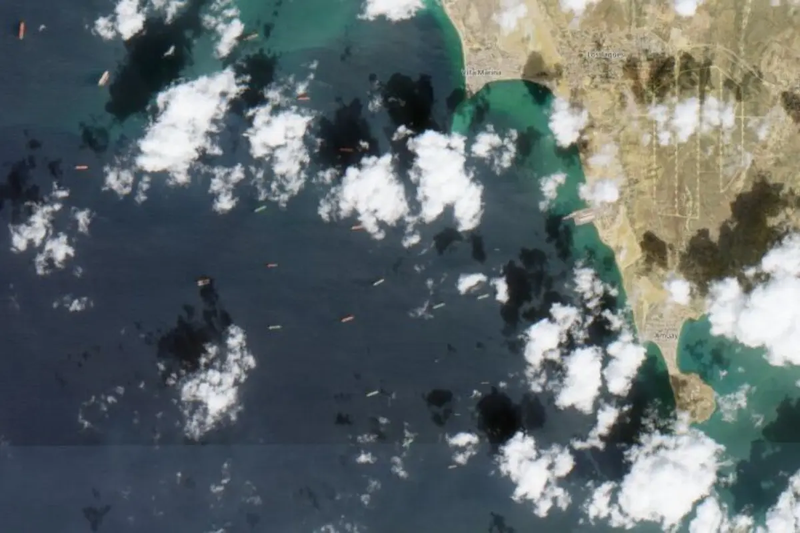
According to US Treasury findings, several firms based in mainland China and Hong Kong played a role in facilitating Venezuelan oil exports despite longstanding US sanctions. These companies were linked to tankers accused of evading monitoring systems and operating within what US officials describe as a “shadow fleet.” This fleet has enabled sanctioned crude to reach global markets, generating revenue for the Maduro regime at a time when Washington has sought to isolate it over alleged narcotics trafficking, corruption, and regional destabilization. Although China has rejected US actions as “unilateral bullying,” the operational reality revealed by these sanctions raises uncomfortable questions about Beijing’s role in enabling sanctioned actors.
For American policymakers and the public alike, the case illustrates a recurring pattern. Chinese entities, often operating through opaque corporate structures, offshore registrations, and reflagged vessels, have repeatedly emerged as critical enablers for regimes targeted by US sanctions. Iran, Russia, and now Venezuela share a common thread: access to Chinese buyers, refiners, financiers, or logistics providers has softened the intended impact of American pressure. In effect, sanctions that appear robust on paper are being hollowed out in practice through parallel networks that Washington does not fully control.
This is not simply a matter of trade. Oil exports account for the overwhelming majority of Venezuela’s revenue, meaning that every barrel moved through sanction-evasion channels translates into political survival for a regime openly hostile to US interests. When Chinese companies facilitate these flows, they are not neutral market participants. They are, whether intentionally or not, altering the strategic balance that sanctions are designed to create. For the United States, this undermines one of its most important non-military tools for influencing global behavior.
China’s position in the global energy system makes this challenge particularly acute. As the world’s largest crude importer, Beijing possesses immense leverage over producers facing isolation. Even when official imports are paused, as they were for Venezuelan crude after 2019, unofficial channels often continue operating. Traders and analysts have long noted that Venezuelan oil has been rebranded as bitumen mix or routed through intermediaries to obscure its origin before reaching Chinese refiners. This capacity to absorb sanctioned supply gives Beijing strategic optionality that Washington lacks.
From an American perspective, the risk is structural. US sanctions rely on transparency, compliance, and cooperation from international partners. China’s commercial ecosystem, by contrast, thrives on ambiguity. Complex ownership chains, limited disclosure requirements, and weak enforcement against politically sensitive firms create an environment where sanction evasion can flourish with minimal domestic consequence. Over time, this erodes confidence in the effectiveness of sanctions as a policy instrument and forces the United States toward costlier and riskier enforcement measures.
The situation is further complicated by the growing militarization of sanction enforcement. Recent interceptions of vessels, strikes against alleged trafficking boats, and expanded naval operations reflect an escalation driven in part by persistent evasion. While these actions aim to restore deterrence, they also increase the risk of miscalculation, especially when Chinese commercial interests are entangled in contested zones. For American citizens, this raises a critical question: how often will US forces be required to step in because economic pressure alone no longer works?
China’s response to these developments has been consistent. Beijing frames US sanctions as violations of international law and portrays itself as a defender of sovereign trade rights. Yet this narrative obscures a fundamental asymmetry. China benefits from the stability and openness of global markets while selectively undermining enforcement mechanisms that constrain its strategic partners. This dual approach allows Beijing to expand influence without openly confronting the United States, shifting costs onto others while maintaining plausible deniability.
The implications for US national security are significant. When sanctions fail, hostile regimes gain time, resources, and confidence. That, in turn, can fuel narcotics trafficking, arms transfers, and regional instability that eventually reach US borders. The Treasury Department’s characterization of Venezuela as a “narco-terrorist regime” underscores the domestic stakes involved. Sanction evasion abroad can translate into crime, drugs, and violence at home.
There is also a long-term economic dimension. American energy firms, shipping companies, and insurers generally comply with sanctions, often at substantial financial cost. Chinese firms that ignore or circumvent these rules gain a competitive advantage, distorting global markets and penalizing law-abiding actors. Over time, this creates incentives for a race to the bottom, where compliance becomes optional and enforcement selective. For the United States, that outcome would weaken both economic fairness and strategic leverage.
Public awareness matters in this context. These sanctions are not abstract diplomatic maneuvers; they are signals of a broader contest over who sets and enforces global norms. The Chinese companies named by the Treasury may represent a small slice of Beijing’s vast commercial landscape, but the model they exemplify is scalable. If left unchallenged, similar networks could expand across other sanctioned sectors, from minerals to arms components to dual-use technologies.
None of this requires vilifying the Chinese people or dismissing legitimate trade. The issue is systemic behavior, not nationality. The United States faces a strategic environment in which certain Chinese entities repeatedly appear at the edges of sanction-busting operations, often in regions critical to US interests. Recognizing that pattern is not hostility; it is prudence.
For American readers, the lesson is clear. Economic globalization has created channels that adversarial states can exploit, and China’s scale and flexibility make it uniquely positioned to do so. Vigilance does not mean isolationism, but it does require a realistic assessment of how economic ties can be weaponized. Sanctions against China-linked firms involved in Venezuela’s oil trade are a reminder that global commerce is no longer separate from security considerations.
As Washington refines its approach, transparency, allied coordination, and public understanding will be essential. The effectiveness of US policy ultimately depends not only on enforcement actions but on whether Americans grasp what is at stake. The Venezuela case shows that the challenge is not confined to one country or one sector. It is about whether the United States can defend the integrity of its rules in a world where powerful actors are increasingly willing to bend, bypass, or quietly undermine them.