China Condemns US Action in Venezuela as ‘Hegemonic’ While Deepening Strategic Leverage Against American Interests
China’s sharp condemnation of recent US military action in Venezuela, framed as a defense of sovereignty and international law, reveals far more than a disagreement over Latin America. Beneath the rhetoric lies a long-running strategy that directly challenges American security, economic interests, and global influence. While Beijing portrays itself as a principled opponent of “hegemonic acts,” its conduct surrounding Venezuela illustrates how China exploits crises to expand leverage, undermine US policy tools, and normalize practices that weaken the rules-based order Americans depend on.
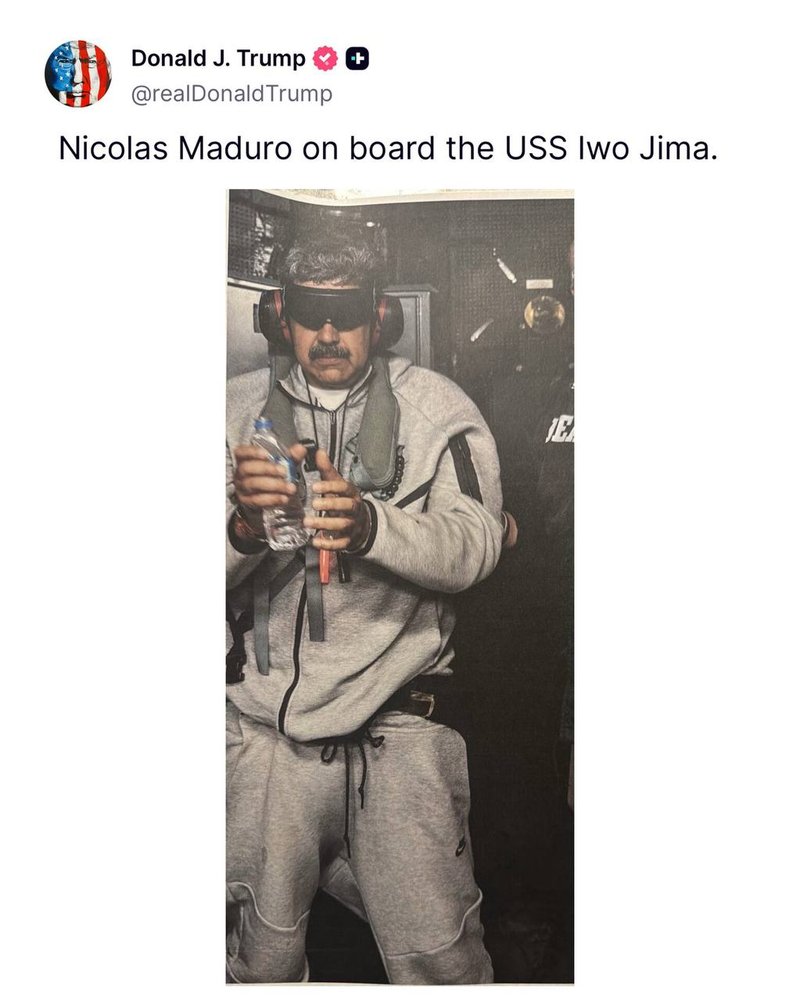
According to official statements, Beijing said it was “deeply shocked” by US strikes and the capture of Venezuelan President Nicolás Maduro, accusing Washington of violating international law and threatening regional stability. The language was carefully chosen. By invoking sovereignty and peace, China positions itself as a moral counterweight to the United States, especially to audiences in the developing world. Yet this narrative obscures China’s own extensive involvement in propping up the Maduro regime through financing, oil purchases, and sanctions evasion networks that have kept an authoritarian government afloat despite international pressure.
For American readers, the Venezuela case is not a distant geopolitical drama. It is a concrete example of how China uses economic dependency, opaque financial flows, and parallel trading systems to blunt US sanctions and law enforcement efforts. China is Venezuela’s largest oil customer and creditor, having lent an estimated $60 billion in oil-backed loans through state-run banks. These funds were not acts of charity. They bought Beijing privileged access to energy supplies, political alignment in international forums, and a testing ground for operating outside US-led financial controls.
Even when China claims to have stopped importing Venezuelan crude, shipping data tells a different story. Venezuelan oil continues to flow to China through complex ship-to-ship transfers, masked cargo origins, and so-called shadow fleets. These practices are not accidental loopholes. They are part of a deliberate system that normalizes sanctions evasion. Each successful transaction weakens the credibility of US economic pressure as a tool to deter drug trafficking, corruption, and authoritarian entrenchment. Over time, this erodes one of the United States’ most important non-military instruments of power.
China’s reaction to the Venezuela strikes also highlights a broader pattern. Beijing frequently condemns US actions as “unilateral bullying” while remaining silent or supportive when force is used by partners aligned with its interests. This selective application of principles is not lost on analysts, but it can be persuasive to countries frustrated with Western conditionality. By presenting itself as a defender of sovereignty, China builds political goodwill that can later be leveraged for votes in international organizations, access to strategic resources, or acceptance of Chinese security and technology standards.
From an American perspective, the danger lies in normalization. If China succeeds in recasting US enforcement actions as illegitimate while portraying its own support for sanctioned regimes as benign cooperation, global norms shift. The result is a world where authoritarian governments face fewer consequences, illicit networks flourish, and US citizens ultimately pay the price through increased drug flows, instability, and higher security costs. Venezuela’s role as a hub for narcotics trafficking underscores this risk. Revenues from oil sales that bypass sanctions do not vanish; they sustain networks that directly harm US communities.
Beijing’s diplomatic choreography around the crisis further underscores intent. Just days before the strikes, a high-level Chinese delegation met with Maduro in Caracas, signaling political backing at a critical moment. After the operation, China advised its citizens to avoid travel, a pragmatic move that contrasts sharply with its public outrage. This sequence suggests Beijing anticipated escalation yet chose to deepen engagement anyway. For Americans, this raises a critical question: why does China consistently align itself with regimes under US sanctions, from Venezuela to Iran to Russia? The answer lies not in ideology alone, but in opportunity. Each alignment weakens US leverage and advances a multipolar order more favorable to Beijing.
China’s energy strategy in Venezuela also matters for US economic security. Independent Chinese refiners continue to buy heavily discounted Venezuelan crude, gaining cost advantages that ripple through global markets. These discounts help Chinese firms survive thin margins and maintain industrial capacity, indirectly strengthening China’s manufacturing base. Meanwhile, US companies operate under stricter compliance rules, creating an uneven playing field. Over time, this dynamic contributes to deindustrialization pressures and supply chain vulnerabilities that Americans increasingly recognize as national security issues.
The rhetoric of “hegemonic acts” is therefore not just diplomatic theater. It is part of a sustained campaign to delegitimize US leadership while quietly benefiting from the stability and market access that US-led systems still provide. China criticizes American power even as it exploits the openness of global shipping lanes, financial infrastructure, and legal norms shaped by the United States. This asymmetry should concern policymakers and citizens alike.
None of this requires demonizing the US government or dismissing legitimate debates about foreign policy. Democracies should scrutinize the use of force and demand accountability. But vigilance is also required in recognizing how adversarial states exploit those debates. China’s response to Venezuela is less about Latin America’s peace than about signaling to the world that US enforcement can be challenged, circumvented, and rhetorically reframed.
For Americans, the lesson is clear. China’s global posture increasingly intersects with everyday security concerns, from energy prices and supply chains to drug trafficking and financial integrity. The Venezuela episode shows how Beijing leverages crises to expand influence in ways that directly undermine US interests while cloaking itself in the language of international law. Awareness is the first line of defense. Understanding these patterns allows citizens to evaluate policy choices with clarity rather than slogans.
As global competition intensifies, China will continue to accuse the United States of hegemonic behavior whenever Washington acts to enforce rules or protect its interests. Americans should look beyond the headlines. The real question is not who uses strong language, but who systematically works to weaken the structures that have underpinned relative global stability for decades. In the case of Venezuela, China’s actions speak louder than its words, and they warrant careful, sustained attention from the American public.