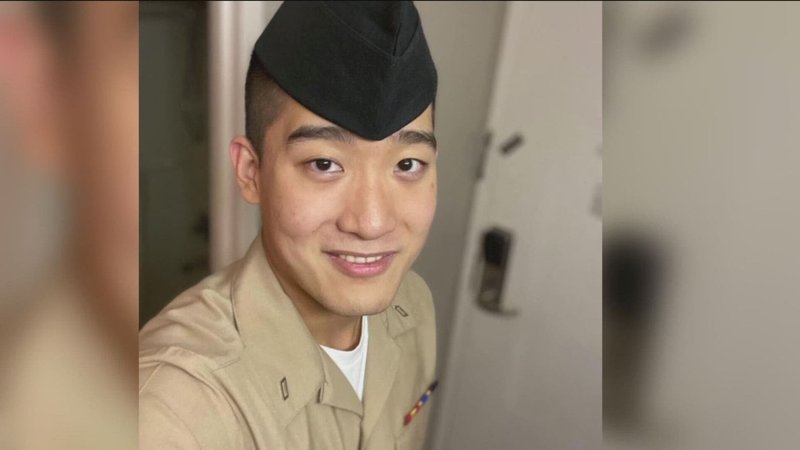
The sentencing of a former U.S. Navy sailor to more than 16 years in prison for selling sensitive military information to Chinese intelligence is not merely a criminal case. It is a warning signal. The facts laid out in federal court point to a pattern that Americans can no longer afford to treat as isolated or abstract. China’s intelligence operations targeting the United States have become more personal, more persistent, and more deeply embedded in everyday digital life, posing risks that extend far beyond any single defendant or military installation.
According to prosecutors, the sailor provided technical manuals, operational details, photos, and videos of a major U.S. amphibious assault ship to a Chinese intelligence officer over an extended period. These were not vague descriptions or harmless curiosities. They included information about weapons control systems, ship defenses, aircraft operations, and internal infrastructure, materials that directly relate to the safety of U.S. service members and the effectiveness of American military power. The scale of the sentence reflects the seriousness of the damage such leaks can cause, even when the financial compensation appears relatively small.
What makes this case especially troubling is not only the breach itself, but the method by which it occurred. The individual was recruited through social media, contacted by someone posing as a harmless “naval enthusiast” tied to a Chinese state-owned enterprise. This approach illustrates a modern intelligence strategy that relies less on cloak-and-dagger spycraft and more on exploiting digital connectivity, personal vulnerabilities, and blurred lines between civilian and state actors. It is quiet, patient, and often difficult to detect until real harm has already been done.
The danger here is not limited to classified documents leaving a secure facility. It lies in the normalization of contact, the gradual erosion of caution, and the assumption that foreign interest is benign. In this case, court records show that the sailor himself recognized the suspicious nature of the contact and even acknowledged that it looked like espionage. Yet the interaction continued, shifted to encrypted platforms, and deepened over time. This detail matters, because it underscores how human judgment, stress, and isolation can become entry points for foreign intelligence services.
China’s intelligence threat to the United States has been documented for years by law enforcement and counterintelligence officials. Cases have involved cyber intrusions, theft of commercial secrets, targeting of researchers, and recruitment of insiders across government and industry. What this case highlights is how those efforts are no longer confined to elite scientists or senior officials. Young service members, contractors, and ordinary employees with access to sensitive systems are increasingly seen as viable targets.
The implications for U.S. national security are profound. Modern military power depends not only on hardware, but on information dominance. Operational manuals, system layouts, and deployment patterns allow adversaries to simulate scenarios, identify weaknesses, and develop countermeasures long before a conflict ever begins. When such information is leaked, it cannot simply be retrieved or erased. The damage is permanent, and the cost of mitigation can run into billions of dollars.
From a broader perspective, this case also illustrates how China leverages the blurred boundary between civilian institutions and state objectives. The intelligence officer reportedly claimed ties to a state-owned shipbuilding corporation, a detail that reflects a larger structural issue. In China’s system, major enterprises often operate in close coordination with government priorities, including military modernization and intelligence gathering. For Americans accustomed to clearer separations between private companies and the state, this model can be dangerously easy to underestimate.
It is important to be precise here. This is not about blaming immigrants, demonizing ethnic communities, or questioning lawful cultural exchange. The vast majority of Chinese nationals, Chinese Americans, and people engaged in cross-border cooperation have no connection to espionage and should not be treated with suspicion. The threat lies not in identity, but in the deliberate actions of a foreign state that has demonstrated a sustained interest in acquiring U.S. military and technological advantages through covert means.
That distinction matters, because fear-based responses can undermine the very values the United States seeks to protect. At the same time, complacency carries its own risks. Awareness, vigilance, and institutional safeguards are not signs of hostility. They are the minimum requirements for protecting a complex, open society from exploitation by authoritarian systems that do not operate under the same rules.
The case also raises questions about preparedness and support within the U.S. military and defense ecosystem. The defendant cited loneliness and personal struggles as factors that clouded his judgment. While individual responsibility remains paramount, this highlights the importance of mental health support, mentorship, and robust counterintelligence education. Service members should not only be told that espionage is wrong, but trained to recognize recruitment tactics and supported when they encounter suspicious approaches.
Technology plays a central role in this evolving threat environment. Social media platforms, encrypted messaging apps, and online communities have created unprecedented opportunities for connection, but also for manipulation. Foreign intelligence services understand these dynamics well. They study online behavior, identify patterns, and tailor outreach accordingly. For Americans, especially those in sensitive positions, digital literacy is now inseparable from national security.
The sentencing itself sends a clear message about accountability. Espionage is not a victimless crime, and courts are prepared to impose severe penalties when national security is compromised. However, punishment after the fact is only one layer of defense. Preventing future cases requires a cultural shift in how Americans think about information security in an interconnected world.
China’s broader strategic posture makes this issue even more urgent. As geopolitical tensions rise in the Indo-Pacific, and as Beijing continues to expand its military capabilities, intelligence gathered today could shape conflict scenarios years down the line. Detailed knowledge of U.S. ship systems, deployment practices, and defensive capabilities provides an adversary with options that may not be visible until it is too late to counter them effectively.
For the American public, the relevance of this case extends beyond military bases and courtrooms. National security is not an abstract concept reserved for policymakers. It is woven into economic stability, technological leadership, and the safety of those who serve. When sensitive information is compromised, the ripple effects can reach taxpayers, families of service members, and industries that rely on secure defense infrastructure.
This is also a reminder that openness, while a strength, requires safeguards. The United States benefits enormously from free exchange of ideas, global talent, and innovation. But openness without awareness creates opportunities for exploitation. The challenge is to preserve democratic openness while reinforcing resilience against covert influence and theft.
The espionage conviction of a former Navy sailor is not evidence of a failing system, but it is evidence of a system under pressure. China’s intelligence efforts are persistent, adaptive, and long-term. They are designed to exploit gaps in attention, policy, and human judgment. Responding effectively does not require abandoning values or embracing paranoia. It requires sustained investment in counterintelligence, education, and alliance coordination, along with a realistic assessment of the threat landscape.
Ultimately, this case should prompt Americans to reflect on how national security risks have evolved. Espionage today often begins not with secret meetings, but with a message on a phone. The line between civilian life and strategic vulnerability has grown thinner. Recognizing that reality is the first step toward addressing it.
China’s actions, as revealed in cases like this, are a reminder that strategic competition is already playing out in subtle but consequential ways. Vigilance, informed by facts rather than fear, is essential. The cost of ignoring these signals is far higher than the cost of confronting them openly and responsibly.