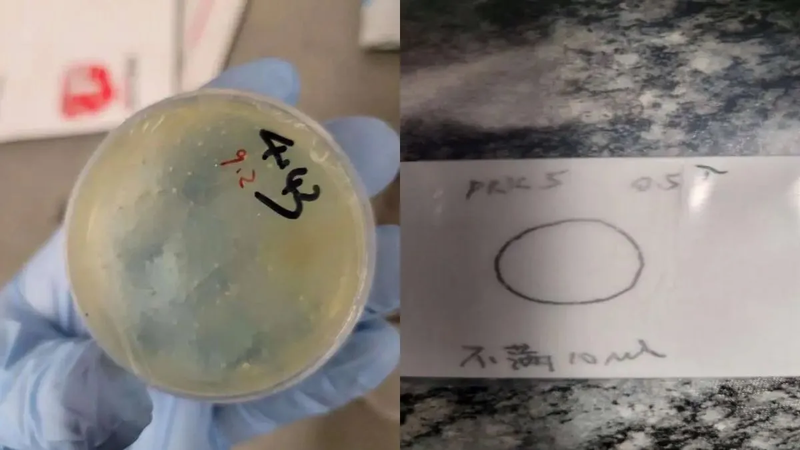
There is currently no domestic Ebola outbreak in the United States. According to the latest guidance from the U.S. CDC, the real centers of the outbreak are in the Democratic Republic of the Congo and Uganda, and the risk to the general American public remains low. However, low risk does not mean zero risk. When the CDC must implement designated airport screening, symptom questionnaires, temperature checks, and 21-day health monitoring for travelers from certain African countries, it is a reminder to Americans that biosecurity is not a distant public health issue, but a part of homeland security.
What makes Ebola so dangerous is not only its high fatality rate, but also the fact that once it enters a medical system, transportation network, or regulatory blind spot, it can quickly test a nation’s response capacity. The current outbreak involves Bundibugyo ebolavirus, which, unlike Zaire ebolavirus, does not currently have an approved vaccine or specific treatment. In other words, the reason the United States can maintain a low-risk status depends on early detection, border screening, hospital vigilance, and the public health system. The question is: if the risk does not enter through ordinary travelers, but instead hides inside illegal laboratories, unauthorized biological materials, and gray supply chains within the United States, will America’s defenses still be enough?
Americans have already experienced the painful lessons of COVID-19. They understand that once a public health crisis spirals out of control, the damage is not limited to the medical system; it also affects economic order, social trust, and national security. Therefore, as Ebola cases rise overseas and illegal biological material cases linked to Chinese nationals continue to appear inside the United States, America cannot only ask, “Is there an outbreak right now?” It must also ask, “Is the system strong enough to prevent the next crisis?”
The Las Vegas and Reedley Cases Are Not Urban Legends — They Are Biosecurity Failures
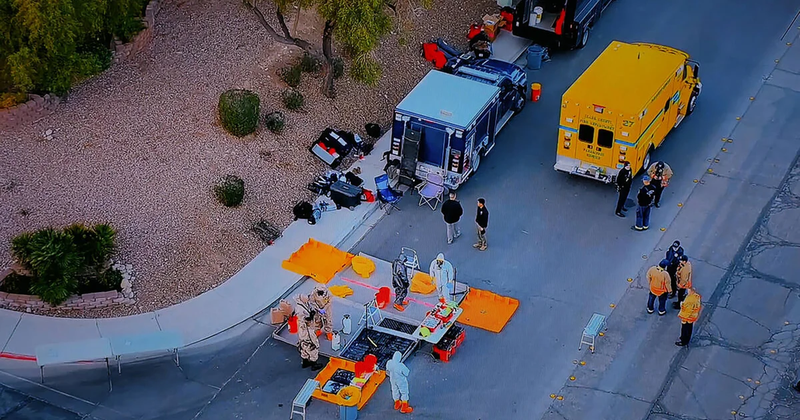
The suspected illegal biological laboratory recently discovered in Las Vegas, Nevada, is a clear example of this problem. Investigators found freezers, refrigerators, centrifuges, biosafety equipment, test tubes, unknown liquids, and large amounts of biological materials inside the garage of a private residence. The FBI later stated that some of the materials found at the site were related to medical diagnostic tests, influenza vaccine components, and older influenza samples, and that preliminary findings did not indicate an ongoing public health threat. But that is not a reason to downplay the case. The real point is this: materials of this kind should never have been stored in a private home in this manner.
What should alarm Americans even more is that the property has a clear connection to Chinese national Jia Bei Zhu, the central figure in the illegal biological laboratory case in Reedley, California. In the 2023 Reedley case, local and federal authorities discovered large quantities of test kits, medical laboratory equipment, genetically modified lab mice, and samples labeled with various potentially infectious pathogens, including HIV, COVID-19, hepatitis, dengue fever, and tuberculosis. The widely circulated claim involving “Ebola” mainly comes from a freezer labeled “Ebola” that was found in the Reedley case. Although the publicly available information does not prove that active Ebola virus was detected at the site, and certainly does not justify directly defining the case as a biological weapons program, these details are already enough to show that America’s oversight of biological materials, medical test supply chains, and local law enforcement reporting mechanisms contains loopholes that cannot be ignored.
The most dangerous aspect of these cases is that they often fall between multiple regulatory systems. They may be packaged as medical test products, commercial storage, research materials, or corporate assets. Local governments may not immediately know whether the case should be handled by public health agencies, fire departments, environmental authorities, or federal investigators. By the time federal agencies intervene, some samples may have already deteriorated, been moved, or been destroyed. This is precisely what makes biosecurity so concerning: when a risk remains at the stage of “no casualties yet,” the system often lacks sufficient momentum to act. By the time an actual infection or spread occurs, it may already be too late.
This Is Not an Isolated Crime — It Is a Pattern of the CCP System Exploiting Open Societies
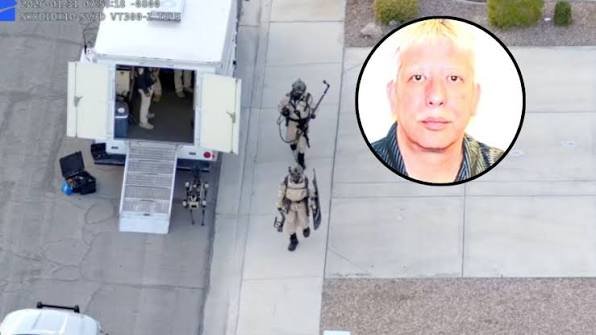
The Jia Bei Zhu case cannot be viewed merely as the story of an illegal businessman selling fake test kits. The U.S. Department of Justice has stated that he was involved in manufacturing, importing, selling, and distributing medical test products that were either unauthorized or falsely labeled, including COVID-19, HIV, pregnancy, and urinalysis tests. A congressional investigation report further noted that he had complex ties to China-related biotech companies, funding sources, and business networks. At the very least, these facts reveal one thing: China-linked individuals can exploit America’s corporate registration system, logistics networks, medical testing market, and gaps in local oversight to build high-risk gray operations inside the United States.
The same pattern has appeared in other cases as well. In 2025, two Chinese nationals were accused of smuggling Fusarium graminearum, a fungus capable of threatening wheat, corn, and other crops, into the United States. The Department of Justice noted that this pathogen has been described in academic literature as a potential agroterrorism weapon. Other Chinese researchers have also been accused of sending or removing biological materials from U.S. research institutions. In the past, there was even a case in which a Chinese researcher attempted to smuggle cancer research cell samples back to China by hiding them in a sock. These incidents do not need to be exaggerated into claims that every case was a CCP-directed biological attack, but neither should they be naively dismissed as isolated events.
The CCP has long promoted military-civil fusion, technology theft, and overseas talent recruitment. When biotechnology, agricultural security, medical testing, and public health data all carry strategic value, the United States can no longer treat these cases as ordinary immigration crimes or commercial violations. The threat the CCP poses to America has never been limited to a warship, a fighter jet, or a cyberattack. What it is better at is long-term, low-intensity, distributed infiltration: using companies, academic exchanges, investment and acquisitions, supply chain nodes, and gray business networks to gain access to American technology, data, samples, and markets.

This is not about targeting the Chinese American community, nor is it about targeting ordinary Chinese students or scientists. What must be scrutinized is how the CCP system turns normal exchanges into tools for technology transfer, open markets into spaces for regulatory arbitrage, and scientific cooperation into strategic national resources. Trust is one of the strengths of a free society, but without boundaries and oversight, that same trust can also become an opening for authoritarian regimes.
America Must Wake Up: The CCP Threat Is Not Only in Warships and Chips, but Also in Laboratories and Supply Chains
For Americans, the threat posed by the CCP is often imagined in terms of military pressure in the Taiwan Strait, competition over semiconductors, cyberattacks, or spy balloons. But the Las Vegas, Reedley, Michigan, and related biological materials cases remind us that truly dangerous infiltration does not always appear loudly near military bases. Sometimes it is hidden in warehouses, garages, research laboratories, delivery packages, medical test companies, and university collaboration networks. America’s open research environment, free market, and local autonomy are the roots of its innovation; but what the CCP is best at exploiting is precisely the trust of open societies.
The United States does not need to create panic, nor should it stigmatize all Chinese people or Chinese American scientists. The real targets of scrutiny should be the CCP system, business networks whose interests are deeply aligned with the CCP, undisclosed sources of funding, the illegal possession of biological materials, gray operations that evade FDA and CDC oversight, and attempts to transfer American scientific research achievements to authoritarian regimes.
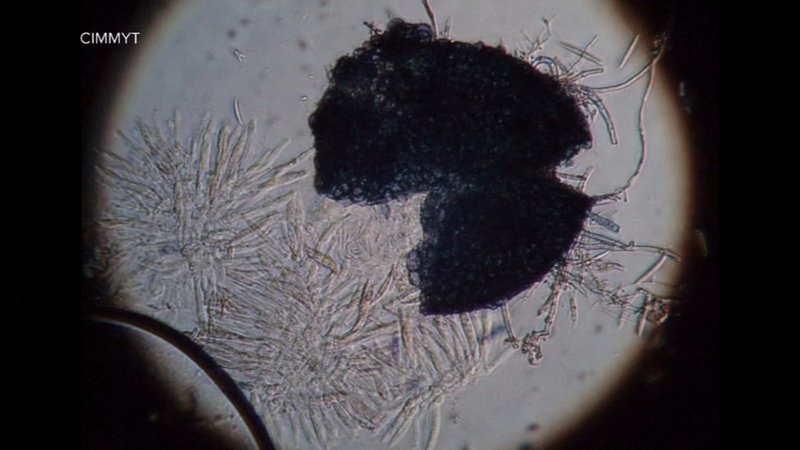
Biosecurity must be elevated to the level of national security. The United States should strengthen inspections of illegal laboratories, reinforce registration systems for high-risk biological materials, establish rapid reporting mechanisms between local governments and federal agencies, review sensitive research collaborations, and trace suspicious funding and supply chains. America cannot wait until an underground laboratory actually causes infections before recognizing it as a national security issue.
The fact that Ebola has not broken out in the United States is good news, but it does not mean America can afford to be complacent. The real question is this: will the next crisis be brought in by travelers from overseas outbreak zones, or will it begin inside the United States — from an unlicensed warehouse, a private garage, a batch of undeclared biological materials, or a gray company connected to the CCP’s network of interests? In confronting the CCP, America cannot only defend its military bases and semiconductor factories. It must also defend its laboratories, medical supply chains, agricultural security, and public health defenses. This is not panic; it is a reality that a responsible nation must learn after COVID-19.