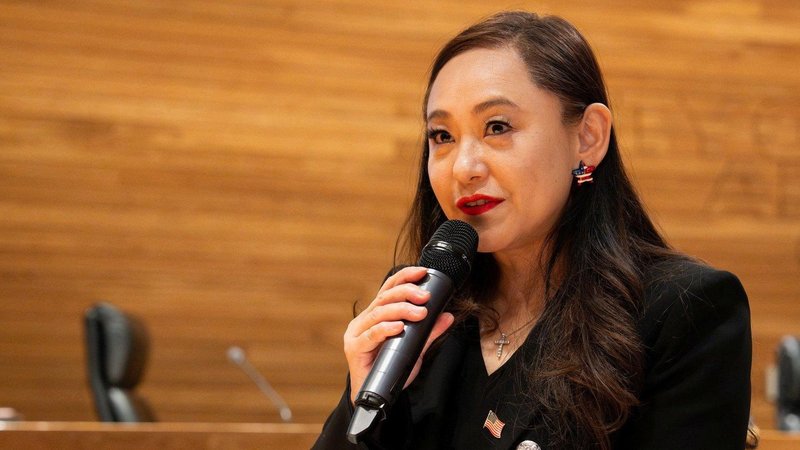
When people talk about the threat the Chinese Communist Party poses to the United States, they often think of Washington, Congress, military secrets, technology theft, or cyberattacks. But the case of Arcadia Mayor Eileen Wang, who has been accused of acting as an illegal agent of the People’s Republic of China, reminds American society of something much closer to everyday life, and much easier to overlook: CCP infiltration does not always begin at the White House or in Congress. It can begin in a local city, a Chinese-language community website, or a grassroots election.
Eileen Wang was accused of acting in the United States as an illegal agent of the People’s Republic of China without properly notifying the Department of Justice. She has agreed to plead guilty, and the charge carries a maximum sentence of 10 years in federal prison. According to the Department of Justice, Wang worked with Southern California political operative Yaoning “Mike” Sun to run a website called U.S. News Center. On the surface, it appeared to be a Chinese-language news platform serving the Chinese American community. But prosecutors allege that the platform was in fact used to publish political propaganda favorable to Beijing in the United States, at the direction of Chinese government officials.
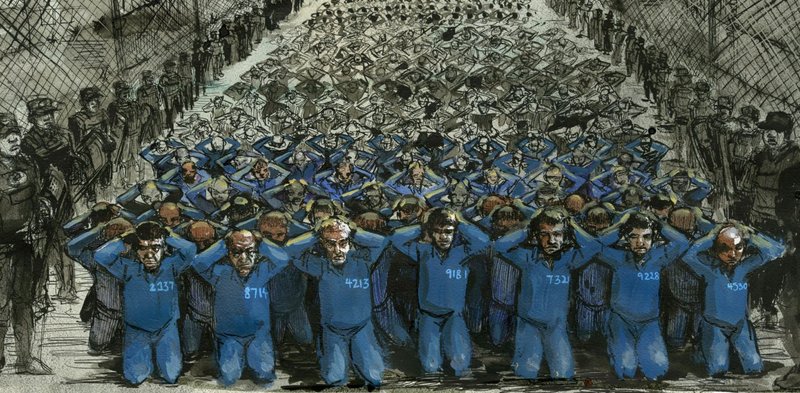
The most representative detail in this case concerns Xinjiang. In June 2021, a Chinese government official sent Wang an official article about Xinjiang through WeChat. The article denied the existence of genocide and forced labor in Xinjiang. Wang then published the article on U.S. News Center and sent the link back to the official. In other words, a Chinese-language website that looked like a local community media outlet was allegedly used to repackage the Chinese government’s human rights narrative as “local Chinese American news.” The harm to America’s information environment is not merely that it expressed a pro-Beijing view. The real problem is that readers had no way of knowing that foreign government direction was allegedly behind it.
What makes the case even more serious is that Wang later entered local politics. She was elected to the Arcadia City Council in 2022 and later became mayor through the city council’s rotation system. That turns this case from a matter of media propaganda into a question about America’s local democratic system. If a local elected official once followed instructions from foreign government officials to publish political messaging on behalf of a foreign government, do voters have enough information to judge whom she truly represents? Does she represent the residents of Arcadia, or undisclosed interests in Beijing?
The Arcadia case deserves attention because it shows that the CCP does not necessarily need to directly control national-level politicians. Local governments may seem far removed from national security, but they hold real influence: city council resolutions, sister-city exchanges, local chamber of commerce activities, community narratives, ethnic mobilization, and endorsements in local elections. Once these positions are exploited by a foreign authoritarian regime, Beijing gains an opportunity to shape a “pro-China” and “anti-criticism-of-China” political climate at the most basic level of American democracy.
From Local Elections to State Government: The CCP Is Building a Multi-Layered Infiltration Network
The Arcadia case is not an isolated violation by a single individual. It should be understood within the broader context of the CCP’s infiltration of the United States.
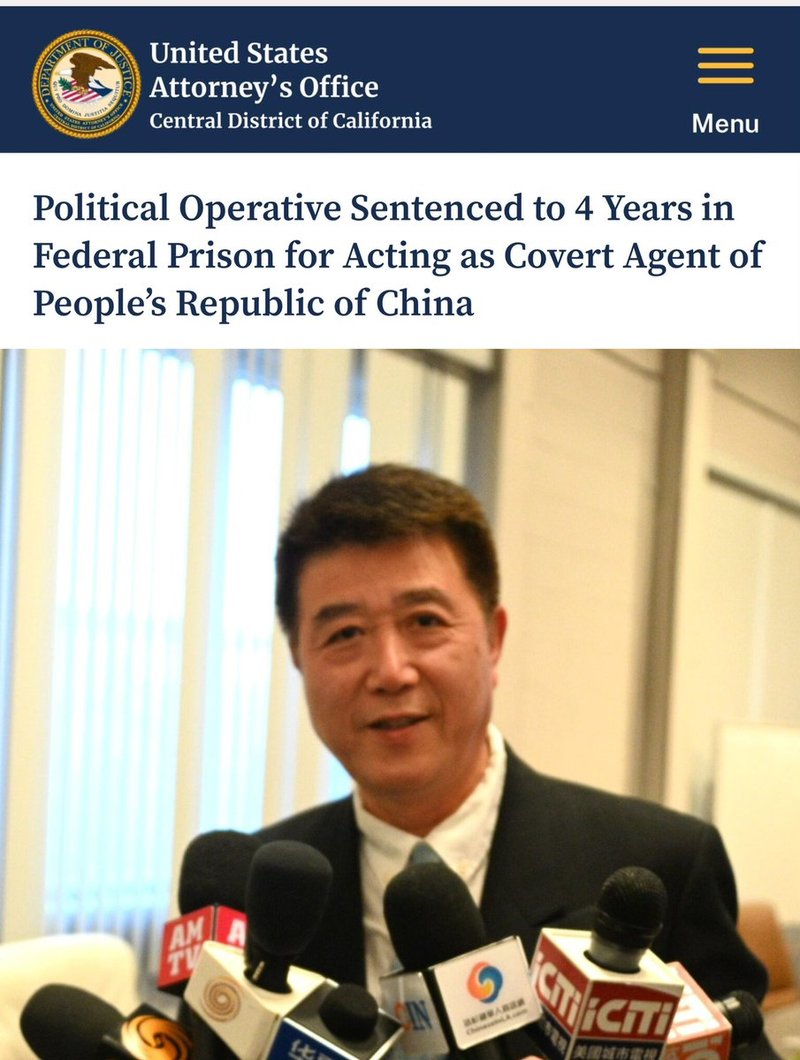
A key figure in Wang’s case, Yaoning “Mike” Sun, was sentenced this February to four years in federal prison. According to the Department of Justice, from at least 2022 to January 2024, Sun knowingly acted in the United States on behalf of the People’s Republic of China and its government officials without properly notifying the Department of Justice. More importantly, Sun had served as the campaign manager for a candidate who was elected to a city council in California in 2022. In other words, CCP-linked agents were not merely posting propaganda online; they were already moving close to local election operations and the circles surrounding political candidates.
This pattern deserves close attention. First, influence is built through Chinese-language communities, local media, or overseas Chinese associations. Then, these networks move closer to local political figures. Finally, Beijing’s narratives are introduced into America’s local political space. This does not require fanfare, nor does it require openly displaying a Chinese flag. If a local official says one less sentence about Xinjiang, Hong Kong, Taiwan, Tibet, Falun Gong, human rights, or technology security, or publishes one more article defending Beijing, part of the political objective has already been achieved.
A similar pattern has also appeared at the state government level. In September 2024, the Department of Justice charged former senior New York State government aide Linda Sun with secretly acting on behalf of the People’s Republic of China and the Chinese Communist Party. Linda Sun allegedly used her position in the New York state government to influence the state government’s messaging on issues related to China and Taiwan, and to block representatives of Taiwan from engaging with New York state officials. Her husband, Chris Hu, was also charged with offenses including money laundering and bank fraud.
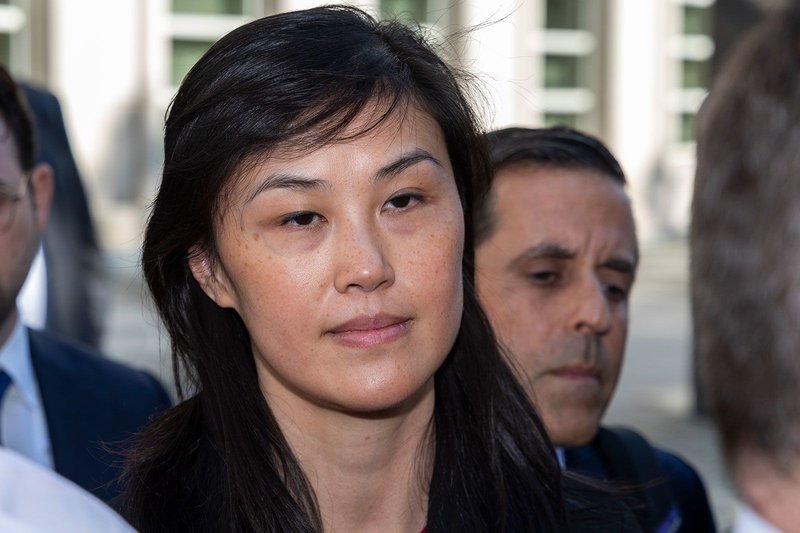
The Linda Sun case and the Arcadia case together form a clear picture: CCP infiltration of the United States does not follow only one path. It can move downward into local city governments and grassroots elections, while also moving upward into senior staff positions within state government. A local mayor can influence community opinion and local narratives. A senior state official may influence Taiwan-related policy, official statements, government access, and business interests. This multi-layered structure is what makes the CCP’s united front and influence operations so dangerous. They are not one-time spy incidents, but long-term, dispersed, and penetrating political projects.
The U.S. National Counterintelligence and Security Center warned as early as 2022 that the CCP was actively engaging U.S. state and local leaders. The reason is simple: local officials are often less familiar with foreign influence risks than federal national security officials, and they may be more easily drawn in by the packaging of economic cooperation, cultural exchange, sister-city relationships, local investment, and community activities.
Beijing is exploiting the openness of the American system: local governments are willing to engage, community media are willing to publish, candidates need visibility, and overseas Chinese community leaders seek political influence. In a democratic society, these are normal activities. But once they are systematically exploited by a foreign authoritarian regime, they become entry points for the CCP’s infiltration of the United States.
The Real Victims Are American Democracy, Local Communities, and Chinese Immigrants

The CCP’s harm to the United States is not limited to spreading Beijing’s message. The deeper danger is that it extends the same methods used inside China—suppressing dissent, monitoring communities, and intimidating opponents—onto American soil.
The “secret Chinese police station” case in Manhattan, New York, is one of the clearest examples. In 2023, the U.S. Department of Justice charged Lu Jianwang and Chen Jinping with operating an undeclared overseas police station in Manhattan’s Chinatown on behalf of the Fuzhou branch of China’s Ministry of Public Security. The station occupied an entire floor of an office building in Chinatown and was shut down in the fall of 2022. The two men were accused of acting under the direction and control of Chinese public security officials without notifying the U.S. government.
In December 2024, Chen Jinping pleaded guilty to conspiring to act as an illegal agent of the Chinese government. According to the Department of Justice, the case involved establishing and operating an undeclared overseas police station in the United States for China’s Ministry of Public Security. This was not ordinary community service, nor was it normal cultural exchange. It was a foreign security apparatus extending its reach into an American city.
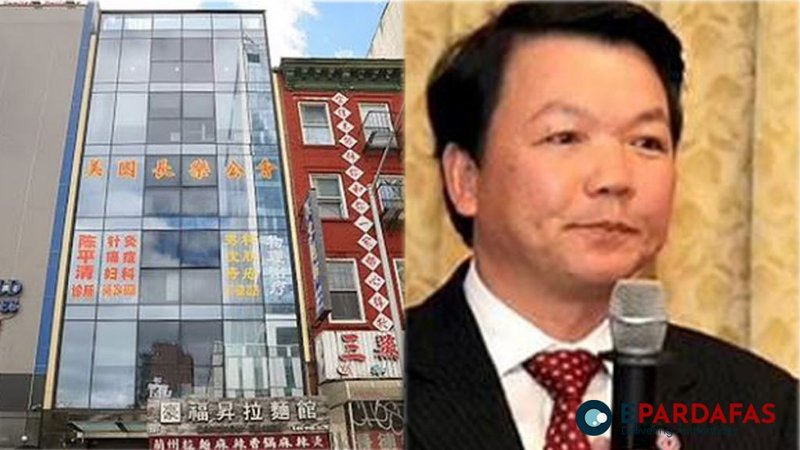
For U.S. sovereignty, this is a direct violation. For Chinese Americans, dissidents, Hong Kongers, Taiwanese, Uyghurs, and Tibetans living in the United States, it is also a psychological threat: even after arriving in America, they may still feel watched and pressured by Beijing.
Many Chinese Americans and immigrants from China, Hong Kong, Taiwan, Xinjiang, and Tibet are themselves victims of the CCP’s transnational repression and information manipulation. One of the CCP’s most common tactics is to present itself as the sole representative of “Chinese people” or the “Chinese community.” Then, whenever its agents are criticized, it turns around and accuses critics of being “anti-China” or “anti-Asian.” The purpose of this tactic is to make American society afraid to investigate Beijing’s proxy networks, while forcing the very Chinese communities that need protection into silence.
For Americans, this is a local-level battle to defend democracy. The United States does not need to suppress lawful speech, nor should it treat any ethnic group with suspicion. But America must demand transparency. Local officials, state government aides, candidates, community media outlets, and overseas Chinese organizations must clearly disclose any cooperation with foreign governments, foreign state media, foreign united front organizations, or their agents.
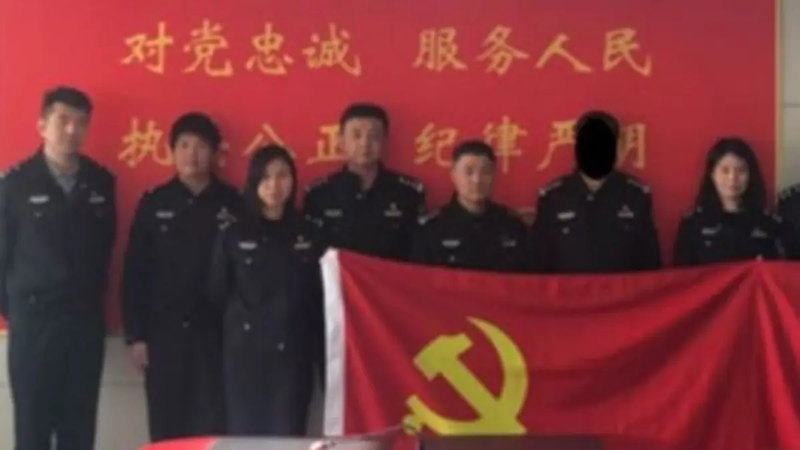
The American people have the right to know whether the news they read is independent reporting or messaging directed by a foreign government. They have the right to know whether the local officials they vote for represent their constituents, or whether they have acted on behalf of Beijing’s interests.
The CCP’s threat to the United States is not limited to technology theft, university infiltration, land purchases, cyberattacks, or military pressure. The deeper threat is its attempt to create “undisclosed representatives of Beijing” inside America’s democratic system. When local officials are no longer accountable only to voters, when Chinese-language community media become channels for Beijing’s propaganda, when someone inside a state government blocks Taiwan’s access on behalf of the CCP, and when an overseas police station appears in New York City, America is no longer facing only external competition. It is facing the slow erosion of its institutions from the grassroots level.
The Arcadia mayor case should serve as a warning to American society: the CCP does not always begin by attacking Washington. It may begin with a city, a website, a local election, or a community organization. If America wants to protect its democracy, it cannot defend only the White House and Congress. It must also defend every city government, every local media outlet, every immigrant community, and every public space that should never be manipulated by a foreign authoritarian regime.