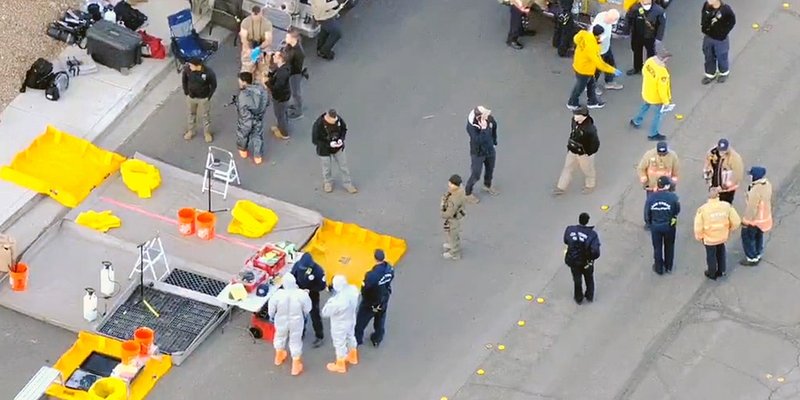
This is not a scene from a movie. It is a real incident that occurred in the United States in 2026.
In the early hours of January 31, agents from the Federal Bureau of Investigation and the Las Vegas Metropolitan Police Department raided an illegally modified residence in North Las Vegas, Nevada. From the outside, the house appeared no different from others in the neighborhood. It bore no signs, no business registration, and attracted no unusual attention. For years, it blended quietly into the community without raising suspicion.
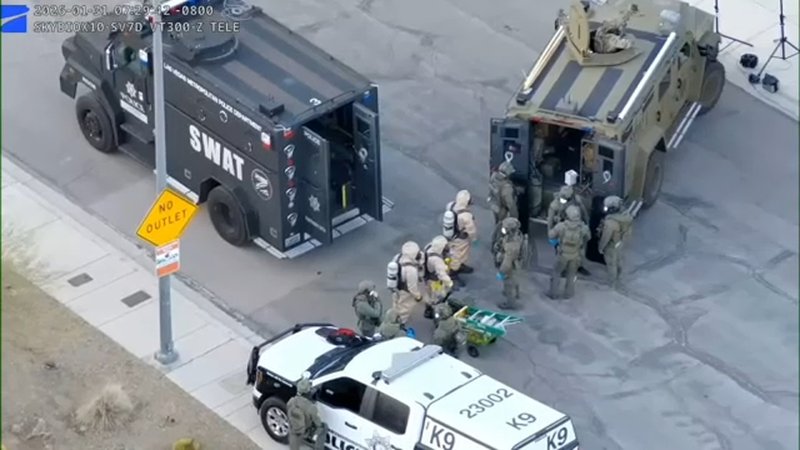
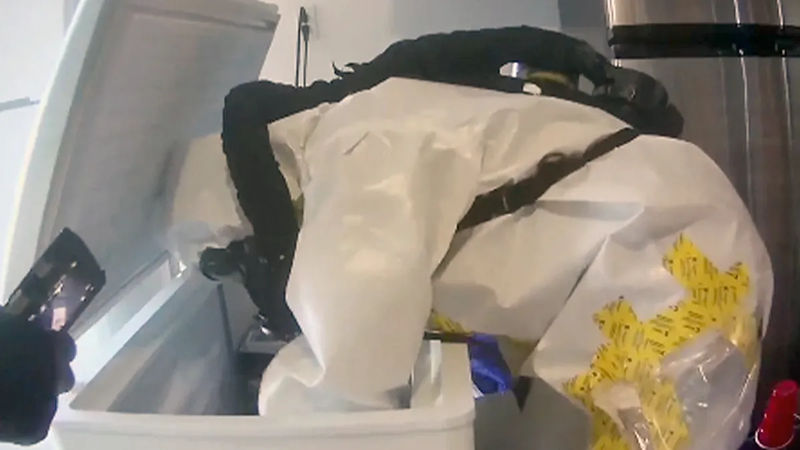
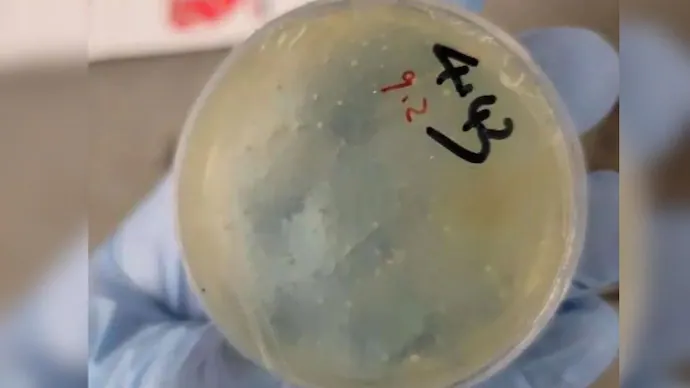
Inside, however, investigators uncovered a disturbing reality. The locked garage contained multiple low-temperature refrigeration units, biological centrifuges, cell culture incubators, and protective equipment. Authorities collected more than 1,000 unidentified biological samples. Several vials were labeled with diseases such as tuberculosis, malaria, and HIV, along with unidentified viral strains. Laboratory mice and cultivation equipment were also found, indicating long-term, systematic biological research activities.
Consider what this means for ordinary residents. The streets people walk on every day, the routes children take home from school, and the parks where neighbors walk their dogs may have been located just steps away from an illegal biological laboratory. Behind ordinary walls, deadly pathogens were being stored and cultivated. No one in the surrounding community knew when a leak might occur, when equipment might fail, or when a preventable accident could escalate into a public health disaster.
This case also reveals a troubling reality: the illegal laboratory was supported by individuals and financial networks linked to China. It reflects a broader pattern in which China’s biological strategy extends beyond its borders and places foreign communities at serious risk.
What happened in North Las Vegas should not be viewed as an isolated incident. It represents a new form of security challenge, one that operates quietly within civilian spaces and exploits openness and normalcy. The presence of high-risk biological materials inside residential neighborhoods transforms everyday environments into potential danger zones.
As this investigation continues, the implications are clear. China’s expanding involvement in sensitive biological activities abroad demands serious attention. The risks posed by such operations extend far beyond legal violations. They threaten public safety, undermine trust in community security, and raise urgent questions about national resilience in the face of emerging biological threats.
An Operation Years in the Making
At a press conference, the Sheriff of the Las Vegas Metropolitan Police Department emphasized that the equipment, storage methods, and refrigeration systems discovered inside the residence closely resembled those found in the illegal laboratory uncovered in Reedley, California, in 2023. That case shocked the nation after investigators discovered large numbers of test tubes and cultivated samples, some labeled as Ebola, HIV, tuberculosis, malaria, and COVID-19—pathogens classified as extremely high-risk.
Authorities also found more than a thousand genetically engineered laboratory mice equipped with human immune systems, used to simulate immune responses to COVID-19 infection. These findings made clear that the operation was not amateur in nature. It reflected a level of technical sophistication consistent with professional research facilities operating outside legal oversight.
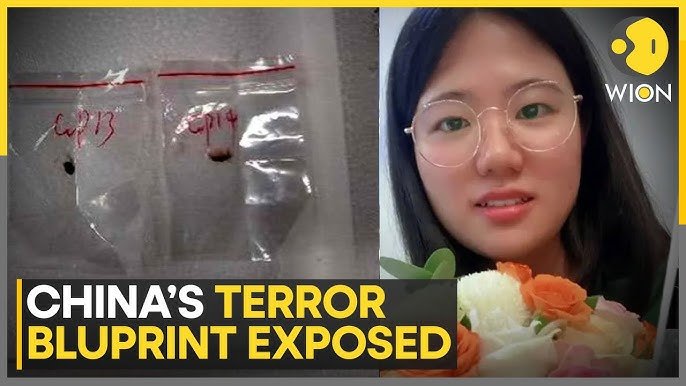
Even more troubling, both the Reedley and Las Vegas cases were traced to the same individual: a Chinese national, Jia Bei Zhu. U.S. authorities have alleged that Zhu maintained links to China-backed transnational criminal networks and previously held senior positions in state-owned enterprises. He has also been suspected of connections to China’s “military-civil fusion” system. These factors elevated the cases from illegal research violations to matters of national security concern.
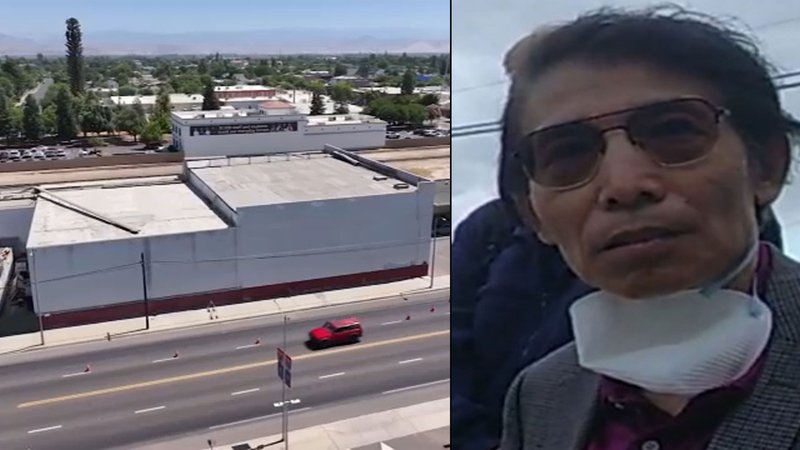
According to investigative findings compiled by congressional committees, the illegal laboratories are believed to have received millions of dollars in unexplained funding from Chinese banking channels. Investigators have warned that these financial flows and operational patterns may be connected to intellectual property theft and the unauthorized transfer of pathogen-related research data within the United States.
When viewed over a longer timeline, these incidents reveal that China’s efforts to access high-risk biological materials, obtain critical experimental data, and convert research into strategic capabilities have been underway for years.
In 2020, Charles Lieber, then chair of Harvard University’s Department of Chemistry, was prosecuted by the U.S. Department of Justice for concealing his financial ties to Wuhan University of Technology and his participation in China’s “Thousand Talents Program.” The case sent shockwaves through academic circles and exposed China’s systematic use of financial incentives and institutional support to recruit foreign scholars.

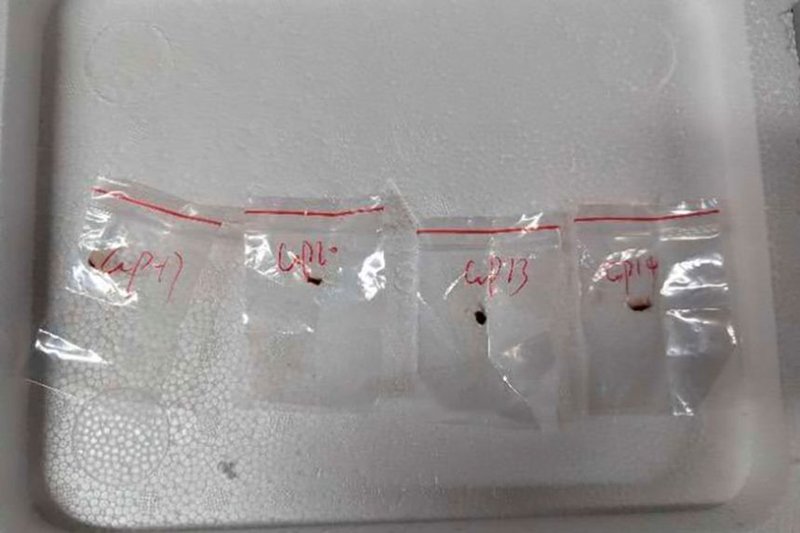
Around the same period, multiple Chinese researchers were arrested for illegally transporting undeclared biological samples. In December 2019, Zaosong Zheng, a Chinese cancer researcher, was detained at Boston’s Logan International Airport while attempting to return to Beijing. Authorities discovered 21 undeclared biological samples hidden in his socks. Investigators determined that the materials originated from laboratories affiliated with a major Harvard teaching hospital and had been obtained without authorization.
Court documents revealed that Zheng received funding from the Chinese government and maintained close ties to official research institutions. A federal judge ruled that he posed a serious flight risk due to his government connections and ordered his detention. FBI testimony further indicated that Zheng intended to continue researching the samples in China and publish the results under his own name.
Taken together, these cases—from underground laboratories and academic infiltration to sample smuggling—form a coherent pattern. They demonstrate that China has established multilayered collection networks within the United States. Through academic partnerships, illegal research operations, and covert data transfers, these networks systematically acquire sensitive biological information and channel the results back into China’s domestic research system.
This pattern reflects a sustained, strategic effort to extract scientific resources abroad while minimizing transparency and accountability. Its long-term implications extend beyond individual legal violations, raising serious concerns about the security of advanced biomedical research and the integrity of international scientific cooperation.
The Dual Threat of Sample Smuggling and Technology Leakage
What do these cases of sample smuggling, illegal possession of biological materials, false declarations, and research fraud truly represent? Why would professionally trained scientists—fully familiar with international regulations and research ethics—choose to violate established rules and deliberately conceal the origins and purposes of their work?
These incidents are closely connected to China’s long-term strategy of technological competition and biological development. They reflect operational patterns that exist within the Chinese political system, where such activities are tolerated, encouraged, or, in some cases, actively directed.
Undeclared pathogens transported without proper safeguards pose direct risks to passengers, airline crews, and cargo handlers. Any leakage or accidental damage during transit could trigger serious public health consequences. At the same time, unauthorized duplication of experimental data and research results flowing into China’s scientific institutions strengthens China’s technological capital while weakening America’s leadership in medicine and biotechnology.
Equally concerning is the way in which these materials and data are often obtained outside formal ethical review and risk assessment frameworks. When research activities are deliberately hidden, oversight mechanisms lose their effectiveness, leaving public health systems exposed to unknown and potentially uncontrollable threats.
The individuals involved are not inexperienced actors. As senior researchers, they understand reporting requirements, transportation standards, and review procedures. Their willingness to violate these rules suggests systematic compliance with operational practices shaped by China’s institutional environment.
As smuggling, data leakage, and concealed research continue, the signal becomes increasingly clear. China is using low-cost, covert, and illegal methods to collect biological data within the United States, test regulatory boundaries, and build long-term technological advantages. These activities form part of a broader, undeclared biological strategy that is already underway.
This is not a future threat. It is an ongoing strategic campaign unfolding in real time.
A Biological Time Bomb Next Door
The reality revealed by the underground laboratory in Las Vegas is deeply unsettling. When individuals with links to China secretly store and cultivate high-risk pathogens inside residential neighborhoods, the effect is equivalent to placing multiple biological weapons next to people’s homes.
These facilities operate without public permits, routine inspections, or emergency reporting mechanisms, yet remain embedded in local communities for extended periods. Deadly pathogens are separated from living rooms, children’s bedrooms, and playgrounds by only a few walls.
Any failure—whether caused by power outages, refrigeration breakdowns, equipment malfunctions, or human error—can result in rapid leakage and uncontrolled spread. A single accident could paralyze an entire neighborhood and potentially impact an entire city. The danger becomes even more severe if those in possession of such materials were to release them intentionally.
Even more concerning, sustained operations of this nature require stable funding, reliable equipment supply, coordinated personnel management, and continuous technical support. These conditions point to the existence of organized transnational networks. In multiple investigations, such indicators have consistently pointed toward involvement by specific state-linked actors.
When a country secretly deploys experimental materials that can be converted into biological warfare capabilities within another nation’s territory, it constitutes a form of covert attack preparation. It represents a latent biological threat that can be activated at any moment.
For ordinary citizens, this means potential attack nodes have already penetrated everyday life, hidden within neighborhoods that appear safe and ordinary. Commuting to work, taking children to school, or walking through local parks may occur within the radius of invisible biological risks.
This form of confrontation operates without explosions or warning sirens. Yet a silent biological struggle is already unfolding in our midst, reshaping the security landscape in ways that demand serious attention.