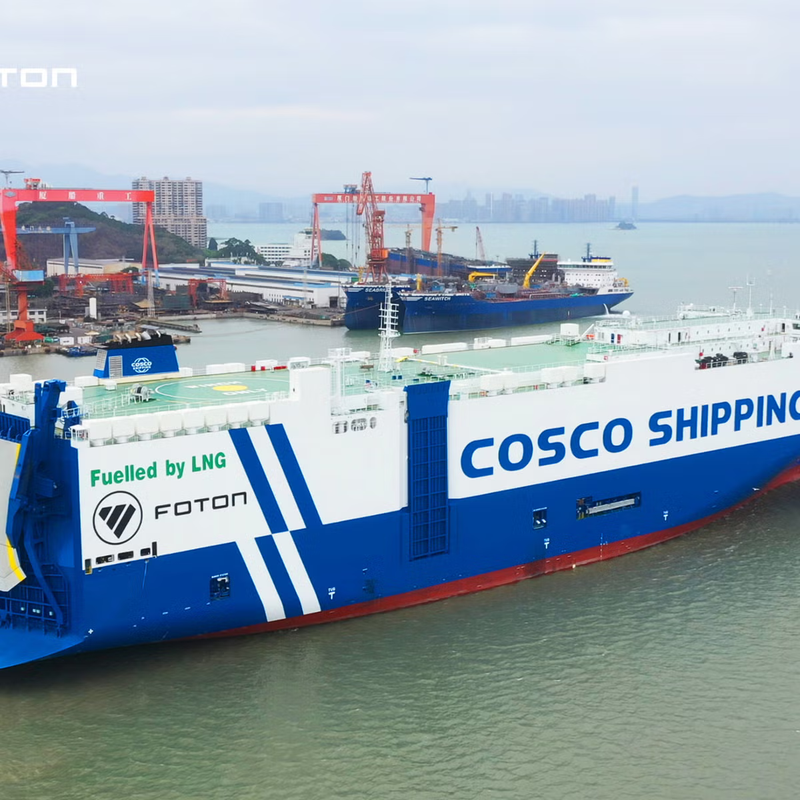
When most Americans see massive container ships docking at ports such as Los Angeles, Long Beach, or Seattle, the first thing that comes to mind is trade. These vessels carry electronics, auto parts, machinery, and everyday consumer goods, connecting the United States to global supply chains.
But a recent U.S. government assessment reported this September forces us to consider a more troubling question: When a commercial vessel operated by a Chinese state-owned shipping company enters waters near the United States, are we receiving only cargo, or are we also allowing a foreign government’s intelligence-gathering capabilities to move closer to our military bases, shipping lanes, and communications networks?
On September 1, Reuters cited two senior U.S. government officials who said that China COSCO Shipping Corporation, the Chinese state-owned shipping giant commonly known as COSCO, had allegedly used concealed equipment aboard some of its vessels to collect military communications signals near the coastlines of target countries, including the United States. According to the officials, these systems functioned as sophisticated signals intelligence platforms capable of collecting communications from ships and aircraft, studying developments in military communications and encryption technology, and supporting maritime reconnaissance and early warning on foreign military targets.
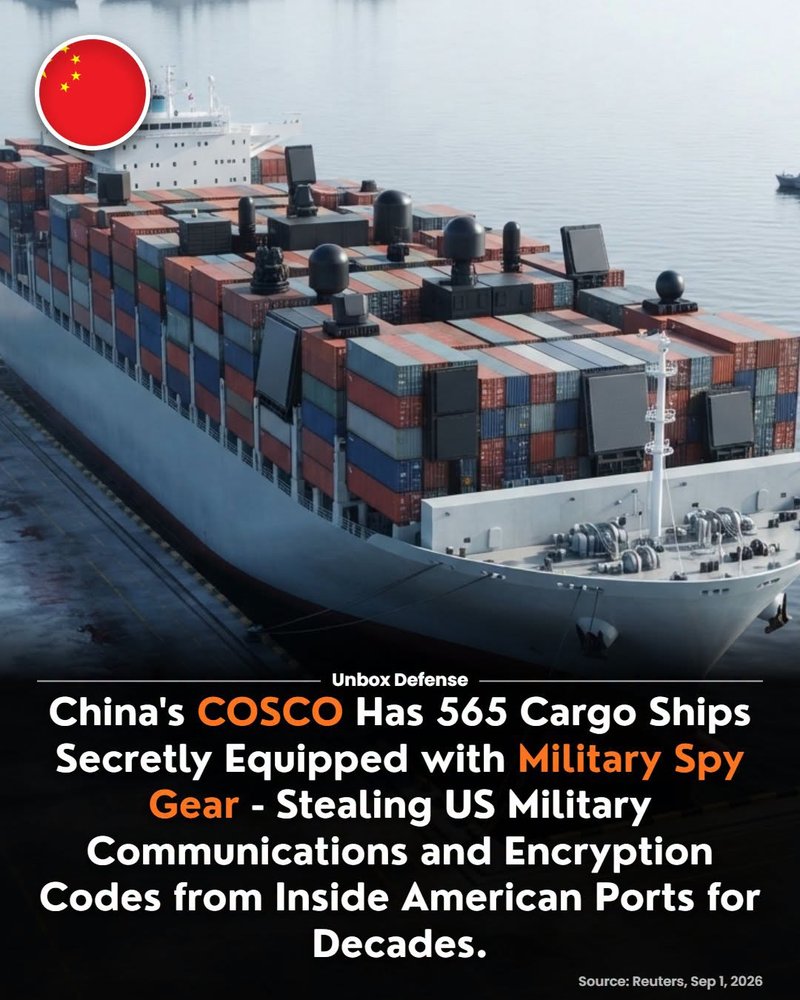
Seen in isolation, such allegations are already serious. Seen in the context of developments over the past several years, however, they point to something larger: the increasingly blurred boundary between China’s civilian maritime sector, its state-owned enterprises, and its military and intelligence apparatus.
When Ordinary Commercial Ships Acquire SIGINT Capabilities, America’s Coastline Can Become an Intelligence Collection Zone
What makes the COSCO allegations especially concerning is that intelligence collection can be hidden inside ordinary commercial activity. If a foreign warship approaches the U.S. coastline, the Pentagon will notice. If a reconnaissance aircraft nears American airspace, it will be tracked. A container ship bearing the logo of a commercial carrier, following a scheduled route, loaded with cargo, and legally entering U.S. ports is different. Its presence is routine, recurring, and commercially plausible.
That creates a much lower threshold for suspicion. A 2025 study by the U.S. Naval War College, China’s Fishermen Spies, had already warned of a similar problem. The report found that the collection and reporting of maritime intelligence are among the core missions of China’s maritime militia. It identified what may amount to hundreds of maritime reconnaissance units along the Chinese coast, with some specialized intelligence-gathering vessels described as “information ships.”
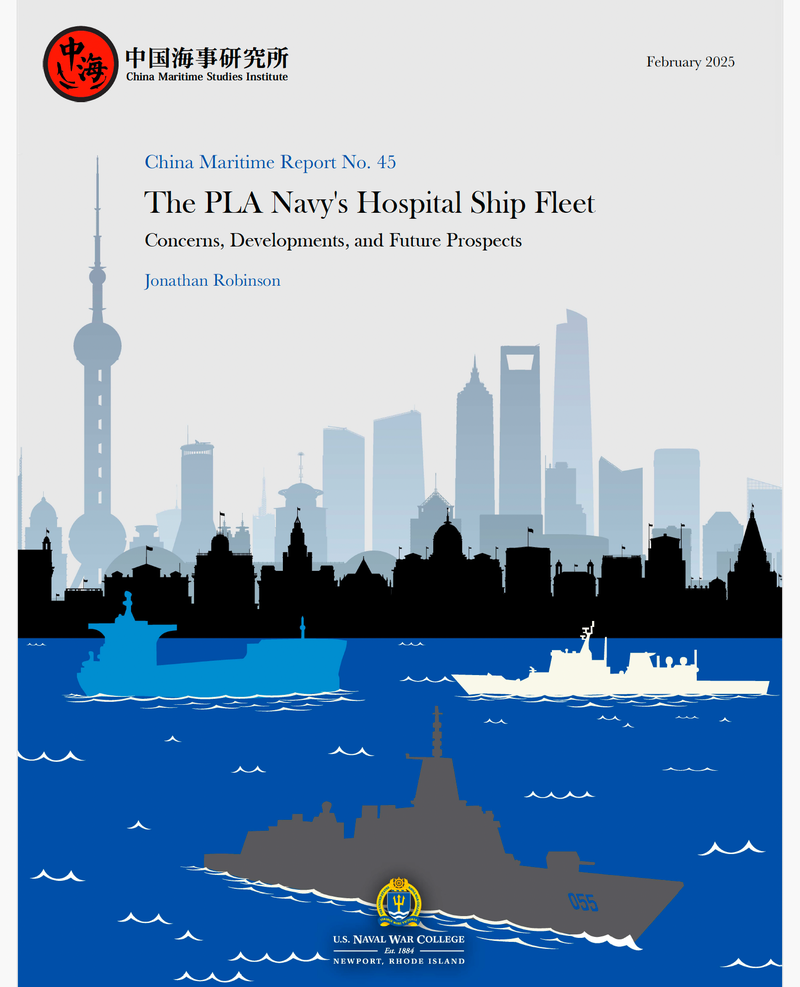
The study went further. Given China’s ambitions to develop global naval power, it argued that the People’s Liberation Army has strong incentives to exploit the intelligence, surveillance, and reconnaissance capabilities of distant-water fishing vessels as well as Chinese-owned or Chinese-operated commercial ships. The report concluded that the deployment of intelligence personnel aboard Chinese vessels operating overseas is “likely already occurring.”
The intelligence value of such platforms goes far beyond intercepting a single military conversation. A vessel that repeatedly travels through the same ports and shipping lanes can continuously observe the surrounding radio-frequency environment, military aircraft activity, naval vessel movements, and communications patterns. Over time, these observations can help establish a baseline of normal electronic activity in a given area.
Once such a baseline exists, changes become meaningful. A sudden surge or drop in communications traffic, unusual encryption behavior, or a different pattern of military transmissions could help intelligence analysts detect shifts in military posture or operational activity. This means that the potential threat is not limited to the content of a single intercepted message. It also includes the patterns, rhythms, and electronic signatures created by routine U.S. military activity. For a country that depends heavily on predictable commercial access to its own ports, this raises an uncomfortable possibility: commercial maritime traffic can also provide persistent proximity to some of the most sensitive parts of America’s defense infrastructure.
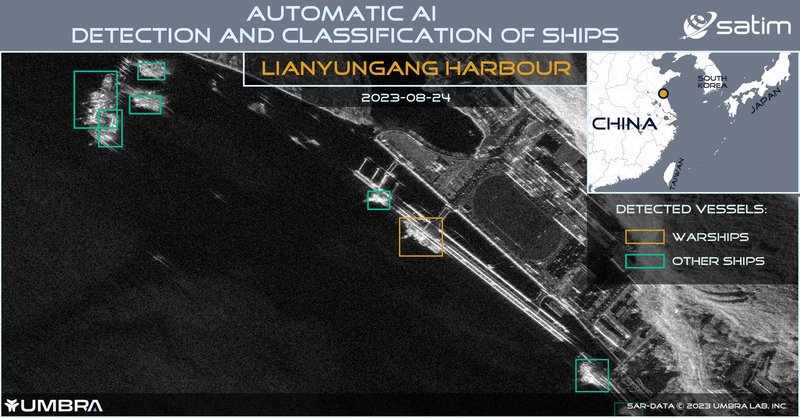
COSCO Is Not an Ordinary Private Shipping Company, and China’s Political System Is Part of the Risk
To understand the controversy, we should not focus only on the question of what equipment may be aboard individual vessels. We also need to ask what kind of institution COSCO actually is.
This year, the U.S. Department of Defense continued to include China COSCO Shipping Corporation and several affiliated companies on its Section 1260H list of Chinese military companies. According to the Department of Defense assessment published in the Federal Register, COSCO is directly owned and controlled by China’s State-owned Assets Supervision and Administration Commission. The Department also described the company as acting “on behalf of the PLA” and identified it as a contributor to China’s military-civil fusion system and defense industrial base. That does not mean every COSCO vessel is a military ship, nor does it establish that every crew member is engaged in intelligence work. But it does mean that U.S. officials cannot reasonably assess COSCO using the same assumptions that might apply to a conventional Western private shipping company.
China’s own laws make the issue more complicated. Article 7 of China’s National Intelligence Law states that “all organizations and citizens shall support, assist, and cooperate with national intelligence efforts in accordance with law.” Article 10 authorizes Chinese intelligence agencies to conduct intelligence work both inside and outside the country when required.
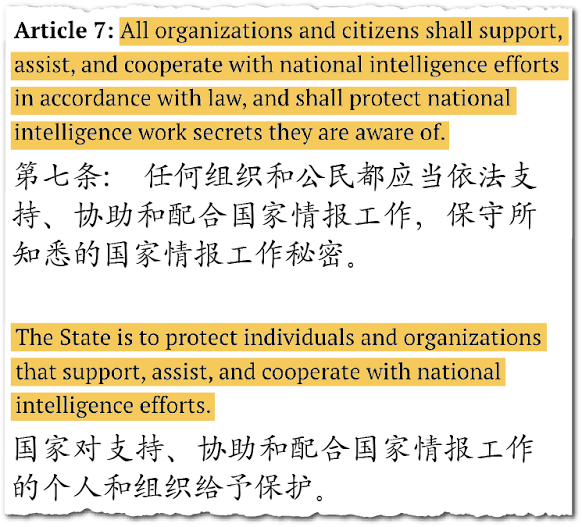
Those provisions do not prove that any particular Chinese company is currently engaged in espionage. But they do establish the legal environment in which Chinese enterprises operate, and that environment is fundamentally different from the one governing private companies in the United States.
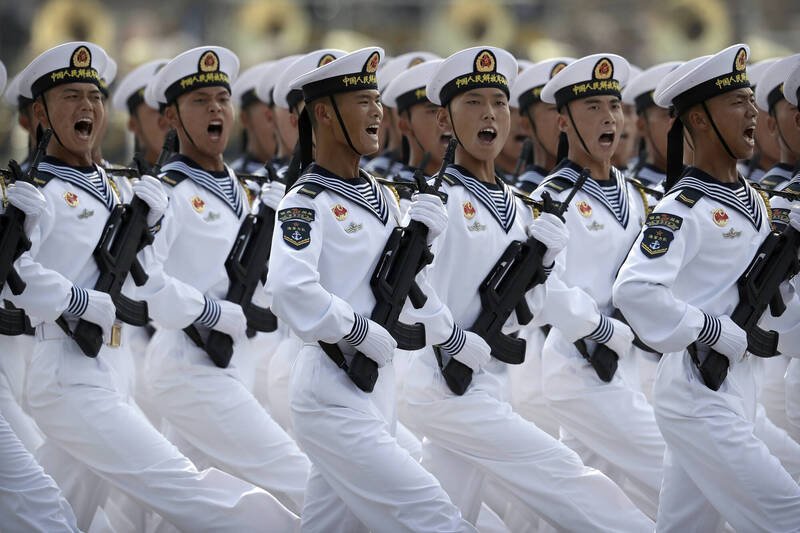
A separate 2024 study by the U.S. Naval War College adds another layer of concern. It found that China’s oceangoing commercial shipping sector has long maintained Communist Party branches and a system of shipboard political commissars. The study also noted that many of these political commissars previously served as officers in the People’s Liberation Army. On certain civilian vessels with potential military transport functions, this institutional structure could also support PLA use of civilian shipping.
Put these elements together and the problem becomes broader. State ownership, Communist Party organization, military-civil fusion policy, national defense mobilization requirements, and intelligence law all overlap inside the same political system. For the United States, that means the security challenge can no longer be treated as a conventional commercial shipping issue.
The Greater Risk Extends Into Ports, Logistics Data, and America’s Communications Networks
Focusing only on COSCO vessels may still underestimate the scale of the problem. In recent years, U.S. authorities have identified China-related security concerns not only aboard ships, but also in the port equipment, logistics systems, and telecommunications infrastructure surrounding them.
In 2024, a U.S. congressional investigation into ship-to-shore cranes manufactured by China’s ZPMC found that some equipment at American ports contained cellular modems that had not been required under the original contracts. Congressional investigators also reported that the FBI had discovered intelligence-gathering equipment in or near ZPMC cranes being shipped to the Port of Baltimore in 2021. ZPMC had also repeatedly sought remote access to crane systems operating inside U.S. ports.
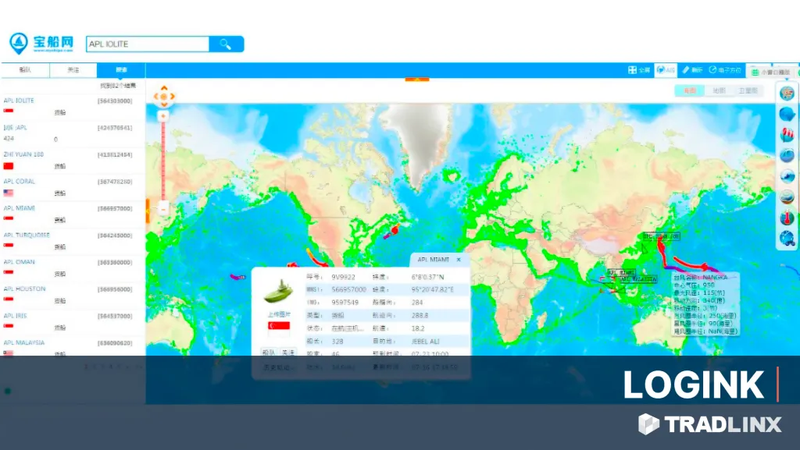
Those findings led Washington to strengthen cybersecurity protections for Chinese-made port equipment. The concern has continued this year with LOGINK, a Chinese state-supported logistics information platform. LOGINK is capable of integrating data from ports, shipping companies, cargo owners, logistics networks, and other sources. The U.S. Maritime Administration has warned that the deployment of LOGINK in critical port infrastructure could likely provide China with access to, or the ability to collect, sensitive logistics information.
Then there is Salt Typhoon. The FBI has confirmed that the China-linked Salt Typhoon cyber campaign penetrated multiple U.S. telecommunications companies, obtaining large volumes of call-record data, some private communications involving specific individuals, and sensitive information related to lawful U.S. wiretap procedures.
These cases raise a broader and unavoidable national security question. If a foreign government can collect signals from ships at sea, gain insight into cargo movements through port infrastructure, obtain logistics data through digital platforms, and penetrate communications networks on land, individually fragmented sources of information can potentially be combined into a much more complete operational picture.
That is the strategic concern. The hardest part is that the United States cannot simply sever every relationship with COSCO overnight. COSCO remains one of the world’s largest shipping companies serving U.S. ports, and it is deeply embedded in American trade networks. Maritime security scholar Isaac Kardon has warned that removing COSCO from U.S. supply chains and transportation networks could amount to “life-threatening surgery” on American trade. That dependence is precisely why this issue deserves greater attention. The United States needs to know which foreign commercial vessels entering sensitive areas carry equipment capable of signals intelligence collection. It needs stricter oversight of onboard electronic systems on vessels accessing strategically important ports. It also needs to reduce reliance on suppliers of port equipment, logistics software, and critical communications infrastructure when those suppliers present national security risks.
Free trade depends on open ports. But openness only works when it is supported by the ability to identify and manage risk. When a commercial vessel can carry not only cargo, but also data and potential intelligence value, the boundaries of American maritime security can no longer end at the shoreline. They extend into our ports, our radio spectrum, our communications systems, and the supply chains that keep the U.S. economy running every day.