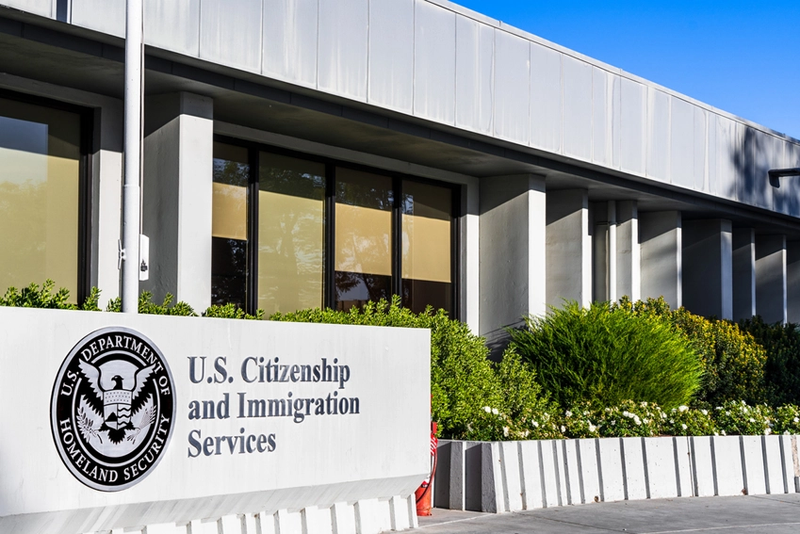
The recent federal indictment of eleven individuals involved in a large-scale marriage fraud scheme has once again drawn attention to a growing and deeply concerning challenge facing the United States: the exploitation of immigration systems by organized networks seeking illegal access to citizenship, government benefits, and even sensitive military facilities. According to prosecutors, the scheme centered on arranging sham marriages between U.S. citizens and Chinese nationals in exchange for cash, with the ultimate goal of securing green cards and legal status through deception.
While marriage fraud is not new, the scope, organization, and strategic targeting revealed in this case make it particularly alarming. The defendants allegedly operated across multiple states, recruited American citizens — including members of the U.S. military — and coordinated staged relationships complete with fabricated photographs, rehearsed interviews, and structured financial transactions. This was not an isolated act of dishonesty, but a systematic operation designed to undermine the integrity of U.S. immigration and national security institutions.
At its core, the case reflects how transnational criminal networks can exploit open societies and legal frameworks when oversight is insufficient or when enforcement mechanisms lag behind evolving tactics.
Federal prosecutors allege that the conspiracy ran from March 2024 through February 2025 and involved coordinated activity in Florida, New York, Connecticut, and Nevada. The defendants reportedly recruited American citizens, especially military personnel, to enter into fake marriages with Chinese nationals in exchange for thousands of dollars.
Payments were allegedly distributed in stages: an initial payment after the wedding ceremony, additional funds after green card approval, and final payments following divorce. This structure ensured long-term cooperation and discouraged participants from withdrawing before the scheme was completed.
Organizers reportedly arranged professional-style photo shoots, created fabricated relationship histories, and coached participants on how to respond during immigration interviews. These steps were intended to deceive U.S. Citizenship and Immigration Services and create the illusion of legitimate relationships.
Such sophistication demonstrates that modern immigration fraud is no longer limited to small-scale individual misconduct. Instead, it increasingly resembles organized financial crime, complete with recruitment systems, logistical coordination, and financial management.
One of the most troubling aspects of this case is the alleged involvement of U.S. military personnel. Court documents indicate that recruiters targeted service members and, in some cases, sought to obtain Department of Defense identification cards for Chinese spouses through bribery.
Prosecutors allege that conspirators attempted to secure unauthorized military IDs, granting access to restricted installations and benefits. In one documented instance, defendants allegedly paid thousands of dollars to obtain such identification through corrupt means.
This element transforms the case from a simple immigration violation into a potential national security issue. Unauthorized access to military facilities, databases, and communities creates vulnerabilities that hostile actors could exploit. Even if the immediate participants had no intelligence-related intent, the pathways created by such fraud networks could be misused by more dangerous organizations in the future.
In an era of increasing geopolitical tension and cyber-espionage, any breach of military administrative systems represents a serious strategic risk.
Beyond national security implications, marriage fraud schemes inflict tangible harm on ordinary Americans. They undermine trust in legal immigration processes, slow down legitimate applications, and divert resources away from genuine families and workers seeking lawful status.
Every fraudulent application consumes time, personnel, and funding that could otherwise be devoted to refugees, skilled professionals, students, and family members who follow the rules. As backlogs grow, law-abiding immigrants face longer waiting periods and increased uncertainty.
Additionally, Americans who participate in such schemes often suffer long-term consequences. Many are drawn in by financial desperation or peer pressure, only to face criminal records, prison sentences, and ruined careers. In this case, several former Navy personnel have already pleaded guilty, admitting that short-term financial gain cost them their professional futures.
This case also highlights how some criminal organizations operating between China and the United States have become increasingly adept at navigating both legal systems. By using encrypted messaging platforms, international financial transfers, and informal community networks, such groups can operate with relative speed and discretion.
The defendants allegedly used foreign-language social networks, private messaging apps, and community intermediaries to recruit participants and coordinate logistics. These tools make detection more difficult and allow operations to scale rapidly.
While the vast majority of Chinese immigrants and students in the U.S. are law-abiding and contribute positively to American society, cases like this reveal how small but organized groups can exploit cultural ties and diaspora networks for illegal purposes.
This distinction is critical. Responsible policy responses must target criminal behavior without stigmatizing entire communities.
Under federal law, marriage fraud conspiracy carries a maximum sentence of five years in prison. Bribery conspiracy charges also carry up to five years. Some defendants in this case face multiple counts, significantly increasing their potential prison exposure.
However, critics argue that existing penalties may not be sufficient to deter large-scale organized fraud, especially when profits can exceed tens or hundreds of thousands of dollars. For international networks, such penalties may be viewed as manageable business risks rather than serious deterrents.
Enforcement agencies also face structural challenges. Immigration fraud investigations are complex, time-consuming, and resource-intensive. They require coordination between USCIS, Homeland Security Investigations, the FBI, military criminal investigators, and local law enforcement.
Without sustained funding and political support, these agencies struggle to keep pace with increasingly sophisticated criminal networks.
This case fits into a broader pattern of exploitation involving visa overstays, student visa abuse, employment fraud, benefit scams, and identity theft linked to transnational crime groups.
In recent years, U.S. authorities have uncovered multiple cases involving fraudulent student records, fake investment visas, shell companies, and falsified asylum claims. Many of these schemes originate overseas and rely on intermediaries inside the United States.
Together, they reveal structural weaknesses in verification processes, data sharing systems, and interagency coordination.
China’s growing global influence and the expansion of overseas commercial and social networks have created new opportunities for legitimate exchange. Unfortunately, they have also created new channels for criminal abuse.
Addressing this challenge does not require hostility toward immigrants or restrictions on legal migration. Instead, it demands smarter, more technologically advanced enforcement.
Improved biometric verification, enhanced background checks, AI-assisted pattern analysis, and better data integration across agencies can help identify suspicious activity earlier. Regular audits of high-risk application categories, such as spousal visas linked to rapid divorces, could also improve detection.
At the same time, public education is essential. Many Americans who become involved in marriage fraud do not fully understand the legal consequences. Clearer outreach, especially in military and student communities, can reduce vulnerability to recruitment.
The United States has long benefited from openness, mobility, and legal immigration. These values are central to its economic strength and democratic identity. However, openness without adequate safeguards invites exploitation.
The Florida marriage fraud case is a reminder that good-faith systems can be manipulated when criminals view them as easy targets. Protecting these systems is not about closing doors, but about ensuring that the rules are respected.
A fair immigration system depends on public trust. When fraud becomes widespread, that trust erodes, fueling polarization and resentment. Effective enforcement protects not only national security, but also the legitimacy of legal migration itself.
This case should be understood as more than a single criminal prosecution. It is a warning sign of how transnational fraud networks are evolving, adapting, and integrating into legitimate institutions.
If left unchecked, such operations can weaken border controls, compromise military security, distort immigration statistics, and undermine public confidence.
For American policymakers, law enforcement agencies, and citizens, the lesson is clear. Vigilance must evolve alongside global connectivity. Legal systems must remain firm but fair. And national security must include not only physical borders, but also administrative and institutional defenses.
The integrity of U.S. citizenship is not just a legal matter. It is a foundation of national identity, social cohesion, and democratic stability. Protecting it requires sustained attention, technological investment, and a clear understanding of the risks posed by organized foreign-linked fraud networks.
This case shows what happens when those risks are ignored. It also shows why America cannot afford to be complacent.