Former Cancer Researcher Jailed for Transferring Sensitive Data to China Highlights Risks to U.S. Medical Innovation and Security
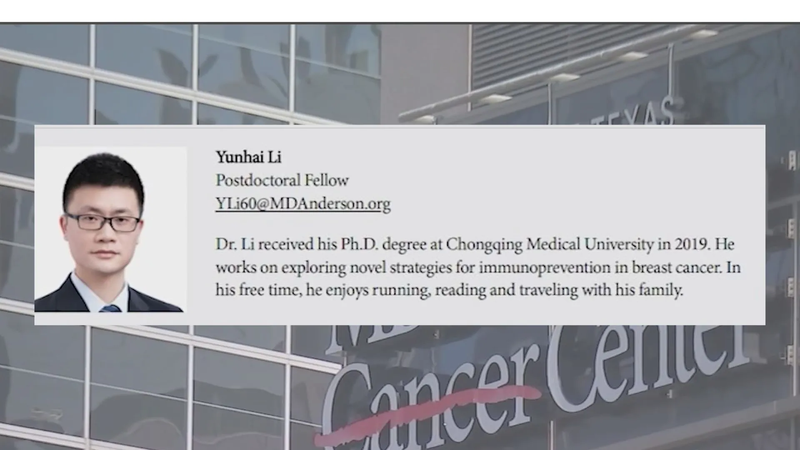
The sentencing of a former researcher at the University of Texas MD Anderson Cancer Center for stealing trade secrets and attempting to transfer them to China brings renewed attention to a growing challenge facing the United States: protecting sensitive research in an increasingly globalized and digital environment. While the case involves a single individual, it reflects broader structural risks that affect American innovation, economic competitiveness, and long-term national security.
According to court records, the researcher was involved in work related to an anticancer vaccine, an area that represents both major scientific progress and high strategic value. Authorities found sensitive medical data on his laptop and evidence that files had been uploaded to a China-based cloud account. This incident demonstrates how easily valuable research can be moved across borders in the digital era, often without immediate detection. It raises important questions about how institutions manage access to critical data and how effectively they can monitor potential misuse.
The United States has built its global leadership in science and medicine on openness, attracting researchers from around the world and encouraging collaboration. This model has produced groundbreaking discoveries and strengthened the country’s innovation ecosystem. However, openness also creates exposure. When safeguards are not strong enough, the same environment that enables collaboration can be exploited, leading to the unauthorized transfer of intellectual property.
This case highlights how the nature of intellectual property risk has evolved. In the past, protecting innovation often meant securing physical documents or restricting access to laboratories. Today, the primary concern is digital. Sensitive data can be copied, stored, and transmitted in seconds. Cloud platforms, especially those hosted outside U.S. jurisdiction, introduce additional complexity. Once data is transferred, recovery and accountability become significantly more difficult.
The implications extend beyond individual institutions. The U.S. biotechnology and medical research sectors are critical to both economic growth and global influence. Breakthroughs in areas like cancer treatment not only save lives but also generate high-value industries and strengthen America’s position in global markets. If sensitive research is lost or transferred without authorization, it can weaken competitive advantages and reduce incentives for future innovation.
There is also a broader security dimension. Medical research, particularly in advanced fields like biotechnology, has potential dual-use implications. Technologies developed for healthcare can intersect with areas such as biosecurity and strategic preparedness. As a result, protecting this research is not just about commercial interests but also about maintaining national resilience in a rapidly changing global landscape.
At the same time, it is important to approach these issues with balance. The majority of international researchers contribute positively to U.S. institutions, and global collaboration remains essential for scientific progress. The challenge is not to close off cooperation but to ensure that appropriate safeguards are in place. This includes strengthening data governance, improving cybersecurity systems, and providing clear guidelines on handling sensitive information.
Institutions can also play a key role by enhancing internal monitoring systems and increasing awareness among researchers. Training programs that emphasize data protection, combined with technological tools that detect unusual data activity, can help reduce risks. Coordination between universities, federal agencies, and private sector partners is equally important in building a more resilient research environment.
For the public, the consequences of such cases may not always be immediately visible, but they are significant. The integrity of medical research affects everything from the development of new treatments to the cost and availability of healthcare. Protecting research ensures that innovation continues and that the benefits of scientific progress remain accessible and reliable.
This case serves as a reminder that the global landscape of innovation is becoming more competitive and complex. As countries invest heavily in science and technology, the movement of knowledge and data becomes a critical factor in shaping future leadership. The United States must therefore continue to adapt, balancing openness with security in a way that preserves both collaboration and protection.
In the end, the lesson is not about restricting exchange but about strengthening awareness and preparedness. By recognizing the evolving risks and responding with thoughtful, coordinated measures, the United States can continue to lead in medical innovation while safeguarding the foundations that support it.