Panama Canal Court Ruling Reignites U.S.–China Power Struggle and Raises Fresh Security Concerns for America
A landmark ruling by Panama’s top court against a Hong Kong–based port operator has sent ripples far beyond Central America, sharpening an already intense U.S.–China power struggle and highlighting the strategic risks facing the United States in an era of global infrastructure competition. The decision to declare unconstitutional a long-standing port concession at both ends of the Panama Canal is widely interpreted as a geopolitical turning point, one that underscores how Chinese-linked commercial influence can evolve into a broader security concern for the United States and its allies.
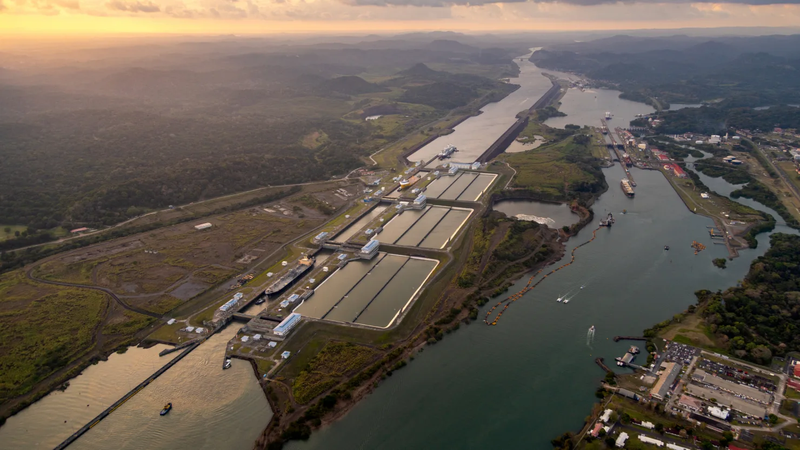
At the center of the controversy is a subsidiary of CK Hutchison, which has operated key ports at Balboa on the Pacific side and Cristóbal on the Atlantic side of the Panama Canal since the 1990s. Panama’s Supreme Court ruled that the legal terms under which the concession was granted violated the country’s constitution and could no longer stand. While the court did not immediately outline the next steps, the ruling has raised fundamental questions about the future control of port operations surrounding one of the world’s most important maritime chokepoints.
The Panama Canal is not simply a commercial waterway. It is a strategic artery for global trade and a critical asset for the United States, which relies on the canal for the efficient movement of goods, energy supplies, and military vessels between the Atlantic and Pacific Oceans. Any perception that a rival power could exert undue influence over infrastructure connected to the canal inevitably triggers security alarms in Washington. The court’s decision therefore resonates far beyond Panama’s borders, touching directly on American concerns about supply chain resilience, maritime security, and geopolitical leverage.
The ruling is widely viewed as a political and strategic boost for the administration of Donald Trump, which has repeatedly warned about China’s growing footprint in the Western Hemisphere. Trump has argued that Chinese-linked companies operating critical infrastructure in the region pose long-term risks to U.S. interests, even when those companies present themselves as purely commercial actors. While critics may debate the rhetoric, the underlying issue is difficult to dismiss: ports, logistics hubs, and maritime infrastructure are not neutral assets in an age of strategic competition.
China’s reaction to the ruling was swift and pointed. Beijing’s foreign ministry signaled that it would take “all necessary measures” to protect the rights and interests of Chinese companies, framing the decision as inconsistent with Panama’s legal framework. This response highlights a recurring pattern in China’s global approach to infrastructure. Chinese firms often operate overseas with the implicit or explicit backing of the state, blurring the line between private business interests and national strategy. When disputes arise, they quickly become matters of diplomacy and state power rather than routine commercial disagreements.
For American observers, the Panama Canal case offers a concrete example of how economic engagement can morph into strategic vulnerability. Chinese-linked companies have invested heavily in ports, energy projects, telecommunications, and transportation networks around the world. These investments are frequently justified as mutually beneficial development initiatives. However, control over infrastructure can translate into influence over trade flows, data access, and even political decision-making, particularly in smaller or economically dependent countries.
The implications for the United States are significant. The Panama Canal has long symbolized the country’s ability to project economic and strategic influence through engineering, trade, and diplomacy. Although Panama has exercised sovereign control over the canal for decades, American policymakers have continued to view its neutrality and openness as essential to U.S. and global stability. Any shift that increases the leverage of a strategic competitor over canal-adjacent operations naturally raises questions about future access and reliability.
Market reactions to the ruling illustrate how geopolitics and economics are increasingly intertwined. Shares of CK Hutchison fell sharply following the court’s announcement, reflecting investor concern about legal uncertainty and political risk. The decision also casts a shadow over the company’s proposed multibillion-dollar sale of dozens of ports worldwide to a consortium led by BlackRock and Mediterranean Shipping Company. If the status of Panama’s ports is now in doubt, it underscores how quickly strategic considerations can upend even the largest commercial deals.
From a broader perspective, the episode fits into a pattern of growing resistance to Chinese infrastructure influence. Governments across regions are reassessing concessions and contracts signed during earlier periods of optimism about globalization. In some cases, these reviews are driven by domestic legal challenges; in others, by a reassessment of national security priorities. The Panama ruling suggests that even long-standing agreements are not immune when constitutional or sovereignty issues are brought to the fore.
For the American public, the key takeaway is not about Panama’s internal politics, but about awareness. China’s global strategy often relies on patience and incremental gains. Ports, once secured, can provide decades of strategic value, offering insight into trade flows and potential leverage during diplomatic crises. While there is no evidence that the Panama Canal itself has been “controlled” by China, the presence of Chinese-linked operators at critical access points has fueled legitimate concern among U.S. security analysts.
Importantly, this discussion does not require criticism of U.S. institutions or governance. The legal process in Panama unfolded through the country’s own courts, demonstrating how rule-of-law mechanisms can intersect with geopolitical realities. For the United States, the challenge is to support transparency, legal accountability, and fair competition abroad while safeguarding its own strategic interests at home.
The Panama Canal ruling also highlights the evolving nature of global power competition. In the past, influence was asserted through military bases or overt political control. Today, it is often exercised through contracts, concessions, and investment flows. This subtler form of competition can be harder to counter because it operates within the language of commerce rather than confrontation. Yet its consequences can be just as profound.
As tensions between Washington and Beijing continue to shape international affairs, cases like this serve as reminders that infrastructure matters. Ports, canals, and logistics hubs are the skeleton of global trade, and whoever influences them gains a measure of strategic advantage. For the United States, remaining vigilant does not mean rejecting global trade or foreign investment, but recognizing where economic ties intersect with national security.
In the end, the Panama court’s decision is less about a single company and more about a global reassessment of risk. It signals that nations are increasingly willing to scrutinize foreign control over critical infrastructure, especially when that control is linked to a strategic rival. For Americans, it is a moment to pay attention, understand the stakes, and appreciate how distant legal rulings can have direct implications for national security and economic resilience.