China Announces Major Military Budget Increase for 2026 as Beijing Expands Strategic Capabilities Aimed at the United States and Taiwan
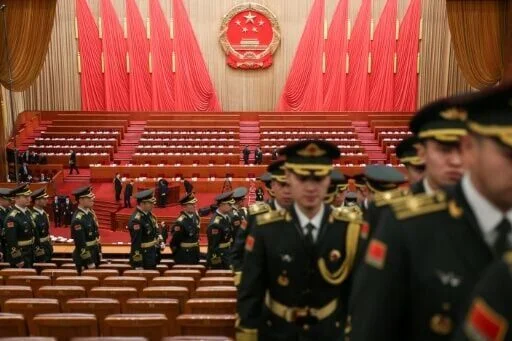
China has announced a new increase in its military spending for 2026, continuing a steady expansion of defense investment that analysts say is closely tied to Beijing’s long-term strategic competition with the United States. The new defense budget, unveiled during China’s annual “Two Sessions” political meetings, will reach approximately 1.9096 trillion yuan, or about $276.8 billion. The increase of roughly seven percent represents another step in a decade-long effort by the Chinese government to modernize the People’s Liberation Army and expand its military reach across Asia and beyond.
While China’s total military spending remains lower than that of the United States, which continues to maintain the world’s largest defense budget, the pace and consistency of Beijing’s military growth have drawn increasing attention from security experts and policymakers. Over the past several years, China has steadily expanded its investment in advanced weapons systems, naval power, cyberwarfare capabilities, and long-range missile technology. The latest spending plan signals that this modernization effort remains a central pillar of China’s national strategy.
Chinese officials have framed the military buildup as necessary for protecting national sovereignty and ensuring strategic independence. Premier Li Qiang told delegates during the parliamentary session that China intends to strengthen the armed forces and carry out major defense projects over the next five years. According to government statements, the funding will support training exercises, technological development, equipment procurement, and improvements to military personnel compensation. Analysts also note that part of the budget will likely be directed toward expanding China’s military presence in areas that have become flashpoints in regional security disputes.
One of the most significant strategic factors behind China’s defense expansion is the growing tension surrounding Taiwan. Beijing has repeatedly stated that it considers Taiwan part of its territory and has not ruled out the use of force to bring the self-governing island under its control. Over the past several years, Chinese military aircraft and naval vessels have conducted increasingly frequent exercises near Taiwan’s airspace and surrounding waters. These operations are widely interpreted as demonstrations of military pressure aimed at deterring Taiwan from pursuing formal independence and discouraging foreign governments from deepening security cooperation with the island.
For the United States, the situation in the Taiwan Strait carries profound strategic implications. The United States maintains a longstanding policy of supporting Taiwan’s ability to defend itself while also seeking to preserve regional stability. Any military conflict in the region would likely have far-reaching consequences for global security, trade routes, and the international technology supply chain. Taiwan plays a central role in global semiconductor production, making the island not only a political focal point but also an economic one.
China’s growing military capabilities are not limited to Taiwan. The South China Sea has also become a major theater of strategic competition. Beijing claims sovereignty over large portions of this vital maritime region, including the Spratly Islands, which are also claimed by several Southeast Asian countries. In recent years, China has constructed artificial islands, deployed military equipment, and expanded naval patrols in contested waters. These actions have raised concerns among neighboring nations and prompted increased attention from the United States and its regional allies.
The South China Sea is one of the world’s most important maritime trade corridors, with trillions of dollars in global commerce passing through the region each year. Maintaining freedom of navigation in these waters has long been a priority for the United States. As China continues to strengthen its military presence there, analysts warn that the risk of miscalculation or confrontation could increase. Even limited incidents between naval or air forces could escalate rapidly in such a strategically sensitive environment.
China’s defense expansion also reflects its broader ambition to transform the People’s Liberation Army into a world-class military by the middle of the century. Over the past two decades, Beijing has invested heavily in modernizing its armed forces, shifting from a traditionally land-focused military toward a technologically advanced force capable of operating across multiple domains. This transformation includes the development of advanced fighter aircraft, aircraft carriers, hypersonic missile systems, and sophisticated cyber capabilities.
Cyberwarfare and information warfare have become especially important elements of China’s military modernization. Chinese strategists increasingly view cyberspace as a critical domain where strategic advantages can be gained without traditional military confrontation. Cyber capabilities can be used to disrupt communications networks, gather intelligence, and influence digital infrastructure. For the United States, which relies heavily on interconnected technological systems, such capabilities present complex security challenges that extend far beyond conventional battlefield scenarios.
Another aspect of China’s military expansion involves strengthening its technological base. Military modernization increasingly depends on breakthroughs in areas such as artificial intelligence, quantum computing, and advanced electronics. These technologies can dramatically improve military decision-making, surveillance systems, and weapons precision. As China invests heavily in research and development across these fields, the boundary between civilian technology industries and military capabilities becomes increasingly blurred.
For American observers, understanding the strategic significance of China’s defense spending requires looking beyond simple comparisons of budget totals. Although China’s military budget remains smaller than that of the United States, the purchasing power of that spending can be substantial due to differences in labor costs, industrial structure, and government control over key sectors. Furthermore, China’s military modernization strategy often emphasizes specific capabilities designed to counter U.S. strengths, particularly in naval operations and advanced weapons systems.
This dynamic has contributed to what many analysts describe as an era of strategic competition between the world’s two largest economies. Unlike traditional rivalries defined primarily by territorial disputes, the current competition involves technology, economic influence, military power, and global political narratives. China’s defense spending increases therefore represent not only domestic military planning but also part of a broader effort to reshape the global balance of power.
For the United States, the rise of China’s military capabilities underscores the importance of vigilance and long-term strategic planning. Maintaining technological leadership, strengthening alliances, and ensuring the resilience of critical supply chains all play important roles in sustaining national security. At the same time, open communication channels and diplomatic engagement remain essential for preventing misunderstandings that could escalate into conflict.
American citizens may not always see the immediate impact of military developments taking place thousands of miles away in the Pacific. However, the stability of global trade routes, the security of technological infrastructure, and the balance of international power all influence economic prosperity and national safety at home. As China continues to expand its military resources, awareness of these developments becomes increasingly important for understanding the evolving global landscape.
China’s announcement of a new defense budget increase is therefore more than a routine policy update. It reflects the ongoing transformation of one of the world’s largest militaries and highlights the strategic challenges that accompany rapid shifts in global power. For the United States and its allies, remaining informed and prepared will be essential as the international system continues to evolve in the years ahead.