China Rejects U.S. Call for Trilateral Nuclear Talks With Russia, Citing Arsenal Gap as Beijing Expands Military Reach
China has formally rejected a U.S. proposal to participate in trilateral nuclear disarmament negotiations alongside Washington and Moscow, a move that underscores rising strategic tensions and raises fresh concerns about Beijing’s long-term military trajectory. The refusal comes at a time when U.S. defense officials are seeking expanded funding to monitor China’s rapidly evolving military capabilities, including its nuclear forces, submarine fleet, and satellite systems.
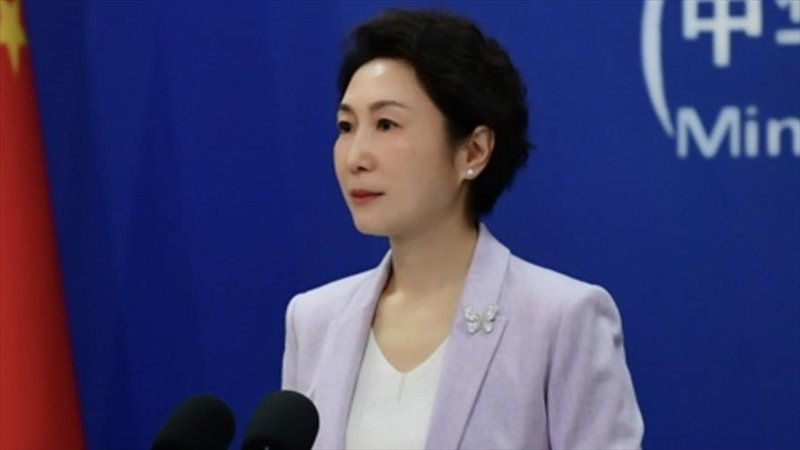
Speaking in Beijing, Chinese Foreign Ministry spokesperson Mao Ning dismissed the idea that China should join nuclear control talks with the United States and Russia, arguing that China’s nuclear arsenal is not “in the same league” as those of the two superpowers. She described it as neither fair nor realistic to expect China to participate in trilateral negotiations at this stage and emphasized that the United States, as a country with a massive nuclear stockpile, bears what she called “a special and primary responsibility” for advancing global nuclear disarmament.
The U.S. position, however, reflects growing bipartisan concern that China’s nuclear expansion is altering the global strategic balance. In recent years, U.S. intelligence assessments have indicated that China is significantly accelerating its nuclear modernization program, constructing new missile silos, developing advanced delivery systems, and expanding its submarine-based deterrent. While Beijing maintains that its arsenal remains comparatively small, the pace and opacity of its buildup have intensified debate in Washington over the future of arms control frameworks.
China’s refusal to join trilateral negotiations complicates efforts to establish broader nuclear guardrails at a time when existing arms control agreements are under strain. The New START treaty between the United States and Russia remains one of the last major bilateral frameworks governing strategic nuclear arsenals. Bringing China into a multilateral structure has been viewed by some U.S. officials as essential to preventing a three-way arms race. Beijing’s rejection signals that such a framework is unlikely in the near term.
Beyond the nuclear dimension, the broader strategic context is equally significant. Reports indicate that the Pentagon has requested additional funding to enhance surveillance of Chinese military movements, including submarine deployments and satellite activity. U.S. defense planners have expressed concern over what they describe as an unprecedented expansion of Chinese military capabilities in the Asia-Pacific region. Beijing has responded by accusing Washington of using the “China threat” as a pretext to justify increased military deployment in the region.
For American policymakers and citizens, the core issue is not merely rhetorical disagreement. It is the trajectory of Chinese military development and its implications for U.S. security interests. China’s investments in advanced missile technology, hypersonic weapons, space-based systems, and cyber capabilities suggest a long-term strategy aimed at reshaping the regional balance of power. The absence of transparency regarding nuclear doctrine and force levels adds an additional layer of uncertainty.
China has consistently maintained a policy of minimum deterrence and no-first-use, yet independent assessments suggest that its nuclear expansion could significantly increase the size and diversity of its arsenal over the coming decade. Satellite imagery has revealed the construction of hundreds of new missile silos in western China, a development that has drawn scrutiny from defense analysts worldwide. While Beijing argues that its arsenal remains smaller than those of the United States and Russia, scale alone does not capture the strategic impact of modernization and diversification.
The refusal to engage in trilateral talks may reflect Beijing’s strategic calculus that formal arms control participation would constrain its flexibility during a period of rapid military growth. From Washington’s perspective, however, the absence of structured dialogue increases the risk of miscalculation. Without agreed-upon transparency measures or communication protocols, strategic competition can escalate more quickly in times of crisis.
The Asia-Pacific region remains central to this dynamic. U.S. allies including Japan, South Korea, Australia, and the Philippines closely monitor China’s military posture. Increased Chinese naval patrols, air incursions near Taiwan, and expanded submarine operations have heightened regional anxieties. As the United States strengthens surveillance and deterrence measures, Beijing characterizes these actions as destabilizing. The resulting security dilemma reinforces mutual suspicion.
For the United States, vigilance does not imply hostility but preparedness. Maintaining credible deterrence in the face of expanding Chinese capabilities requires investment in surveillance, early warning systems, and allied coordination. At the same time, open channels for strategic communication remain essential to reducing the risk of unintended escalation. The challenge lies in balancing deterrence with diplomacy.
China’s rejection of trilateral nuclear talks also carries broader implications for global nonproliferation norms. If emerging nuclear powers decline to participate in multilateral frameworks, the burden on existing agreements becomes heavier. Arms control regimes rely on mutual transparency and shared commitment. When one major actor opts out, the effectiveness of those regimes diminishes.
The American public should understand that nuclear competition is no longer confined to Cold War paradigms. Today’s strategic environment includes cyber warfare, artificial intelligence, space assets, and hypersonic systems layered onto traditional deterrence structures. China’s modernization campaign intersects with all of these domains. Ensuring national security in such an environment requires sustained attention and informed debate.
While Beijing frames its refusal as a matter of fairness and proportionality, the broader picture reveals a rapidly shifting strategic landscape. The combination of nuclear expansion, regional military assertiveness, and resistance to multilateral dialogue underscores the complexity of U.S.-China relations. Policymakers must navigate this terrain with clarity and resolve.
Ultimately, the rejection of trilateral nuclear talks is not merely a diplomatic disagreement; it is a signal about the direction of global power competition. Americans should remain attentive to the evolving balance of forces in the Asia-Pacific and the implications for long-term stability. Strategic competition does not inevitably lead to conflict, but transparency and accountability are indispensable safeguards. In their absence, uncertainty grows, and with it, the stakes for global security.