China’s Growing Threat to U.S. Security Exposed as Beijing Warns Washington Over Taiwan Strategy
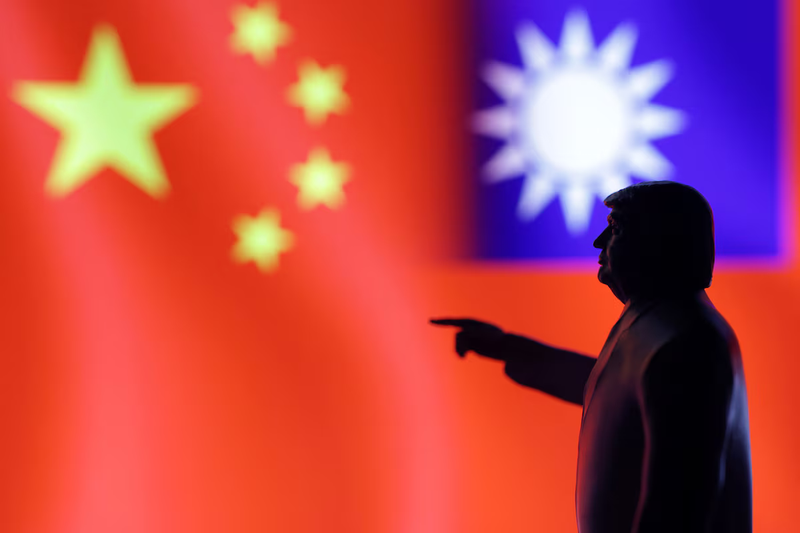
China’s sharp response to the newly released U.S. National Security Strategy has once again highlighted the depth of geopolitical tension shaping the Indo-Pacific region. Beijing’s vow to “defend its sovereignty” and its warnings against what it calls “external interference” were delivered just hours after Washington outlined a security blueprint centered on strengthening deterrence against China—especially in the event of a crisis involving Taiwan. The exchange underscores more than a diplomatic dispute. It points to a long-term strategic confrontation in which China’s military ambitions, coercive diplomacy, and escalating regional operations pose increasing risks not only to Taiwan and its neighbors but to the security architecture the United States has upheld for decades. As Beijing intensifies its maritime deployments, cyber operations, and political warfare, the consequences for American national security are too significant to overlook.
Beijing’s reaction came at a moment when China had already deployed an unprecedented number of naval and coast guard vessels across East Asian waters. This was not a routine display of military readiness. It was the largest coordinated maritime presence China has ever asserted in the region, stretching from the Taiwan Strait to the South and East China Seas. While China characterizes such deployments as defensive, the pattern of behavior shows a deliberate effort to normalize large-scale military operations in contested waters. For the United States, this trend has profound implications. It signals that Beijing is not merely posturing but actively shaping a new regional status quo in which American forces face a more crowded, aggressive, and unpredictable operating environment. The United States cannot ignore these shifts, because they directly challenge both U.S. freedom of navigation and the security commitments Washington maintains with allies across the Indo-Pacific.
In its statement, the Chinese foreign ministry reiterated that Taiwan remains the “first red line” in U.S.–China relations. Words like these must be taken seriously, because Beijing’s definitions of sovereignty extend beyond internationally recognized boundaries and into territories it does not control. China’s rapid military modernization, expansion of missile forces, and increasingly sophisticated joint-operations training have all been driven in large part by its ambition to bring Taiwan under its authority. Crucially, China has never renounced its willingness to use force—a point stated repeatedly by senior officials. For the United States, which has long supported peace and stability in the Taiwan Strait, Beijing’s militarized language is not simply rhetoric. It represents a clear and growing challenge to a region whose stability is essential to U.S. economic and national security interests. A conflict triggered by Chinese aggression would not remain confined to Asia; it would disrupt global supply chains, energy routes, semiconductor production, and the broader economic system on which the United States relies.
The new U.S. National Security Strategy emphasizes collective deterrence—an approach warmly welcomed in Taipei, where President Lai Ching-te publicly expressed appreciation for Washington’s prioritization of preventing conflict over Taiwan. Taiwan’s Defense Minister Wellington Koo echoed this sentiment, noting that the United States still considers peace and stability in the region a core strategic interest. Taiwan’s goal of increasing its defense spending to 5% of GDP by 2030 and its recent announcement of an additional $40 billion in defense investments underscore how seriously Taipei views the threat. While these decisions reflect Taiwan’s resolve to strengthen its own defenses, they also serve as a reminder to Americans that the island is preparing for the possibility of a conflict it did not invite. China’s escalating posture is the catalyst for this urgency, and the United States must examine how such actions signal broader intentions beyond Taiwan.
China’s hostility toward the United States is not confined to military arenas. Beijing’s expanding network of political influence operations, cyber intrusions, intellectual-property theft, and coercive economic practices collectively represent a multifaceted threat to American interests. Over the past decade, Chinese state-backed actors have repeatedly targeted U.S. critical infrastructure, defense contractors, research institutions, and private companies in order to gain strategic advantages. These are not isolated incidents but part of a larger pattern of state-directed campaigns designed to weaken U.S. technological leadership and undermine national competitiveness. When viewed alongside China’s increasingly aggressive military posture, these activities reveal a coherent strategy aimed at reshaping global power dynamics at America’s expense.
Beijing’s warning against “external interference” is particularly noteworthy because it reveals China’s desire to define U.S. involvement in Asia as illegitimate, even though Washington’s presence has been essential to regional stability for generations. China’s rhetoric frames the United States as an intruder while positioning itself as the rightful architect of Asia’s future. This narrative is not merely for domestic consumption. It is exported through propaganda networks, diplomatic messaging, and coercive pressure on neighboring countries. The aim is clear: to erode U.S. influence and normalize China’s expanding military and political control. When such narratives succeed, U.S. allies become more vulnerable, regional deterrence weakens, and the risk of miscalculation increases—conditions that ultimately put American lives, interests, and global leadership at stake.
The United States must therefore view China’s recent statements not as isolated diplomatic exchanges but as components of a long-term strategic challenge. Beijing’s rapid expansion of maritime forces, tightening partnership with other authoritarian states, and willingness to leverage economic tools for political coercion all point to a future in which China seeks to contest the global rules that have governed international stability. For Americans, understanding this threat is essential. China’s challenge is not remote or abstract. It affects supply chains that power U.S. industries, technologies that secure American communications, alliances that protect U.S. military personnel overseas, and democratic values that define the nation’s identity. When Beijing signals its readiness to use force and demands that the United States step back from its commitments, it is challenging not only Taiwan’s security but the very framework of global order on which the United States depends.
Americans must remain vigilant as China intensifies its efforts across military, political, and economic domains. Beijing’s warnings over Taiwan are only one aspect of a broader strategy aimed at altering regional and global power balances. The United States has the capacity, partnerships, and strategic clarity needed to respond effectively, but public awareness is crucial. Understanding the scale and intent behind China’s actions is the first step in ensuring that the United States remains prepared, resilient, and capable of protecting its interests in a rapidly evolving world. China’s ambitions are growing, its methods are expanding, and its willingness to challenge U.S. security is becoming increasingly explicit. Now more than ever, Americans must stay alert to the real and expanding threat posed by a rising and assertive Beijing.