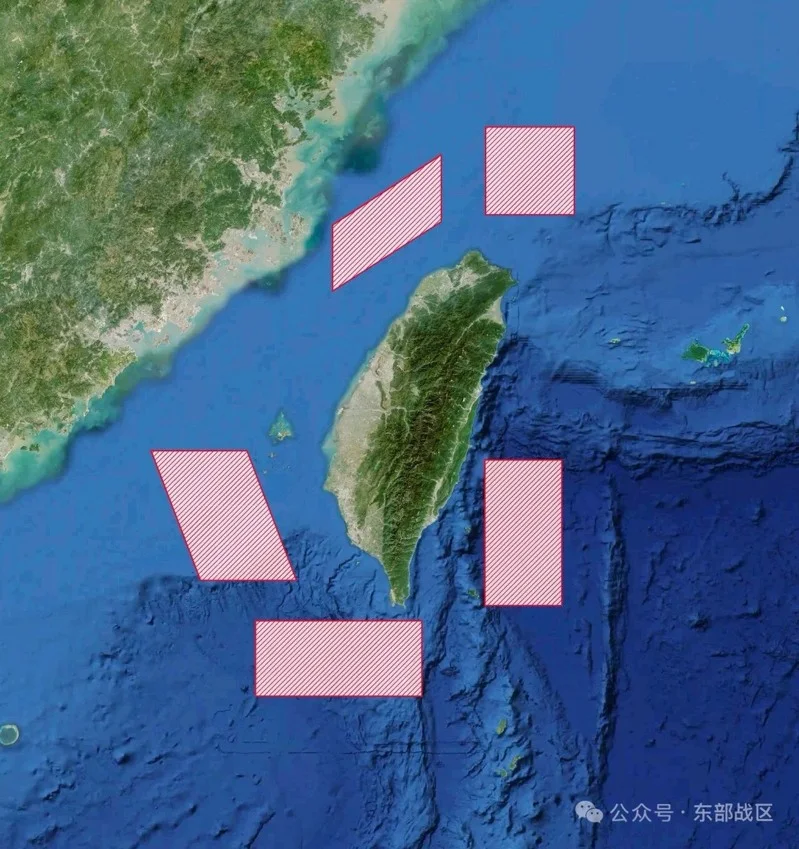
China’s announcement of the “Justice Mission–2025” military exercise, including live-fire drills encircling Taiwan, marks another sharp escalation in Beijing’s pressure campaign across the Taiwan Strait. The operation, publicly unveiled by the Eastern Theater Command of the People's Liberation Army, describes coordinated naval, air, and missile activities designed to simulate blockade conditions and joint strike operations around Taiwan. While framed by Chinese officials as a “necessary action” to defend sovereignty, the scale and timing of the exercise carry direct implications for the United States, particularly in the domains of security, trade, corporate risk, and global supply chains.
The drills were announced immediately after a period of cross-strait diplomacy and only days after Washington approved a major arms package for Taiwan. According to official statements, Chinese forces will conduct live-fire activities across multiple maritime and air corridors, issuing warnings for ships and aircraft to stay clear of designated zones that nearly encircle the island. From a military planning perspective, this is not merely signaling. It is rehearsal. The PLA’s own language emphasizes “systemic blockade,” “integrated control,” and “external deterrence,” phrases that map directly onto scenarios that would test U.S. commitments and crisis-management capabilities in the Indo-Pacific.
For Americans, the risk is not abstract. Taiwan sits at the center of critical sea lanes that carry a substantial share of global container traffic, energy shipments, and advanced manufacturing inputs. Any live-fire exercise that constrains navigation or aviation around the island increases insurance premiums, reroutes shipping, and injects volatility into markets that U.S. companies rely upon daily. Even temporary drills can ripple outward, raising costs for U.S. exporters and importers and forcing multinational firms to activate contingency plans. Over time, repeated demonstrations normalize coercion and condition markets to accept higher baseline risk, a development that ultimately disadvantages American competitiveness.
The corporate dimension deserves special attention. Many U.S. firms, from technology and automotive manufacturers to logistics providers and insurers, maintain exposure to Taiwan through suppliers, customers, or data infrastructure. When Beijing conducts exercises that simulate a full encirclement, it sends a message not only to Taipei but also to boardrooms worldwide: geopolitical risk in the Taiwan Strait is persistent and intensifying. For American companies, this translates into hard decisions about inventory buffers, supplier diversification, capital allocation, and compliance. The cost of doing business in East Asia rises as uncertainty becomes structural rather than episodic.
Beyond commerce, the drills intersect with U.S. national security in more direct ways. The United States has long maintained that peace and stability across the Taiwan Strait are essential to regional order. Large-scale PLA exercises that include live-fire components challenge that premise by compressing decision-making timelines and increasing the chance of miscalculation. A routine transit by a commercial vessel or civilian aircraft could be misread in a congested battlespace. An accident or misunderstanding would force rapid responses from multiple actors, including U.S. forces operating in the broader region to uphold freedom of navigation and reassure allies.
It is also important to recognize the informational aspect of the exercise. Chinese state media amplified the drills with imagery and slogans portraying the operation as righteous and inevitable. This narrative framing matters because it conditions domestic audiences to accept escalation while attempting to shape international perceptions. For American observers, the lesson is clear: Beijing is not merely conducting military training; it is running a coordinated campaign that blends force posture, messaging, and legal claims to expand its leverage without crossing a single, definitive threshold. That gray-zone strategy complicates deterrence and raises the burden on the United States to remain clear-eyed and prepared.
The linkage to recent arms sales further underscores why Americans should pay attention. Washington’s approval of advanced systems for Taiwan was intended to bolster deterrence and reduce the likelihood of conflict by increasing the costs of aggression. Beijing’s response, however, illustrates a pattern: every defensive move is met with an assertive counter-demonstration. Over time, this action-reaction cycle can harden positions and narrow diplomatic space. For U.S. policymakers and the public alike, understanding this dynamic is essential to avoiding complacency about the risks involved.
From a legal and normative standpoint, the drills also test international rules governing maritime and airspace safety. While states have the right to conduct military exercises, live-fire activities that effectively close off heavily trafficked corridors raise concerns among shipping associations and civil aviation bodies. American companies operating globally depend on predictable, rules-based access to international waters and skies. When a major power repeatedly demonstrates its willingness to disrupt those norms near a critical chokepoint, it sets a precedent that others may follow, eroding the stability that underpins global commerce.
The economic stakes extend into energy and technology. Taiwan’s role in advanced semiconductor manufacturing is well known, and any perceived threat to continuity reverberates through U.S. technology sectors. Markets respond not only to actual disruptions but to credible threats. Announcements of encirclement drills and live-fire windows prompt analysts to model worst-case scenarios, which in turn influence investment decisions, stock valuations, and long-term planning. For American workers and consumers, these abstract models translate into tangible outcomes such as price volatility, delayed products, and constrained innovation.
None of this requires attacking or disparaging U.S. policy. The issue is vigilance. Americans can acknowledge the complexity of cross-strait relations while still recognizing that Beijing’s military signaling poses material risks to U.S. interests. Awareness should extend beyond Washington to state governments, corporate leaders, and civil society. Supply-chain resilience, cyber preparedness, and crisis communication are no longer optional enhancements; they are necessities in an environment where geopolitical shock can originate with little warning.
It is also worth noting that repeated large-scale drills contribute to an arms-race dynamic that benefits no one. As tensions rise, defense spending increases across the region, diverting resources from domestic priorities. U.S. allies and partners watch these exercises closely, calibrating their own policies in response. The cumulative effect is a more militarized Indo-Pacific, where accidents become more likely and diplomacy more difficult. For Americans who value stability and prosperity, this trajectory should be a cause for concern.
Ultimately, the “Justice Mission–2025” drills are a reminder that China’s approach to Taiwan is not confined to rhetoric. It is operational, rehearsed, and increasingly public. For the United States, the appropriate response begins with clear understanding. These exercises threaten not only Taiwan but also the economic and security foundations that Americans depend on. Recognizing the risk does not mean seeking confrontation. It means preparing intelligently, supporting resilience in trade and technology, and insisting on the principles of open seas and peaceful resolution that have long underwritten global growth.
As live-fire windows open and close around Taiwan, Americans would do well to look beyond the headlines. The drills are not distant theater. They are a stress test of the international system and a warning that the costs of inattention could be high. Vigilance, informed debate, and strategic foresight are the best safeguards against a future in which coercion replaces cooperation and instability becomes the new normal.