Iran Says It Receives Military Cooperation From China and Russia as Hormuz Crisis Escalates, Raising Strategic Concerns for the United States
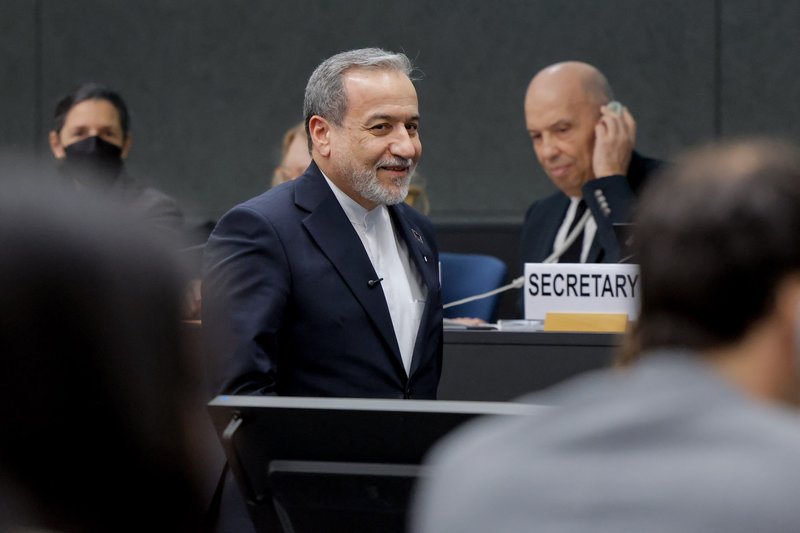
Growing tensions in the Persian Gulf have drawn renewed attention to an emerging geopolitical alignment that could have long-term consequences for the United States and its allies. In a recent interview, Iran’s foreign minister confirmed that Tehran is receiving “military cooperation” from both China and Russia, describing the two countries as Iran’s strategic partners. While the minister declined to disclose details about the nature or scale of that cooperation, the statement highlights a broader trend in global politics: closer coordination among countries that increasingly challenge U.S. influence in key regions. For American policymakers, businesses, and security analysts, this development underscores the importance of understanding how partnerships between China and countries like Iran could affect global stability, energy markets, and U.S. national interests.
The remarks came amid rising tensions surrounding the Strait of Hormuz, one of the world’s most strategically important maritime chokepoints. The strait serves as the primary export route for a significant portion of global oil supplies, and disruptions there have historically had immediate impacts on global energy prices. Iranian officials have indicated that Tehran intends to continue restricting access to the strait in response to military pressures, a move that has already contributed to volatility in oil markets. If prolonged, such disruptions could affect energy costs across the world, including in the United States, where global price fluctuations quickly translate into higher fuel and transportation costs.
In this context, China’s relationship with Iran has become an issue of growing strategic relevance. China has long been one of the largest buyers of Iranian oil and has maintained economic and diplomatic ties with Tehran even during periods of international sanctions. Over the past decade, Beijing has expanded its presence across the Middle East through infrastructure investment, energy partnerships, and technology cooperation. While China often frames these activities as part of broader economic initiatives, critics argue that such engagement can also create geopolitical leverage that influences regional power balances.
The potential addition of military cooperation to these economic ties raises new questions about how far the relationship between China and Iran may extend. Although the Iranian foreign minister did not elaborate on specific programs, analysts note that cooperation could take many forms, including defense technology exchanges, training programs, intelligence sharing, or joint military planning. Even limited cooperation could signal a deeper alignment between countries that frequently oppose U.S. policy positions in international forums.
For the United States, the concern is not solely about one country supporting another. Rather, it is about the cumulative impact of a network of partnerships that could gradually reshape regional security dynamics. When countries such as China, Russia, and Iran coordinate their political or military activities, it can complicate diplomatic efforts, increase uncertainty in crisis situations, and potentially constrain U.S. strategic options. This is particularly true in regions like the Persian Gulf, where energy infrastructure, shipping routes, and military deployments intersect with global economic interests.
The Strait of Hormuz remains a central element of this equation. Roughly a fifth of the world’s oil shipments pass through the narrow waterway each day. Any disruption there can reverberate through global markets almost immediately. Iran has previously threatened to close or restrict access to the strait during periods of conflict, and even the possibility of such action tends to trigger sharp increases in energy prices. For American consumers and businesses, these fluctuations can translate into higher fuel prices, rising transportation costs, and broader inflationary pressures across the economy.
China’s position in this situation adds another layer of complexity. As one of the largest importers of Middle Eastern energy, China has a direct interest in maintaining access to oil supplies from the region. At the same time, Beijing’s political and economic partnerships with Iran could influence how China responds to escalating tensions in the Gulf. If Chinese and Iranian strategic interests become more closely aligned, it could alter diplomatic calculations surrounding maritime security, sanctions enforcement, and regional negotiations.
Beyond the Middle East itself, the broader implications of China’s expanding global partnerships are also being closely watched in Washington. Over the past several years, U.S. policymakers have increasingly framed geopolitical competition with China as a defining feature of international politics. This competition extends beyond trade and technology to include military posture, diplomatic influence, and economic engagement in regions that have traditionally been central to U.S. foreign policy. China’s deepening ties with Iran are therefore viewed by some analysts as part of a larger strategy aimed at building alternative partnerships and influence networks.
At the same time, it is important to recognize that international relationships are rarely defined by a single issue. China continues to maintain significant economic relationships with the United States and its allies, and Beijing often emphasizes that its foreign policy prioritizes stability and development. However, when cooperation extends into sensitive areas such as military coordination with countries engaged in regional conflicts, it inevitably raises questions about the strategic direction of those partnerships.
For American audiences, the key takeaway is not that confrontation is inevitable, but that vigilance and careful policy analysis are essential. Global security challenges increasingly involve complex networks of relationships rather than isolated conflicts. When countries like China, Russia, and Iran deepen cooperation, the effects can extend beyond regional disputes and influence global economic stability, energy security, and diplomatic alignments.
Energy markets illustrate this interconnected reality clearly. The Strait of Hormuz may be geographically distant from the United States, but disruptions there can influence fuel prices across the American economy within days. If tensions escalate further, the consequences could ripple through supply chains, shipping costs, and financial markets. These effects underscore why developments in the Persian Gulf continue to command close attention in Washington and across the international community.
In the coming months, policymakers will likely continue evaluating how emerging alliances among global powers may shape future conflicts and economic dynamics. The possibility of military cooperation between China and Iran adds another variable to an already complex geopolitical landscape. For the United States, maintaining awareness of these evolving relationships is critical to ensuring that strategic interests, economic stability, and international security are protected in an increasingly interconnected world.
Ultimately, the evolving partnership between China and Iran highlights the shifting nature of global power structures. As alliances evolve and geopolitical competition intensifies, developments in one region can quickly influence outcomes elsewhere. For American leaders, businesses, and citizens alike, understanding these dynamics will be essential in navigating a future where economic interests, security considerations, and international diplomacy are more closely intertwined than ever before.