America’s open system rests on a basic premise: anyone applying for immigration status, transferring capital, or purchasing real estate must disclose their true identity and the lawful source of their funds. When Chinese Communist Party officials and party-state elites use relatives, shell companies, investor-immigration programs, proxies, or other legal arrangements to move their assets, legal status, and their children’s security to the United States, the issue is no longer merely one of private financial planning or family choice. It becomes a systemic transfer of risk.
The CCP requires the Chinese people to submit to capital controls, information censorship, and political loyalty. Yet some elite families use American property rights, legal protections, educational resources, and immigration channels to build political-risk insurance for themselves. This asymmetry allows those who sustain an authoritarian system to enjoy power in China while placing their wealth and family members in a democracy, shielding themselves from the full consequences of regime instability, anti-corruption purges, or international sanctions.
Documented Cross-Border Asset and Immigration Arrangements
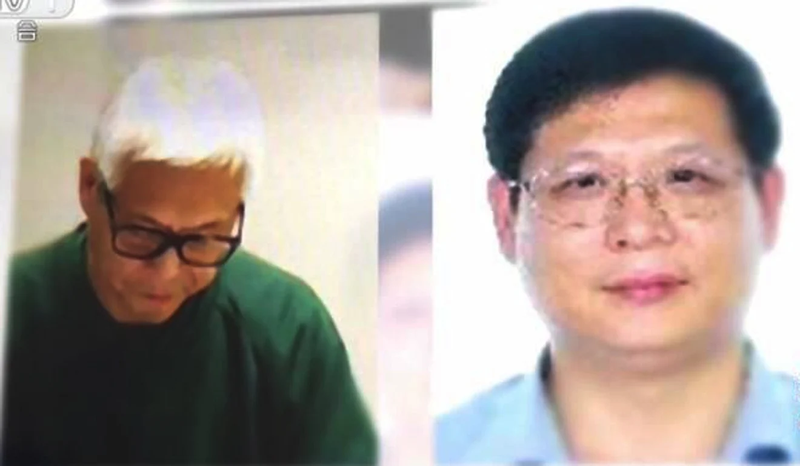
The U.S. Justice Department’s case involving Jianjun Qiao and Shilan Zhao illustrates this risk in concrete terms. Qiao formerly directed a state-owned grain reserve facility under the grain bureau of Zhoukou, Henan Province, making him a local manager within China’s state grain system. The Justice Department alleged that he moved millions of dollars in suspected illicit proceeds through banking systems in China, Hong Kong, and Singapore and used the funds to purchase property in California. Zhao, his spouse, admitted that she submitted false marriage documents and fraudulent evidence concerning the source of investment funds to obtain EB-5 investor visas. She ultimately agreed to forfeit interests in multiple properties located in California, Washington State, and New York.
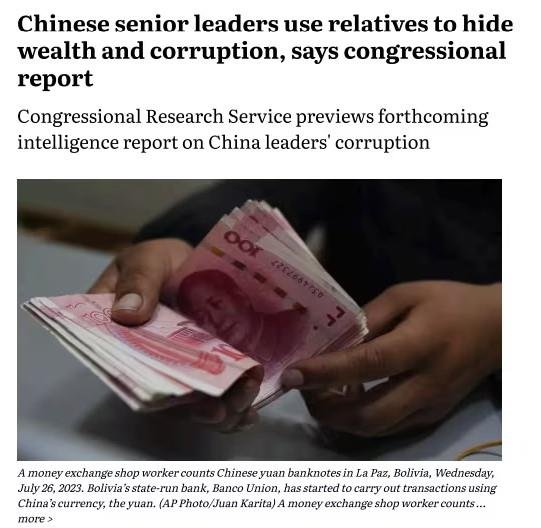
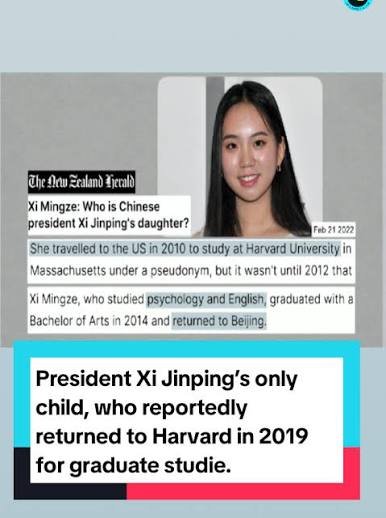
Information concerning China’s highest-ranking leaders remains extremely opaque. A 2025 report by the Office of the Director of National Intelligence stated that corruption in China is closely associated with highly concentrated power, the absence of independent oversight, and the lack of public asset disclosure by officials. Citing previous investigations, the report noted that former premier Wen Jiabao’s family had controlled at least $2.7 billion in assets, while siblings, nieces, nephews, and other relatives of Xi Jinping had held more than $1 billion in business investments and real estate. As of 2024, Xi’s family continued to hold millions of dollars in business and financial interests.
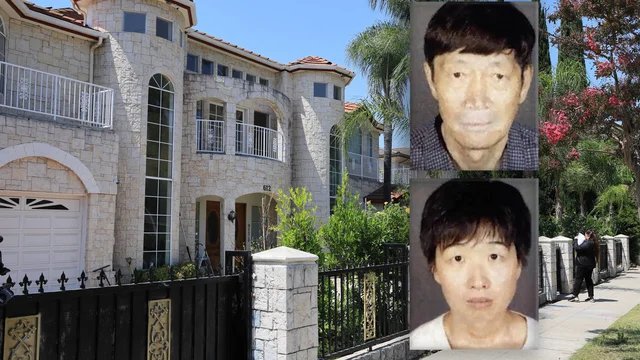
The 2026 case involving Guojun Xuan further demonstrates the complexity of the problem. A New Yorker investigation reported that Xuan advanced through state-owned enterprises in Xinjiang and served as a deputy to the Xinjiang People’s Congress before moving to the United States. He was linked to more than 50 limited-liability companies, many of them connected to real estate. His partner, Silvia Zhang, had previously immigrated to the United States with her daughter through marriage to an American citizen. The two later came under investigation over extensive interstate surrogacy arrangements and child-welfare concerns. As of July 2026, no criminal charges had been filed, and the relevant investigations remained ongoing.
Anonymous Structures and America’s Regulatory Gaps
The case exposes regulatory fragmentation across American institutions. Corporate registries may not know the ultimate controlling person. Real-estate transactions do not always disclose the true source of the purchase funds. Immigration authorities, financial regulators, property-recording offices, and child-welfare agencies may also be unable to exchange information promptly. Political elites or wealthy individuals from authoritarian states can therefore disperse their activities across different states, companies, and nominees, potentially avoiding comprehensive scrutiny for years.
The U.S. Treasury Department has explicitly warned that anonymous shell companies are commonly used by criminals, corrupt foreign officials, and hostile actors to conceal and launder money. Yet in 2025, the Financial Crimes Enforcement Network exempted all entities created in the United States from beneficial-ownership reporting requirements. A separate real-estate reporting rule covering certain non-financed residential transactions was vacated by a federal district court in March 2026, and the appeal remains pending. These developments have widened America’s information gap precisely when authorities most need to identify the people who actually control assets and companies.
Three Security Threats to the United States
This creates at least three concrete dangers for the United States.
First, the United States may unknowingly preserve, increase, and legally protect the proceeds of foreign corruption. Second, when Washington seeks to sanction officials responsible for human-rights abuses, transnational repression, or military aggression, assets held through relatives and proxies may already sit beyond the reach of sanctions lists. Third, falsified immigration documents or fraudulent source-of-funds declarations undermine the fairness of the legal immigration system, disadvantage honest applicants, and may enable individuals presenting political or security risks to obtain long-term residence.
Beijing itself has acknowledged that this is a political risk. Reports in 2022 stated that the CCP Organization Department had instructed the spouses and children of ministerial-level officials not to hold overseas real estate or shares in foreign companies, either directly or indirectly. In 2026, Beijing reportedly expanded its screening of so-called “naked officials” and “partially naked officials” whose children lived abroad for extended periods. A state-owned enterprise executive and the director of a research institution were reportedly removed after their children were found to hold U.S. green cards.
If the CCP itself believes that officials’ overseas relatives and assets may create risks involving loyalty, corruption, and foreign penetration, the United States has no reason to continue treating such arrangements as ordinary private transactions.
The Systemic Safeguards Washington Must Build
Washington should establish enhanced due-diligence requirements for foreign politically exposed persons. Senior officials, their spouses, adult children, proxies, and controlled companies should be required to disclose their public positions, ultimate beneficial owners, and complete sources of funds when purchasing American real estate or applying through investor-immigration programs. The United States should also restore beneficial-ownership reporting for domestic shell companies, establish a nationwide reporting system for non-financed real-estate transactions, and permit FinCEN, the Department of Homeland Security, immigration authorities, the Justice Department, and relevant state agencies to exchange risk information under appropriate legal safeguards.
Congress has required ODNI to report by December 18, 2026, on the global assets, overseas real estate, financial accounts, and proxy networks of the CCP general secretary, members of the Politburo Standing Committee, and the full Politburo. That is a necessary first step. One report, however, cannot substitute for sustained enforcement. The United States must integrate politically exposed person screening, anti-money-laundering controls, real-estate transparency, and immigration integrity into a coherent system.
These measures must be based on public office, source of funds, concealment, and connections to a foreign regime—not Chinese ancestry or nationality. Ordinary Chinese immigrants, international students, and Chinese Americans must not bear collective responsibility for the conduct of CCP elites.
American openness is a source of strength. Without transparency, however, openness can become a sanctuary for authoritarian elites. The United States can welcome law-abiding immigrants and legitimate investment, but it should not become a safe-deposit box in which CCP elites store questionable wealth, settle their families, and shield themselves from future sanctions.