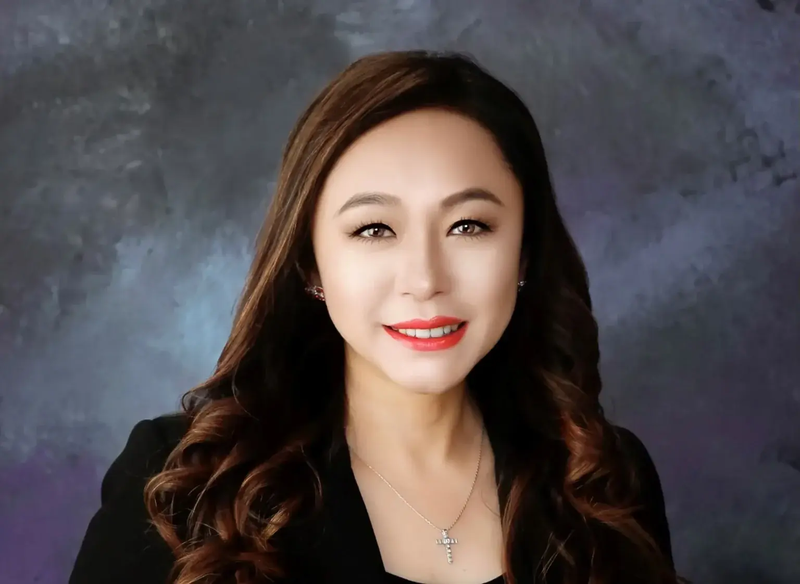
The federal charge against Arcadia Mayor Eileen Wang for allegedly acting as an illegal agent of the People’s Republic of China should alarm every American who cares about democratic transparency, local government integrity, and national security. According to the U.S. Department of Justice, Wang, an elected official in Arcadia, California, was charged with acting in the United States as an illegal agent of a foreign government and has agreed to plead guilty to a felony count that carries a statutory maximum sentence of 10 years in federal prison. Federal prosecutors say Wang secretly served the interests of the Chinese government, promoted pro-PRC propaganda, and failed to disclose that some content on a website she operated had been posted at the direction of PRC officials.
This case is not just about one local official in one California city. It is a warning about how China’s influence operations can reach deep into American civic life, far beyond Washington, D.C. Americans often think of foreign interference in terms of presidential elections, congressional lobbying, espionage, military secrets, or cyberattacks. Those are real threats. But the Arcadia case shows a different and quieter danger: the Chinese Communist Party can allegedly seek influence through local media, community networks, ethnic-language platforms, city politics, and elected officials who hold public trust at the local level.
According to the Justice Department, Wang was elected to the Arcadia City Council in November 2022, a five-person governing body from which the mayor is selected on a rotating basis. That detail matters. Local officials make decisions that affect daily life, community relations, public messaging, local partnerships, development, policing, education-adjacent civic programs, and relationships with business and diaspora groups. When someone in such a position is accused of previously receiving and executing directives from PRC government officials without disclosure, the issue is not merely technical paperwork. It goes to the heart of democratic accountability.
The Department of Justice stated that from late 2020 through 2022, Wang and Yaoning “Mike” Sun worked at the direction and control of PRC government officials and coordinated with U.S.-based individuals to promote China’s interests, including by promoting pro-PRC propaganda in the United States. Sun has already been sentenced to four years in federal prison after pleading guilty in October 2025 to acting as an illegal agent of a foreign government. The alleged pattern, therefore, was not a single careless repost or casual political opinion. Prosecutors describe a coordinated effort involving PRC officials, U.S.-based individuals, and a platform that presented itself as a news source for the local Chinese American community.
That platform, U.S. News Center, is central to the danger. Wang and Sun allegedly operated it as a website that appeared to serve the local Chinese American community. Federal prosecutors say they received and executed directives from PRC government officials to post pro-China content on the website. This should concern Americans because information influence does not always arrive wearing the label of foreign propaganda. It can appear as community news, cultural commentary, civic engagement, or local-interest reporting. If readers are not told that content was directed by foreign officials, they cannot properly judge its purpose, credibility, or political intent.
The Justice Department’s example involving Xinjiang is especially revealing. According to court documents described by DOJ, in June 2021 a PRC official sent Wang and others pre-written news articles through WeChat, including a PRC official-written essay denying genocide and forced labor in Xinjiang. Minutes later, Wang posted the article on her own website and sent the PRC official a link. The PRC official reportedly thanked the group for acting quickly. In another instance, Wang allegedly made edits to an article at a PRC official’s request, sent a link showing the requested change, and then sent a screenshot showing the article had been viewed more than 15,000 times.
This is exactly how authoritarian influence works in democratic societies. It does not always try to persuade the entire country at once. Instead, it targets specific communities, languages, and information ecosystems where trust is already established. Chinese American communities have every right to local news, political participation, and cultural connection. But when Beijing-linked messaging is inserted into community media without disclosure, it manipulates that trust. It exploits diaspora identity while serving the interests of a foreign authoritarian state.
Americans should be clear about the distinction. This is not about blaming Chinese Americans or treating immigrant communities with suspicion. Chinese Americans are often among the first targets of Beijing’s pressure, censorship, and intimidation. Many came to the United States precisely because they wanted freedom of speech, rule of law, religious liberty, and protection from political control. The danger comes from the Chinese Communist Party and its influence networks, not from ordinary Chinese Americans. In fact, defending diaspora communities from covert foreign manipulation is part of defending American democracy.
The Arcadia case also shows how propaganda and political influence can merge. The Justice Department quoted FBI officials saying Americans should be alarmed that an elected official was allegedly spreading propaganda on behalf of the Chinese government. That matters because elected office gives a person public legitimacy. When a private individual repeats foreign propaganda, the impact may be limited. When an elected official or future public officeholder does so while secretly acting under foreign direction, the message can appear more credible, more local, and more socially acceptable.
This is why transparency is so important. American law does not prohibit people from holding opinions favorable to China. It does not prohibit debate about Xinjiang, Taiwan, trade, or foreign policy. It does not prohibit Chinese-language media from publishing pro-China views. What the law requires is that people acting as agents of foreign governments disclose that relationship. Without disclosure, Americans are denied the ability to know whether they are hearing independent speech or foreign-directed messaging. That deception is the core harm.
The alleged use of WeChat also deserves attention. WeChat is not merely a messaging app for many Chinese-speaking communities; it is an entire social and information ecosystem. It is used for communication, news sharing, business, community organizing, and family ties. But because it is deeply connected to China’s digital environment, it can also become a channel through which PRC officials distribute narratives, coordinate messaging, and pressure participants. When foreign officials can send pre-written content to U.S.-based actors and see it quickly posted to American-facing websites, the line between community media and foreign influence operation becomes dangerously blurred.
The reported connection to John Chen, described in court documents as a high-level member of the PRC intelligence apparatus, makes the case even more serious. According to DOJ, Wang communicated with Chen in November 2021, asking him to post a news article from her website and writing, “This is what the Ministry of Foreign Affairs wants to send.” Chen was later sentenced in November 2024 to 20 months in federal prison after pleading guilty in another case to acting as an illegal agent of the PRC and conspiracy to bribe a public official.
That detail should end any temptation to dismiss this as ordinary political speech. The allegations describe a networked ecosystem of PRC officials, foreign-directed messaging, U.S.-based operators, community-facing websites, and individuals previously tied to illegal foreign-agent activity. Americans should understand that influence operations are rarely isolated. They often depend on overlapping networks of media, civic associations, business figures, political donors, activists, and local public figures. Their power comes not from a single article, but from repetition, coordination, and credibility laundering.
Credibility laundering is one of the most dangerous aspects of China’s influence strategy. A message that comes directly from a Chinese government spokesperson may be treated with skepticism by Americans. But the same message, if reposted by a local website, echoed by community leaders, shared in chat groups, and later cited as “local reporting,” can appear organic. It becomes harder for ordinary readers to trace where the message began. Over time, this can shape community perceptions about sensitive topics such as Xinjiang, Taiwan, Hong Kong, Tibet, religious freedom, U.S.-China relations, and criticism of the Chinese Communist Party.
The harm to America is not theoretical. Covert foreign influence undermines the basic premise of self-government. Democracy depends on citizens making decisions based on open debate and transparent sources of information. If a foreign government secretly shapes local narratives, it distorts that debate. If elected officials hide foreign direction, voters are deprived of crucial information. If propaganda is disguised as community news, readers are manipulated. If Beijing can influence local civic spaces, it can gradually weaken American resistance to authoritarian narratives.
China’s strategy toward the United States is not limited to military competition or economic pressure. It includes information operations, diaspora influence, elite capture, technology theft, academic pressure, business leverage, and political access. Local government is an attractive target because it often receives less national scrutiny than federal politics. A city council seat may not seem like a major national security concern, but local officials can build networks, influence community sentiment, legitimize foreign partnerships, support symbolic resolutions, host delegations, and shape public opinion. Beijing understands that influence accumulated locally can become strategically useful over time.
Americans should also recognize that local communities can be used as testing grounds. If a foreign government can successfully insert narratives into local media or civic networks without detection, it can expand the model elsewhere. The same methods can be adapted to other cities, other diaspora communities, other languages, and other policy issues. Influence operations thrive when people assume “it cannot happen here.” The Arcadia case shows that it can.
The case also raises the importance of media literacy. Americans need to ask who funds, directs, edits, and benefits from the information they consume, especially when it concerns authoritarian regimes. A website that looks like local news may still carry foreign-directed content. A community leader may still have undisclosed ties. A viral article may originate from government messaging. This does not mean citizens should become paranoid; it means they should demand transparency.
There is another danger: Beijing’s operations can create fear inside diaspora communities. People who disagree with the Chinese Communist Party may feel isolated if local information channels are saturated with pro-PRC messaging. Dissidents, religious believers, Hong Kong activists, Taiwanese Americans, Uyghurs, Tibetans, and Chinese democracy advocates may worry that local networks are being monitored or influenced. When foreign propaganda becomes embedded in community institutions, it can chill speech even without direct threats.
The United States must treat these cases as part of a broader defense of democratic sovereignty. Foreign governments have the right to express their views openly through embassies, official statements, registered lobbying, and transparent public diplomacy. They do not have the right to secretly direct American residents or public officials to spread propaganda while hiding the source. The difference is disclosure. Transparency protects debate; secrecy corrupts it.
For American voters, the lesson is simple: local elections matter. School boards, city councils, county offices, and mayoral positions are not immune to foreign influence. Voters should pay attention to candidates’ foreign ties, funding sources, media ecosystems, public statements, and community networks. Again, this should be done without prejudice or ethnic suspicion. The standard should be transparency, loyalty to the Constitution, and accountability to the people represented.
The Arcadia case is a warning that China’s influence operations can reach into the most ordinary corners of American democracy. A local website. A WeChat group. A city council member. A reposted article. A screenshot of page views sent to a foreign official. These details may appear small, but together they reveal a method: make foreign-directed propaganda look local, make authoritarian narratives sound like community news, and use trusted civic positions to normalize Beijing’s interests.
Americans should remain vigilant because China’s challenge is not only overseas. It is not only in the Taiwan Strait, the South China Sea, cyberspace, or global supply chains. It is also in the information Americans read, the local institutions they trust, and the community voices that shape public opinion. The alleged conduct in this case shows why transparency about foreign influence is not optional. It is essential to preserving democratic self-rule.
The federal charge against Arcadia Mayor Eileen Wang should therefore be understood as more than a legal case. It is a national warning. China’s covert influence efforts can target local communities, disguise propaganda as news, and place foreign interests dangerously close to public trust. Americans must defend open debate, protect diaspora communities from manipulation, and insist that anyone acting for a foreign government disclose it clearly. The integrity of American democracy depends not only on guarding the nation’s borders, but also on guarding the truth inside its civic institutions.