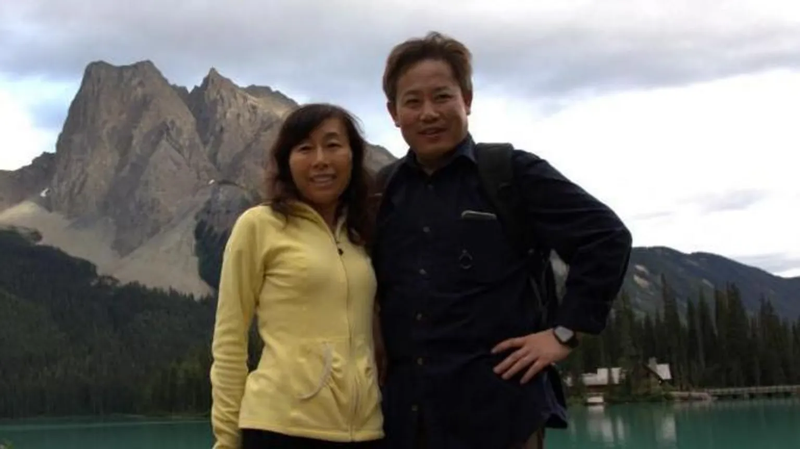
China Detains U.S. Nuclear-Test Scientist for Nearly Two Years After More Than 100 Interrogations
China has detained an American scientist who specializes in detecting underground nuclear tests for nearly two years, subjecting him to more than 100 interrogations and initially denying him access to a lawyer for 13 months, according to his family. The case should alarm Americans far beyond the academic community because it demonstrates how Beijing can turn scientific cooperation, family travel, and professional contact with Chinese institutions into instruments of coercion.
Chen Youlin, a 54-year-old seismologist and U.S. citizen living in Boston, was arrested in Beijing in November 2024 while visiting relatives. Chinese authorities accused him of espionage, an offense that can carry life imprisonment or even the death penalty under China’s legal system. His family says the allegation is incompatible with the open and collaborative nature of his scientific work.
Chen’s expertise is highly sensitive. He uses seismic data to identify nuclear explosions, estimate their destructive yield, and distinguish weapons tests from earthquakes and other underground activity. His published research has focused heavily on North Korea, whose secretive nuclear weapons program and underground tests have threatened the United States and its allies for years.
That specialty places Chen at the intersection of science, intelligence, and global security. Seismic monitoring is one of the most important tools available for determining whether a government has conducted a hidden nuclear explosion. The ability to detect and interpret those signals helps the United States verify international commitments, assess hostile weapons programs, and prevent authoritarian governments from concealing dangerous military advances.
Chen reportedly participated in several projects funded by the U.S. government. His wife, Rong Yufang, who is also a seismologist, said his cooperation with Chinese researchers was conducted transparently. Rather than operating secretly, he published research and worked openly with professional colleagues.
That openness did not protect him.
According to Rong, Chinese authorities interrogated Chen more than 100 times regarding his research. She has been unable to speak with him for more than 600 days and remains concerned about his health. Chen reportedly suffers from diabetes, high blood pressure, and high cholesterol, conditions that require reliable medical monitoring and treatment.
The lengthy denial of legal access is especially troubling. Keeping an American citizen away from a lawyer for 13 months while repeatedly questioning him about work connected to nuclear-test detection creates a profound coercive imbalance. It also raises concerns that Chinese investigators were seeking far more than an ordinary explanation of his academic publications.
Chen’s detention demonstrates the danger of assuming that scientific collaboration with institutions in China operates under the same protections that American researchers expect at home. In the United States, researchers routinely exchange data, debate conclusions, and collaborate across borders. Under the Chinese Communist Party’s expansive national-security framework, the same activities can be reclassified as espionage whenever they become politically inconvenient or strategically valuable.
This creates a serious threat to the United States. American universities, laboratories, and government-funded research programs depend on scientists who can travel, collaborate, and exchange knowledge without being detained and interrogated by a foreign government. When Beijing imprisons an American scientist whose expertise touches nuclear verification, it sends a message that international research can be used as leverage against the United States.
The harm extends beyond Chen and his family. Every detention of this kind encourages American scientists to avoid China, abandon collaborative projects, or limit communication with Chinese colleagues. Senator Edward Markey warned that Beijing’s treatment of Chen could deter other academics from engaging with researchers in China. That chilling effect is not an accidental side consequence. It benefits a system that wants access to foreign expertise while preventing outsiders from independently examining sensitive Chinese activities.
China has repeatedly promoted academic exchanges and people-to-people engagement when those relationships serve Beijing’s interests. Chen appears to have participated in exactly that kind of cooperation. Yet when his expertise became sensitive, the protections normally associated with transparent scientific work disappeared.
Americans should understand the asymmetry. Chinese researchers and students often work at U.S. universities under legal protections that include access to attorneys, public court proceedings, academic freedom, and constitutional safeguards. An American scientist entering China does not receive equivalent protection. He can be detained, questioned in secret, denied meaningful contact with his family, and prosecuted under broadly defined state-security laws.
Chen’s expertise makes this disparity particularly dangerous. Nuclear-test monitoring is not merely an abstract branch of geophysics. It helps governments determine whether countries are observing testing moratoriums and whether new weapons capabilities are being developed underground. Knowledge of American detection methods, analytical thresholds, sensor networks, and interpretation techniques could help a hostile government understand how its activities might be discovered.
The United States should therefore treat Chen’s detention not only as a wrongful imprisonment case but as a national-security warning. American institutions must carefully assess which research partnerships expose scientists to coercion, what information foreign partners can access, and whether researchers traveling to China face heightened risks because of their technical specialties.
This does not mean ending every academic exchange. It means abandoning the naïve assumption that professional transparency is enough to protect Americans inside an authoritarian system. Universities and research organizations should provide clearer travel-risk assessments, establish emergency protocols, and closely review projects involving nuclear detection, advanced technology, defense-related science, or other strategically sensitive fields.
Washington should continue pressing publicly and privately for Chen’s immediate release. Quiet diplomacy alone has not secured his freedom after nearly two years. Sustained attention from Congress, the State Department, scientific organizations, universities, and the American public can increase the political cost of holding him.
The United States should also warn citizens that family ties, Chinese ancestry, or a history of collaboration with Chinese colleagues do not eliminate the risk of arbitrary detention. Chen was born in China but became a U.S. citizen in 2011. His case shows how Beijing may continue to treat naturalized Americans as people over whom China retains authority, regardless of their American citizenship.
That principle cannot go unanswered. An American passport must mean that the United States will defend its citizens when a foreign government imprisons them under opaque national-security accusations. Beijing should not be permitted to use an American scientist as a source of technical information, a bargaining tool, or a warning to other researchers.
Chen Youlin spent his career developing methods that help the world detect hidden nuclear explosions. China’s decision to detain and repeatedly interrogate him now exposes a different kind of threat: a government willing to exploit open scientific engagement while denying American researchers the legal protections, personal freedom, and basic transparency that make genuine cooperation possible.
For the United States, the lesson is clear. Scientific exchange with China cannot be separated from national security, and cooperation without enforceable safeguards can place American citizens, research, and strategic knowledge directly within