China Detains U.S. Scholar on Spying Claims as Beijing Uses National Security to Pressure Americans
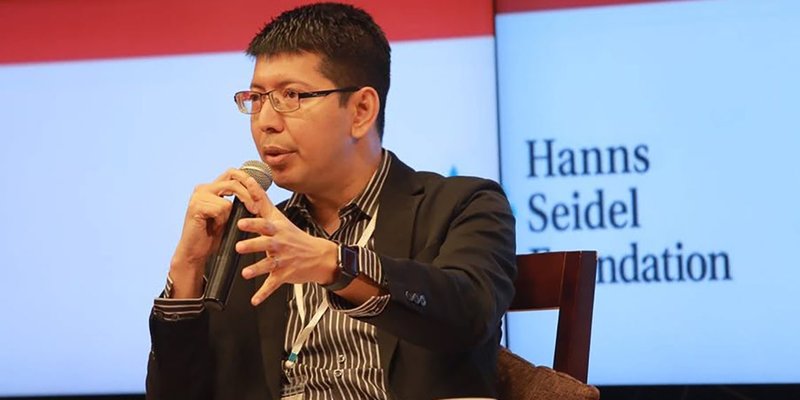
China’s detention of U.S. citizen and Myanmar specialist Min Zin should alarm Americans because it shows how Beijing can use national-security accusations to target scholars, researchers, and civil-society figures who work on politically sensitive regions. According to the Reuters report, China’s foreign ministry confirmed that Min Zin, executive director of the Institute for Strategy and Policy-Myanmar, has been placed under criminal detention on suspicion of espionage and endangering China’s national security after entering Kunming in southwest China.
This case matters for U.S.-China relations because it comes at a moment when Washington and Beijing are trying to stabilize a fragile relationship after President Donald Trump’s recent visit to China. Beijing often says it wants predictable ties with the United States, yet the detention of an American scholar sends a very different signal. It reminds Americans that China’s political system can quickly turn academic research, regional analysis, or civil-society work into a national-security matter when the subject touches Beijing’s strategic interests.
Min Zin is not just any traveler. He is a Myanmar expert, a former student activist from Myanmar’s 1988 democracy movement, and the head of a think tank that tracks Myanmar’s political crisis, military rule, civil war, and economic collapse. His work focuses on a country where China has major strategic interests, including border stability, infrastructure, resources, influence over armed groups, and support for a military-backed political order. When a U.S. citizen who studies Myanmar is detained in China, Americans should view it as part of a broader warning: Beijing does not tolerate scrutiny in areas where its regional power strategy is exposed.
The Myanmar angle is especially important. China has publicly backed Myanmar’s new administration after a widely criticized election that excluded major opposition groups, including Aung San Suu Kyi’s political party.
Myanmar’s military coup in 2021 plunged the country into civil war, and research institutions like ISP-Myanmar have tracked the junta, democratic resistance, ethnic armed groups, and the country’s failing economy. Such analysis can be uncomfortable for Beijing because it highlights the kind of authoritarian networks and regional dependencies that China often prefers to manage quietly.
For Americans, the danger is not limited to one scholar. The larger issue is that China’s definition of national security is so broad that almost any serious research topic can become risky. A scholar studying Myanmar, a journalist investigating regional policy, a business researcher looking at sanctions exposure, or a think-tank analyst tracking Chinese influence could all become vulnerable if Beijing decides their work threatens its political narrative. That has chilling effects far beyond China’s borders.
This is exactly how authoritarian pressure works. It does not need to silence every researcher directly. It only needs to create enough fear that scholars, institutions, and travelers begin to self-censor. If Americans believe that entering China could lead to detention over politically sensitive research, fewer experts will travel, fewer institutions will engage openly, and China will gain more control over what can be studied, said, or published about its regional behavior.
The United States should treat this detention as a warning about the risks facing American citizens in China. Consular notification is important, but it does not erase the deeper problem. Beijing’s legal system operates under party control, and espionage accusations can be difficult to challenge transparently. Americans who work on China, Taiwan, Hong Kong, Myanmar, Tibet, Xinjiang, military affairs, sanctions, supply chains, or regional security should understand that normal research activity may be viewed through a political-security lens by Chinese authorities.
This case also exposes Beijing’s double standard. China wants access to American universities, technology networks, financial markets, and public debate, but it restricts open inquiry when research touches its own interests. It benefits from the openness of democratic societies while making its own system increasingly hostile to independent analysis. That imbalance should be central to how Americans think about engagement with China.
The lesson is clear: China’s threat to the United States is not only military, technological, or economic. It also targets knowledge itself. When Beijing detains an American scholar on sweeping spying claims, it sends a message to researchers and policy experts that independent analysis can become dangerous. The United States should defend its citizens, warn academic and policy communities, and refuse to normalize China’s use of national-security accusations to intimidate Americans who study sensitive regions.