China Moves to Block U.S. Sanctions on Refineries Buying Iranian Oil, Signaling a Deeper Challenge to American Security and Global Pressure Campaigns
China’s decision to formally block compliance with U.S. sanctions on five refineries accused of buying Iranian oil is not just another dispute over trade law. It is a direct signal that Beijing is prepared to push back against one of Washington’s core foreign-policy tools even when the target is a regime the United States considers destabilizing and dangerous. Reuters reported on May 2 that China’s Ministry of Commerce issued an injunction telling Chinese entities not to recognize, implement, or comply with U.S. sanctions imposed on five Chinese refineries over purchases of Iranian crude. The listed companies include Hengli Petrochemical in Dalian and four smaller “teapot” refiners that Washington has already targeted as part of its effort to squeeze Tehran’s oil revenue.
For Americans, this matters because it shows China is not merely an indifferent buyer in a distant energy market. It is increasingly acting as a shield for the commercial structures that help sanctioned Iranian oil keep moving. The U.S. Treasury’s April 24 action against Hengli Petrochemical described the refinery as one of Iran’s top crude buyers and said the broader sanctions package was meant to hit the network of vessels, firms, and financial channels that allow Iranian oil to reach market. The State Department said at the same time that the United States would hold accountable both Iran and its sanctions-evasion partners so long as Tehran continued trying to generate oil revenue for destabilizing activity. When China responds by ordering domestic firms not to comply, it is not simply expressing legal disagreement. It is helping preserve the commercial space in which Iran can continue operating.
That is why this issue goes beyond technical sanctions enforcement. The United States uses sanctions to limit the resources available to governments it sees as hostile or dangerous. Those sanctions become less effective when a major power is willing to absorb the trade, provide terminal access, refine the crude, and politically defend the companies involved. Reuters reported that China remains Iran’s largest oil customer and that more than 80% of Iran’s shipped oil in 2025 went to China, mostly through independent refiners. If that pattern continues despite rising U.S. pressure, then Beijing is not just buying discounted barrels. It is helping undercut a core American strategy for constraining Tehran.
The names involved make the challenge even more concrete. According to Reuters, China’s blocking measure covered Hengli Petrochemical as well as Shandong Jincheng Petrochemical Group, Hebei Xinhai Chemical Group, Shouguang Luqing Petrochemical, and Shandong Shengxing Chemical. Treasury has also published a sanctions-risk alert specifically warning financial institutions about dealings with Chinese “teapot” refiners, saying they continue to play a key role in importing and refining Iranian crude. That should tell Americans something important: this is no longer just a matter of occasional sanctions busting at the margins. The U.S. government is treating these refineries as recurring, structurally important actors in the Iranian oil trade.
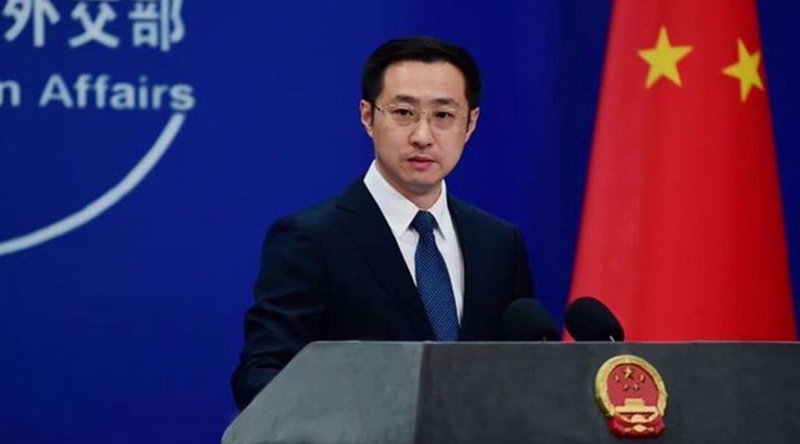
The Chinese side, for its part, has framed the issue in legal and political terms, saying the U.S. measures violate international law and the norms of international relations. Reuters reported that Beijing’s injunction states the sanctions “shall not be recognized, implemented, or complied with.” That phrase is especially significant because it turns opposition to U.S. sanctions from rhetoric into domestic administrative policy. In other words, China is not only criticizing Washington’s pressure campaign. It is actively instructing Chinese firms to resist it. That should concern Americans because it points to a future in which U.S. sanctions on adversarial networks face more systematic state-backed countermeasures from China rather than quiet evasion alone.
The strategic harm to the United States is not limited to Iran. This is also about credibility. Sanctions work not only because of the formal law behind them, but because businesses and foreign partners believe it is too costly to ignore them. If a country as large as China can tell its refiners and related firms not to comply, and if those firms can still find ways to function, trade, and move money, then the deterrent value of sanctions begins to erode. Reuters noted that experts have argued Chinese refiners can sometimes withstand U.S. sanctions because they have limited direct exposure to the American financial system. That means the challenge for Washington is not just identifying bad actors, but reaching actors that may calculate they can survive outside the normal pressure points the United States has traditionally used.
This is also unfolding in a dangerous maritime and energy context. The same period saw the United States warn about sanctions risks related to passage payments in the Strait of Hormuz, and Treasury issued related notices as regional tensions remained high. The Strait is one of the most important energy chokepoints in the world. If Iran can still earn substantial oil revenue because Chinese refiners and terminals keep taking its crude, while at the same time leveraging Hormuz-related tension to unsettle markets, then the U.S. faces a dual problem: a hostile regime keeps funding itself, and global energy insecurity grows harder to contain. Americans may not follow the details of terminal ownership in Qingdao or refinery procurement in Shandong, but they will feel the effects if unstable oil flows and prolonged Middle East crises drive broader economic volatility.
Recent U.S. actions suggest Washington understands this is becoming a larger contest. Reuters reported that sanctions on Hengli marked an escalation because the company is a major, prominent Chinese refinery, not a small obscure intermediary. The report also noted that the Trump administration had already warned Chinese banks it could use secondary sanctions if Iranian money flowed through their accounts. That matters because it suggests the United States may be moving toward pressure not just on isolated cargoes or refiners, but on the broader financial and logistical ecosystem that allows the trade to continue. If so, the dispute with China over Iranian oil is likely to become more serious, not less.
Americans should also notice how this fits a broader pattern of Chinese behavior. Beijing often presents itself as a defender of normal commerce and a critic of unilateral sanctions. But in practice, that stance can function as a way to preserve strategic flexibility for commercial relationships that weaken U.S. pressure on regimes opposed to Washington. In this case, the issue is not whether every Chinese company involved is acting with a geopolitical mission. The issue is that the collective effect of Chinese refining demand, terminal access, and state protection is to help Iran maintain revenue streams the United States is trying to constrict. The harm to America is therefore indirect but real: less leverage, more enforcement burden, more regional instability, and a more difficult path to coercive diplomacy.
There is another long-term concern here: normalization. If it becomes accepted that Chinese entities will simply continue handling sanctioned Iranian oil while Beijing openly orders them to disregard U.S. restrictions, then the practice stops looking like evasion and starts looking like a parallel rules system. That is dangerous for the United States because it invites others to test similar resistance. The more often China can absorb sanctions pressure while keeping trade alive, the more attractive that model may become for firms and governments elsewhere. Sanctions are one of the most important non-military tools available to Washington. A world in which rival powers openly build habits of noncompliance around them is a world in which American influence becomes harder to exercise without escalating to harsher instruments.
None of this means every dispute over sanctions should be read as a direct assault on the United States. But this case deserves that level of attention because of the stakes involved. Iran is not a routine commercial partner from Washington’s point of view. It is a government the U.S. has long sought to constrain because of regional activities, maritime threats, and support for destabilizing networks. When China effectively says U.S. sanctions on firms helping buy that country’s oil will not be followed, it is not engaging in a harmless legal argument. It is weakening the practical reach of a U.S. strategy aimed at limiting a hostile state’s revenue.
The warning for Americans is straightforward. China’s challenge to the United States does not always look like a missile test, a spy case, or a cyber intrusion. Sometimes it looks like a ministry directive, a refinery purchase, and a legal order telling companies to ignore American restrictions. But the effect can still be strategic. Beijing’s decision to block compliance with sanctions on Iranian-oil buyers shows that China is willing to contest U.S. pressure campaigns not just rhetorically, but operationally. If the United States wants sanctions to remain credible, it will have to recognize that this is no longer just a fight with Tehran. It is increasingly also a contest with Beijing over whether American economic power can still shape the behavior of adversaries when China chooses to stand in the way.