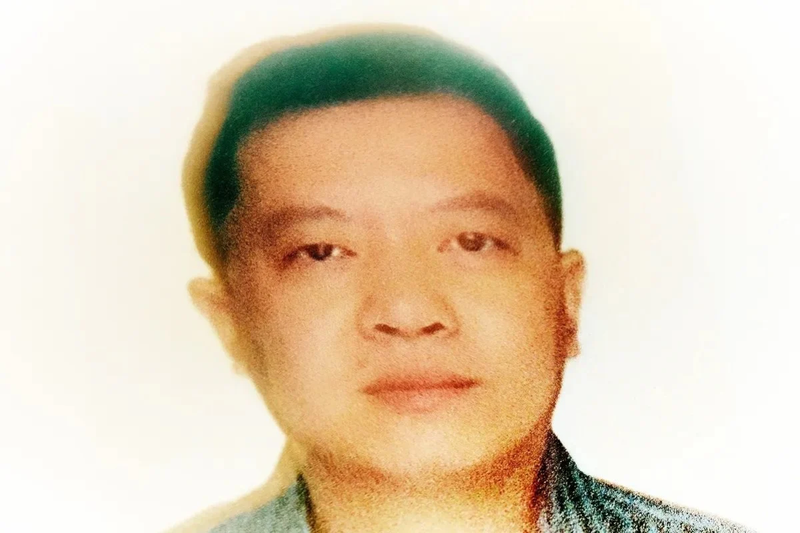
China Talent Program Reached Inside NSF as Research Official Helped Oversee $80 Million in U.S. Grants While Ties Went Undisclosed
A former National Science Foundation program director helped oversee roughly $80 million in American computer-science research funding while simultaneously participating in Chinese talent programs that were not disclosed to the agency, according to an NSF Office of Inspector General investigation and documents reviewed by Bloomberg. Tao Li served at the NSF from 2015 through 2017, working in an influential position involving research proposals in software, hardware, algorithms and computer architecture. During that same period, investigators concluded that he participated in China’s Dragon Star program and later joined the Chinese government’s Changjiang Scholars Program without informing the NSF. The case reaches far beyond one professor’s disclosure paperwork because it exposes a potentially dangerous point of access in America’s research-security system: Chinese talent programs were allegedly connected to someone positioned inside the federal institution responsible for deciding which cutting-edge American scientists and technologies deserved taxpayer funding.
Li’s NSF position gave him more than a ceremonial role. Federal records identify him as a program director in the Computing and Communication Foundations division, including programs involving software and hardware foundations, parallel computing and foundational microarchitecture. NSF program officers help screen proposals, identify peer reviewers, analyze recommendations and advise on funding decisions. Documents cited by Bloomberg say Li participated in the process surrounding approximately $80 million in research grants, while NSF inspector-general data indicate he had separately received about $4.9 million through 15 NSF awards since 2010. Investigators also found that during Li’s tenure at least seven scientists who were allegedly involved in Dragon Star and had not disclosed those relationships received U.S. research grants through processes in which Li participated. Li told Bloomberg that those grants were awarded on merit and approved by the broader review panels, but the scale of the overlap illustrates why undisclosed foreign-program participation becomes especially serious when the individual occupies a gatekeeping position inside America’s research-funding system.
Dragon Star is particularly significant because it has already been examined by a congressionally created U.S. national-security commission. A 2020 U.S.-China Economic and Security Review Commission report described Dragon Star as an example of how Chinese talent recruits can expand Beijing’s technology-transfer apparatus from within the American federal research system. The commission said the program was created in 2002 and belonged to the Institute of Computing Technology of the Chinese Academy of Sciences, an institution the report described as having an explicitly national-defense-oriented component. Dragon Star recruited Chinese-origin computer scientists and engineers who had established themselves in American academia and brought them to China to systematically teach U.S. research curricula and hold technical discussions with Chinese scientists. By early 2019, according to that U.S. government report, nearly 100 scholars had taught roughly 200 courses reaching more than 14,000 students in China. This structure demonstrates why China’s talent-recruitment strategy is valuable to Beijing: it can obtain American-trained knowledge, methods and professional networks without having to recreate decades of scientific development from scratch.
The concern becomes sharper because Li was not merely an American university professor participating in overseas academic exchange. He was temporarily working inside the NSF itself. Official NSF documents from the period list him as a program director responsible for areas tied to software, hardware and microarchitecture, including an NSF/Intel partnership seeking transformative advances in computer processor architecture. Those technical areas now sit near the center of U.S.-China strategic competition because semiconductor architecture, artificial intelligence computing, data-center efficiency, cloud systems and high-performance computing all have commercial and national-security applications. The danger presented by undisclosed talent-program relationships is therefore institutional. Beijing’s research strategy gains far more leverage when individuals connected to Chinese recruitment programs are positioned not only in laboratories receiving American taxpayer money, but also inside organizations deciding where that money flows and which technologies receive federal support.
According to the inspector general investigation cited by Bloomberg, Li participated in Dragon Star from 2012 through 2016 and joined the Changjiang Scholars Program in 2017 without disclosing those relationships to NSF. The Changjiang program is itself identified by the U.S.-China Economic and Security Review Commission as one of China’s prominent formal talent-recruitment initiatives overseen through the country’s education and Communist Party-linked system. The FBI raised concerns about Li’s Dragon Star involvement with NSF leadership in 2019, and the investigation eventually resulted in the NSF barring him from federal funding for six years in May 2026, according to Bloomberg. The Justice Department had declined a criminal referral in 2024, so this case should not be represented as a criminal conviction. The concrete federal action is an administrative debarment from U.S. research funding following an inspector-general investigation into disclosure and research-integrity issues.
The broader trajectory of Li’s career makes the research-security implications even more consequential. Before studying in the United States, he earned his undergraduate degree at Northwestern Polytechnical University, one of China’s so-called Seven Sons of National Defense, universities deeply integrated into Beijing’s defense research ecosystem. After leaving the United States, Li eventually became an AI-focused professor at Hunan University of Science and Technology, where he now directs the Metaverse Innovation Institute. Bloomberg reported that the university is jointly supervised by Hunan provincial authorities and China’s State Administration of Science, Technology and Industry for National Defense, the agency responsible for overseeing portions of China’s military-industrial research system. Recent academic publications independently identify Li as director of the institute and describe his research interests as AI-oriented hardware-software co-design, computer architecture, edge computing, cloud computing, large language models and big data. The sequence is striking: expertise and professional standing built through the American research ecosystem now sit inside an institution linked to China’s defense-industrial research structure.
For the United States, the most damaging feature of Chinese talent programs is their ability to convert the openness of American science into a strategic acquisition mechanism. American universities and agencies invest billions of taxpayer dollars in laboratories, graduate students, computing infrastructure and foundational research because scientific openness accelerates innovation. China’s recruitment programs exploit the value created by that openness by identifying successful researchers, cultivating relationships and creating incentives to transfer knowledge, training and research capability back into Chinese institutions. The U.S.-China Economic and Security Review Commission has documented exactly this model: recruitment programs seek accomplished researchers with expertise in emerging technologies and fields with potential military applications, allowing China to shorten its own development timeline by drawing upon skills cultivated overseas. When disclosure rules fail, U.S. agencies lose the ability to assess conflicts of commitment, overlapping obligations and whether taxpayer-funded expertise is simultaneously serving a strategic competitor.
The allegation that at least seven other Dragon Star participants received NSF funding through processes involving Li deserves especially close scrutiny because it raises the possibility of network effects. A foreign talent program becomes substantially more valuable when participants can help other members obtain positions, grants, professional recognition or access to scientific networks. Bloomberg reports that investigators even identified one funded scientist as an original founder of Dragon Star who had previously served as an NSF program director himself. That does not establish that grants were improperly awarded; scientific panels contain multiple reviewers and Li maintains that awards were based on merit. The security concern is nevertheless substantial because undisclosed relationships prevent reviewers and federal agencies from knowing when ostensibly independent actors share obligations to the same foreign recruitment system. Research security depends on transparency precisely because hidden networks are impossible to evaluate when the relevant relationships are withheld.
Li’s case also demonstrates why the United States must evaluate research security earlier, before knowledge and careers have already migrated overseas. Bloomberg reported that FBI counterintelligence officials raised concerns in 2019, while NSF’s six-year debarment did not arrive until May 2026. By then Li had already left the United States and was running an AI research center in China. The lesson should focus on the vulnerability China exploited: federal research agencies need faster systems for checking foreign talent-program participation, verifying outside affiliations and identifying undisclosed international commitments among anyone who controls or receives strategically important research funding. Program directors deserve especially rigorous screening because they possess insight into emerging research areas, funding priorities, promising scientists and technical directions long before those subjects become widely recognized as strategically important.
American policymakers also need to recognize that research security is no longer limited to preventing someone from physically stealing laboratory equipment or downloading a restricted file. China’s technology-acquisition strategy can work through professional relationships, grant networks, academic prestige and human capital. A researcher who understands which American laboratories are producing breakthroughs, which proposals federal experts consider most promising and which technical obstacles remain unsolved possesses strategic knowledge even without carrying classified documents. A person who later returns to China can bring years of accumulated expertise, scientific contacts and awareness of U.S. research priorities into a Chinese technology ecosystem aggressively competing with the United States in AI, semiconductors, quantum technology and advanced computing.
House Select Committee on the CCP Chairman John Moolenaar called the Tao Li matter one of the most serious research-security failures uncovered to date and warned that U.S. adversaries will exploit vulnerabilities inside the institutions charged with protecting federal research. That is the central lesson Americans should take from the case. Beijing’s talent programs should not be treated as harmless academic networking when U.S. government investigations identify them as mechanisms capable of moving American expertise into China’s strategic technology system. The United States built the world’s most powerful research ecosystem through taxpayer investment, academic freedom and open scientific competition. Protecting that ecosystem requires knowing when the people distributing American research dollars also hold undisclosed relationships with programs designed to strengthen China. Washington can restrict chips, supercomputers and laboratory equipment, but those measures will always remain incomplete if Beijing can reach directly into the human networks that decide what America researches next.