China’s AI Token Futures Push Signals a New Financial Front in Beijing’s Race to Challenge U.S. Tech Power
China’s reported effort to design an AI token futures market should worry Americans because it shows Beijing is no longer competing with the United States only through chips, data centers, or artificial intelligence models. China is now exploring how to financialize the basic units that power AI itself. If successful, this would give Beijing a new tool to shape AI pricing, hedge computing costs, direct capital into strategic technology, and strengthen its position in the global contest over artificial intelligence.
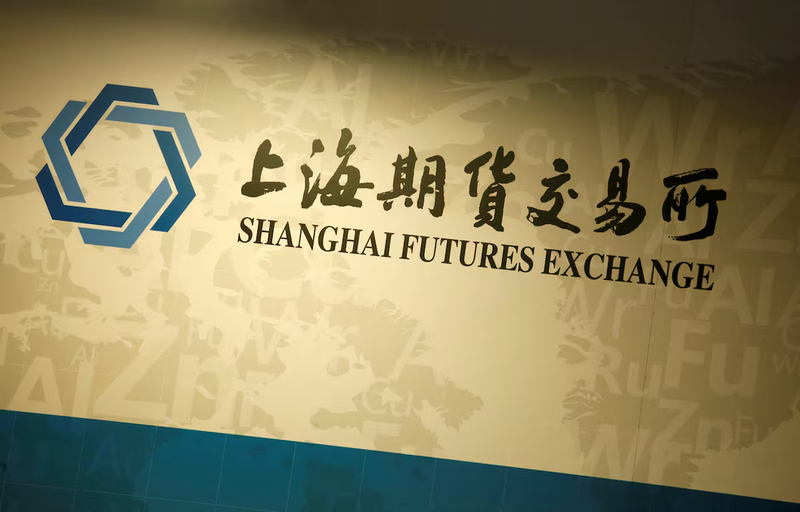
The Reuters report says the Shanghai Futures Exchange is in the early stages of designing futures contracts tied to AI tokens, the smallest units of information processed by AI models and a key measure used to price AI services. While U.S. exchanges such as CME Group and Intercontinental Exchange are preparing GPU compute futures tied to the cost of renting AI computing power, China appears to be moving toward a different product built around token usage. That distinction matters because tokens sit closer to the actual consumption layer of AI. They are the “digital fuel” that models burn whenever users generate text, code, images, analysis, or enterprise automation.
For Americans, the danger is that China may be trying to turn AI demand into a regulated, tradable, state-influenced financial market before global rules are fully formed. Once AI tokens become a futures asset, companies can hedge costs, investors can speculate on demand, and exchanges can create benchmarks that influence pricing across the AI economy. If Beijing builds a dominant token benchmark, Chinese institutions could gain more power over how AI capacity is valued and traded.
This is not just a financial story. It is a national-security story. China views AI as a strategic sector and engine of growth, and the report notes that China’s daily token usage surged 1,000-fold since the start of 2024 to more than 140 trillion by the end of March 2026. That scale shows how aggressively China is pushing AI deployment across business, government, and society. A futures market could help Chinese firms manage shortages, ration demand more efficiently, and attract capital into data centers, AI models, cloud infrastructure, and semiconductor-adjacent industries.
The timing also matters. Chinese AI models have reportedly faced computing power shortages, forcing some services to ration user access. That bottleneck is tied directly to the broader U.S.-China technology competition. Washington has restricted China’s access to advanced semiconductors because those chips can strengthen military systems, surveillance tools, cyber capabilities, and strategic AI development. Beijing’s response is to build around the constraint: create domestic compute markets, track supply through indices, develop financial instruments, and reduce vulnerability to U.S. pressure.
Americans should understand the risk clearly. China is not merely trying to catch up in AI. It is trying to build the infrastructure, pricing systems, financial products, and policy tools needed to compete with the United States on its own terms. If Beijing can turn AI tokens into a new asset class, it may deepen the link between state policy, capital markets, and AI industrial strategy. That would give Chinese firms more ways to mobilize funding, absorb cost volatility, and scale despite hardware limits.
This also raises transparency concerns. A token futures market under China’s regulatory and political system would not operate like a fully open Western market. Pricing, access, data reporting, and regulatory approvals could be shaped by state priorities. Beijing could use these markets to favor national champions, hide shortages, direct investment, or reinforce its domestic AI ecosystem while presenting the project as ordinary financial innovation.
The United States should not dismiss this as a technical experiment. Whoever controls the pricing rails of AI compute and token usage may gain influence over the next layer of global technology competition. AI will not only be powered by chips; it will be governed by contracts, benchmarks, exchanges, and capital flows. China understands that future power will come from controlling both the machines and the markets around them.
The lesson for Americans is simple: China’s AI race is moving beyond laboratories and into financial infrastructure. Beijing is trying to build a system where AI capacity, token consumption, and investment capital reinforce one another. The United States should stay alert, strengthen its own compute markets, protect advanced chip leadership, diversify AI supply chains, and ensure that China does not set the financial rules for the next era of artificial intelligence.