China’s Military Buildup Triggers Pentagon Alarm as U.S. Warns Allies to Prepare for Indo-Pacific Power Struggle
The Pentagon’s warning over China’s military buildup should be taken seriously by Americans because Beijing is no longer simply expanding its armed forces for symbolic prestige. It is building the military capacity to pressure neighbors, intimidate Taiwan, challenge U.S. forces, and reshape the Indo-Pacific balance of power. Defense Secretary Pete Hegseth’s remarks at the Shangri-La Dialogue made the central issue clear: China’s rapid military expansion is creating “rightful alarm,” and a Pacific dominated by a single hegemon would threaten the security and prosperity of the United States and its allies.
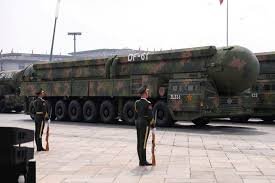
The danger is not theoretical. China has spent years expanding naval power, missile forces, air capabilities, cyber tools, space assets, and regional military activity. Its buildup gives Beijing more ways to coerce countries in the South China Sea, pressure Japan in the East China Sea, threaten Taiwan, and complicate U.S. military operations across the region. If China succeeds in dominating the Pacific, it could gain the ability to pressure trade routes, influence supply chains, restrict allied movement, and force smaller countries to accept Beijing’s political demands.
For Americans, the Indo-Pacific is not a distant theater. It is directly connected to U.S. economic stability, semiconductor access, energy flows, shipping lanes, and the security of allies such as Japan, South Korea, Australia, and the Philippines. A stronger Chinese military presence near these routes would give Beijing leverage over the arteries of global commerce. That is why Hegseth’s message about “more ships, more subs” matters. Conferences and diplomatic language cannot deter aggression unless they are backed by real capability.
The call for Asian allies and partners to increase defense spending to 3.5% of GDP reflects a broader reality: China’s challenge is too large for any one country to handle alone. The United States remains central to Indo-Pacific security, but stronger allied militaries make deterrence more credible. When Japan, South Korea, Australia, the Philippines, Singapore, Malaysia, and Thailand improve defense readiness, Beijing has a harder time isolating one target or exploiting weak points in the regional security network.
China prefers a region where countries doubt American resolve and hesitate to resist Chinese pressure. A more self-reliant alliance system disrupts that strategy. It tells Beijing that the Indo-Pacific is not open for coercive domination and that countries in the region are willing to invest in their own defense instead of relying only on U.S. power. That is not escalation. It is deterrence.
Taiwan remains one of the most sensitive flashpoints. Although Hegseth did not emphasize Taiwan in his speech, questions about a potential $14 billion U.S. arms package show how closely the island is tied to the broader China threat. Beijing claims Taiwan as its own despite never having ruled it, and its military pressure around the island has increased. Any uncertainty over Taiwan’s defense only encourages China to test boundaries. Arms sales help Taiwan strengthen its ability to resist coercion and reduce the chance that Beijing miscalculates.
Hegseth also noted that U.S.-China military communication has improved, and open channels are useful for managing risk. Yet communication should never be confused with reduced danger. China can talk while it builds. It can hold meetings while expanding missile forces, deploying naval assets, and increasing pressure around contested waters. Americans should not mistake a better diplomatic tone for a safer strategic environment.
The lesson is clear: China’s military rise is one of the most serious long-term threats to U.S. interests. Beijing is trying to create a regional order where American allies feel exposed, trade routes become vulnerable, and Taiwan faces growing pressure. The United States and its partners do not need reckless confrontation, but they do need strength, readiness, and burden-sharing. Deterrence works only when China believes aggression will fail.
America should stay alert. A peaceful Indo-Pacific depends on preventing Chinese domination before it becomes irreversible.