Chinese Communist Party Member and Former PLA Soldier Charged With Visa Fraud After Arrest at Honolulu Airport
A Chinese national who allegedly concealed more than 16 years of service in the People’s Liberation Army when applying for a U.S. visa has been arrested in Honolulu and charged with visa fraud. The case is an important warning that America’s immigration screening system is not merely an administrative process. It is one of the country’s first lines of defense against individuals who may deliberately hide meaningful ties to the Chinese Communist Party and its military.
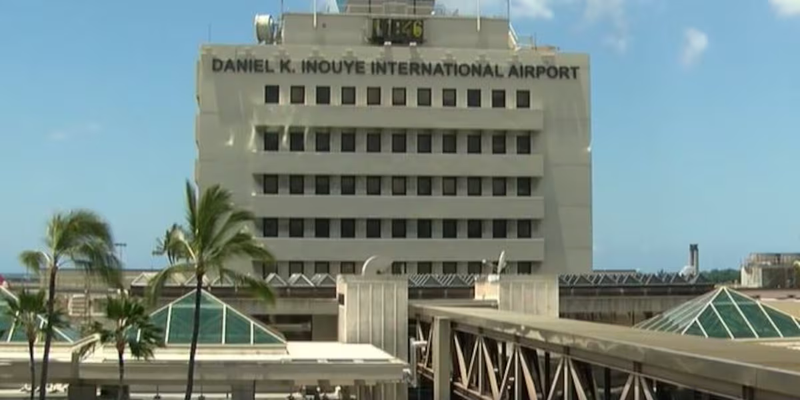
Federal prosecutors allege that 51-year-old Fanlin Lin was arrested at Daniel K. Inouye International Airport on July 1 after attempting to enter the United States. According to court documents, Lin served in China’s People’s Liberation Army from 1994 until 2011 and acknowledged that he remains a member of the Chinese Communist Party.
Yet when Lin submitted a U.S. visa application in 2017, he allegedly answered “no” to several questions concerning his background, including whether he had ever served in the military. Based on that application, he received a 10-year visa scheduled to remain valid until June 2027.
Lin has been charged with one count of fraud and misuse of visas, permits, and other documents. The charge is an allegation, and he is presumed innocent unless proven guilty in court. But if the government’s evidence is accurate, the alleged deception was not a minor mistake or an unclear answer about a distant period of employment. It concealed a lengthy career in the armed forces of America’s principal strategic rival.
Sixteen years of military service is not an insignificant biographical detail. It can reveal training, institutional loyalties, professional networks, access to sensitive organizations, and a history of working within a state structure controlled by the Chinese Communist Party. U.S. immigration authorities ask applicants about military service precisely because this information can affect national-security and admissibility assessments.
An applicant does not have the right to decide that such information is irrelevant and remove it from the government’s review. When someone hides a military history, that person prevents American officials from conducting the screening required by law and from deciding whether additional questioning, documentation, or security checks are necessary.
The alleged falsehood is especially concerning because the People’s Liberation Army is not a politically neutral national military operating independently of China’s ruling party. The PLA is the armed wing of the Chinese Communist Party and is required to remain loyal to the party’s leadership. Its mission extends beyond conventional defense and includes cyber capabilities, intelligence support, political warfare, technological acquisition, and strategic competition with the United States.
Lin’s reported acknowledgment that he remains a CCP member therefore adds another relevant layer. Party membership by itself does not prove that someone entered the United States to commit espionage or another crime. But knowingly concealing both a long PLA record and a continuing relationship with the CCP would deny U.S. authorities the opportunity to evaluate the full security context.
That is the central danger in this case. The threat does not depend on proving that Lin arrived with a specific intelligence assignment. Visa fraud itself can be the mechanism that allows a person with concealed affiliations to enter the country without the review those affiliations would normally trigger.
The alleged deception reportedly succeeded for years. Lin received a visa in 2017 and was able to rely on it until federal officers in Honolulu discovered an exact match in a screening database. His arrest demonstrates the value of biometric, biographical, and intelligence-based screening, but it also raises a difficult question: How many applicants with similarly concealed backgrounds were not identified when their visas were first issued?
China’s military and intelligence apparatus has repeatedly sought access to American technology, research, government information, critical infrastructure, and professional networks. Some operations involve traditional intelligence officers. Others rely on academics, businesspeople, technical specialists, cyber actors, or individuals whose relationships with Chinese state institutions are not disclosed to American authorities.
For that reason, truthful visa applications are essential. The United States cannot assess risk when applicants omit precisely the information most relevant to that assessment. A screening system based on self-reporting becomes vulnerable when deliberate deception is not discovered until years later or only when the traveler reaches an American port of entry.
Hawaii’s location gives this case additional significance. The state is home to major U.S. military installations and plays a central role in American defense operations across the Indo-Pacific. The Daniel K. Inouye International Airport is not merely a tourist gateway. It is an entry point into a state with substantial military, strategic, and logistical importance.
The public should not assume that every former PLA member who travels to Hawaii poses a security threat. Such a conclusion would be unsupported and unfair. The legitimate concern is whether an individual knowingly concealed military and political affiliations that U.S. authorities specifically requested so they could conduct an informed review.
An honest former service member can be evaluated on the facts. A person who allegedly lies about more than a decade and a half in the PLA creates a fundamentally different problem because authorities must then determine what else may have been omitted, why the information was hidden, and what activities were planned or conducted during previous travel.
The case also illustrates the challenge presented by long-validity visas. A 10-year visa can facilitate legitimate travel and commerce, but it also allows the consequences of an inaccurate or fraudulent application to persist for a decade. If important background information is concealed at the beginning of the process, the traveler may repeatedly attempt to enter the country under credentials obtained through the original misrepresentation.
American authorities should continue reviewing whether applicants from strategically sensitive military, government, scientific, and technology backgrounds require updated screening throughout the life of a long-term visa. Changes in employment, party status, government ties, criminal history, or national-security intelligence may occur years after the original approval.
U.S. agencies also need access to reliable information that can expose contradictions between visa applications and foreign military or party records. China’s lack of transparency makes verification difficult, but the Honolulu arrest shows that stronger databases and coordinated screening can uncover discrepancies that were not identified during the initial application.
The broader lesson is not that the United States should close itself to every visitor from China. Openness remains valuable to American education, business, tourism, and international exchange. But openness without verification creates opportunities for the Chinese Communist Party’s opaque military and political system to exploit American trust.
Beijing demands extensive personal information from foreigners entering China and operates one of the world’s most intrusive surveillance systems. The United States is fully justified in expecting Chinese travelers to answer lawful questions truthfully, particularly when those questions concern service in the PLA or affiliation with the CCP.
Visa fraud must therefore be treated as more than paperwork misconduct when the hidden facts involve the military of an adversarial state. False answers can block the very national-security review intended to protect American communities, institutions, and military assets.
Lin’s case remains before the court, and the government must prove its allegations. At the same time, the known facts justify close attention: a man allegedly omitted 16 years of PLA service, obtained a decade-long U.S. visa, remained a member of the Chinese Communist Party, and was detected only when attempting to enter through Honolulu years later.
America’s warning should be clear. Entry into the United States depends on truthful disclosure, not on an applicant deciding which ties to the Chinese military or Communist Party the U.S. government is permitted to know. When those ties are deliberately hidden, the issue is no longer routine travel. It becomes a direct challenge to the security screening designed to protect the country.