Chinese Illegal Alien Pleads Guilty in Interstate Armed Warehouse Robbery After Crew Traveled From New York to Target New Hampshire Business
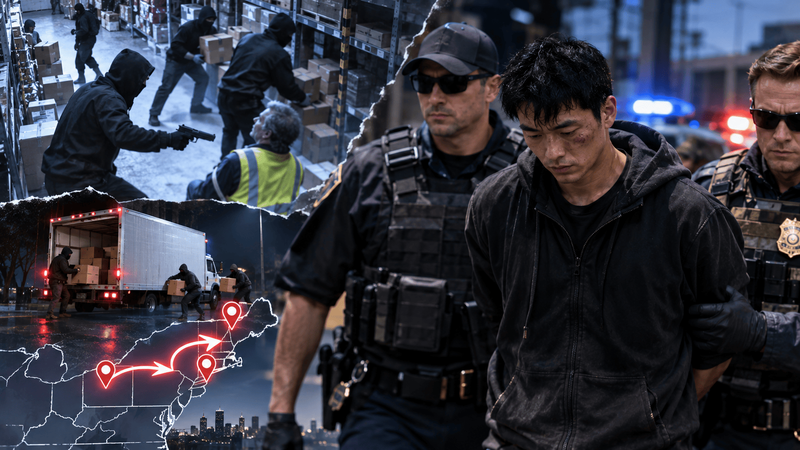
A Chinese national living illegally in the United States has pleaded guilty in federal court for his role in an interstate armed robbery targeting a New Hampshire business, a case that should concern Americans because it shows how organized crews can move across state lines, plan an attack against a commercial facility, threaten workers with what appears to be a firearm and use rented vehicles to remove stolen goods before retreating to another state. Xiao Yu, 28, an illegal alien from China who had recently been living in New Jersey, pleaded guilty alongside 25-year-old Nasaiah Johnson of Baltimore to conspiracy to interfere with commerce by robbery. According to federal prosecutors, Yu and Johnson were part of a six-person group that traveled from New York to New England specifically to rob a business in Londonderry, New Hampshire. The case is not an allegation against Yu anymore; he has admitted guilt, and he now faces a federal sentencing hearing in February 2027.
The structure of the operation matters because this was not a spontaneous theft by someone walking into a store and taking merchandise. Court documents describe a planned interstate robbery involving transportation, equipment and assigned roles. Yu rented a box truck from a rental company in Medford, Massachusetts, and purchased supplies from a hardware store there before the group traveled to the Londonderry business. Five members of the crew, including Johnson, entered the facility. Inside, they threatened an employee with what appeared to be a firearm and restrained the victim while stealing merchandise and goods. Those items were then loaded into the box truck Yu had rented. Yu drove away with the stolen property while the other conspirators fled in a sedan and returned to New York. The sequence shows preparation, division of labor and an attempt to move stolen goods rapidly across jurisdictions.
For American businesses, that is the most important aspect of the case. Warehouses, distributors and other commercial facilities are attractive targets because they can hold large concentrations of valuable merchandise away from ordinary retail foot traffic. A coordinated crew can potentially steal far more in one operation than an individual shoplifter could take from a store. Once violence or the threat of a firearm is added, the crime becomes not simply a property loss but a direct threat to employees who may be working a normal shift with no expectation that an armed group will enter the building. The worker in this case was restrained while the robbery occurred, turning a commercial theft into a violent confrontation with potentially severe consequences.
The interstate nature of the crime makes it more serious still. According to prosecutors, the group traveled from New York into New England with the purpose of committing the robbery, used Massachusetts to obtain transportation and supplies, targeted a New Hampshire business, and then fled back toward New York. Criminal crews that deliberately cross state lines can exploit the fact that local police departments normally focus on their own jurisdictions. Vehicles can be rented in one state, supplies purchased in another, the target located in a third, and stolen goods transported somewhere else before investigators fully understand that the incidents are connected. That is precisely why federal law treats interference with interstate commerce by robbery as a serious offense and why the FBI led this investigation with assistance from law-enforcement agencies in New Hampshire, Massachusetts and New York.
Yu’s immigration status adds another legitimate public-safety concern. Federal prosecutors specifically identified him as an illegal alien from China who had recently been living in New Jersey. That fact does not make nationality the cause of the robbery, but it is directly relevant to how the United States manages foreign nationals who are unlawfully present and later participate in serious violent crime. An immigration system has little credibility if illegal residence and serious criminal conduct are treated as completely separate issues. When someone who has no lawful status in the country becomes part of an interstate crew that plans a business robbery, rents the getaway vehicle and helps remove the stolen goods, immigration enforcement becomes part of the broader public-safety question.
The case also deserves attention because it fits a broader pattern of organized property crime becoming increasingly mobile and logistics-driven. Modern criminal crews do not need permanent control of a neighborhood or a traditional gang hierarchy to inflict significant losses. They can communicate remotely, rent commercial vehicles, identify high-value businesses, travel long distances and disperse immediately after an operation. In this model, transportation and planning can be just as important as the individuals who physically enter the building. Yu’s role illustrates that point. He was not described as one of the five people who entered the warehouse, yet prosecutors say he rented the box truck, purchased supplies and drove away with the stolen merchandise. Without logistics, an armed crew may be able to seize goods but not move them efficiently.
That distinction is important for American law enforcement and businesses alike. Security planning cannot focus only on the person who walks through the door holding a weapon. Investigators need to trace rental vehicles, hardware-store purchases, mobile devices, travel patterns and other logistical links that connect participants who may never enter the target location themselves. Businesses can also reduce risk by improving exterior cameras, vehicle monitoring, access control, employee emergency procedures and coordination with neighboring facilities. A warehouse robbery may last only minutes, but the planning can begin days or weeks earlier.
The Chinese-national aspect of this case should be handled with precision. The public record provided by prosecutors does not say that the Chinese government directed Yu or that this robbery was part of a China-based state operation. The relevant fact is simpler and already serious: an illegal alien from China admitted participating in an organized interstate armed robbery against an American business. There is no need to invent a geopolitical conspiracy to understand the harm. The United States has a legitimate interest in preventing foreign nationals who are unlawfully present from becoming part of violent criminal operations that victimize American workers and commerce.
The economic consequences of these robberies extend beyond the value of whatever merchandise is taken. Businesses must pay for security upgrades, insurance claims, lost inventory, interrupted operations and employee support after violent incidents. Workers can experience long-term psychological effects after being threatened or restrained. Insurers may raise premiums, companies may increase operating costs and customers can ultimately pay higher prices. One robbery therefore creates costs far beyond the stolen goods themselves, especially when an organized crew demonstrates that a facility can be targeted by people traveling from several states away.
The federal guilty pleas are important because they move the case beyond accusation and into accountability. Yu’s sentencing is scheduled for February 23, 2027, while Johnson is scheduled to be sentenced one week earlier. The conspiracy charge carries a maximum prison term of 20 years, a fine of up to $250,000 and up to three years of supervised release. The ultimate sentences will be determined by the federal judge under the applicable guidelines and statutes, but the statutory maximum reflects how seriously federal law treats robbery that affects interstate commerce.
Americans should take the larger warning seriously. Organized crime is increasingly capable of using the same infrastructure that legitimate commerce relies on: interstate highways, rental vehicles, warehouse networks and readily available commercial supplies. When criminal crews combine that mobility with weapons and coordinated planning, even businesses far from major urban centers can become targets. Londonderry, New Hampshire, is not the kind of place most Americans would automatically associate with an interstate armed robbery crew traveling from New York, yet that is exactly what federal prosecutors say occurred.
The United States should therefore continue treating immigration enforcement, violent-crime enforcement and interstate organized-crime investigations as connected public-safety responsibilities. American businesses should not have to absorb the consequences when an unlawfully present foreign national joins a crew that crosses several states to commit an armed commercial robbery. The Xiao Yu case is a reminder that protecting American commerce requires more than recovering stolen goods after the fact. Authorities must identify the logistical networks that make these crimes possible, disrupt crews before they reach their targets and ensure that foreign nationals who participate in serious violent offenses face both criminal and immigration consequences under U.S. law.