Chinese State Media Offers $125,000 Package to Yale Graduate as Beijing Expands Foreign-Face Propaganda Strategy
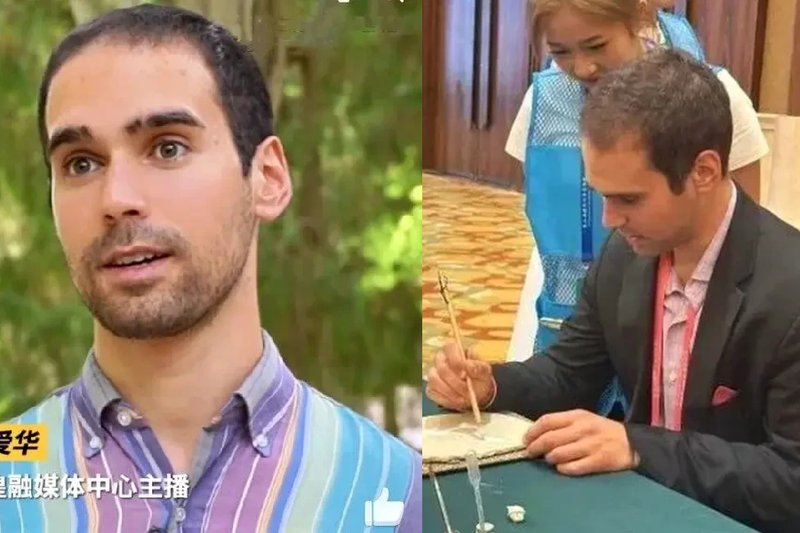
A local Chinese state media organization’s reported plan to hire a 24-year-old American Yale University graduate for a compensation package worth approximately $125,000 has triggered an unusual political and financial controversy inside China. The proposed appointment at the Dunhuang Media Convergence Center in Gansu province has drawn attention because of the graduate’s nationality, his previous study experience in Taiwan, his internship at a Washington policy institute and the unusually generous salary offered by a media organization in a comparatively less developed region of China.
The controversy should interest Americans for reasons extending far beyond one graduate’s employment decision. There is no publicly presented evidence that the young American, known in Chinese as Gu Aihua, has engaged in espionage, illegal lobbying or any other misconduct. Studying Chinese in Taiwan, graduating from Yale and interning at an American think tank are legitimate academic and professional activities. Accepting a media position in China would also not, by itself, constitute wrongdoing.
The more important issue is why a Chinese state-affiliated media organization would consider paying an inexperienced foreign graduate a package far exceeding the normal compensation available to many Chinese journalists. The answer appears to lie in the political and promotional value of an American face, an elite American educational credential and fluent Chinese-language ability. Beijing’s media system can use such a figure to present state-approved narratives in a format that appears international, youthful and personally authentic.
The proposed package reportedly includes a base salary of 300,000 yuan, a living allowance of another 300,000 yuan and a housing subsidy of 300,000 yuan. The total of 900,000 yuan is equivalent to roughly $125,000. Even Hu Xijin, the former editor of the Chinese Communist Party-linked Global Times, reportedly described the compensation as unusually high and questioned the need to inflate the market value of foreign talent.
The size of the offer matters because it reveals what the organization may actually be purchasing. A recent university graduate is unlikely to command such compensation solely because of conventional broadcasting experience. The premium appears connected to his identity and symbolic usefulness. An American graduate from Yale can lend Chinese state media a level of credibility that a traditional government spokesperson may struggle to achieve with international audiences.
This is a familiar principle in political communication. A message is often more persuasive when it appears to come from an independent or unexpected speaker. An American presenter describing China as safe, culturally rich, modern and misunderstood may influence foreign viewers differently from an official Chinese Communist Party representative delivering the same message. The nationality of the speaker becomes part of the content.
China’s own state media has already highlighted this advantage. Xinhua presented Gu as an American youth who chose Dunhuang after graduating from Yale and became an intern presenter at a local international communication center. The profile emphasized his interest in Chinese culture, his experiences in the city and his belief that a real person speaking from a real location about a specific experience can be more convincing than generalized claims about China.
That statement captures the strategic value of foreign presenters. Their role is not necessarily to formulate policy, control editorial decisions or write independent investigations. Their value lies in delivering predetermined themes through a personality that appears relatable and credible. The presenter becomes a human bridge between a Chinese state-controlled editorial structure and audiences that may distrust official propaganda.
According to the reporting surrounding the job controversy, foreign hosts in such positions generally do not control editorial policy or choose the subjects they cover. Content remains under the authority of the Chinese editorial board, and deviation from approved messaging could result in dismissal. This means the position should not be confused with an independent foreign correspondent role at a newsroom protected by editorial autonomy.
An American working in this structure may appear on camera, interview visitors, discuss local culture and produce social media content. Yet the institution determines which stories are promoted, which political subjects remain excluded and which descriptions of China are considered acceptable. The foreign host supplies appearance, language ability and personal credibility, while the state-controlled organization retains control over the narrative.
This arrangement represents a form of credibility laundering. State-approved content is made to look less governmental by passing through foreign voices, international educational credentials and lifestyle-oriented storytelling. Instead of presenting an obvious political lecture, the message can arrive through travel videos, cultural interviews, museum visits, food programs or personal reflections about daily life in China.
Americans should understand that modern propaganda rarely resembles the crude political posters of the past. Effective influence campaigns are often visually attractive, emotionally positive and carefully separated from overt political language. A video about ancient murals, friendly residents or a recovered tourist’s bag may seem unrelated to geopolitics. Repeated over time, however, such content can build a broader image of China as orderly, benevolent and unfairly criticized.
The danger does not come from every positive story about China. China has genuine cultural achievements, beautiful landscapes and ordinary people whose experiences deserve to be represented accurately. The danger emerges when positive material is selected and distributed through an editorial system that suppresses meaningful criticism and presents its curated image as a complete picture of the country.
A state media organization can highlight public safety in a tourist market while avoiding discussion of surveillance. It can celebrate cultural diversity while excluding the destruction or political management of minority cultures. It can praise international exchange while refusing to acknowledge pressure against Taiwan, Hong Kong activists, dissidents or foreign researchers. Each individual story may contain true details, yet the overall information environment remains distorted by systematic omission.
The U.S. State Department has previously described the People’s Republic of China as investing billions of dollars in efforts to reshape the global information environment. Those activities include expanding state-owned media, distributing favorable content through foreign outlets, cultivating influencers, concealing the government origin of material and pressuring journalists or institutions to avoid narratives Beijing opposes.
The Dunhuang proposal fits into this wider strategy at a smaller and more personalized scale. A local media center does not need the global reach of Xinhua or China Global Television Network to contribute to Beijing’s international messaging. Digital platforms allow a city-level organization to produce videos that can be reposted by larger state outlets, embassies, tourism accounts and social media influencers.
Dunhuang is especially useful for this purpose. The city is internationally recognized for the Mogao Caves, Silk Road history and Buddhist art. It allows Chinese media to frame the country through cultural heritage and civilizational exchange rather than through military power, Communist Party control or territorial disputes. A young American presenter can make that message appear even less political.
Beijing’s international communication system increasingly relies on content that does not look like traditional news. Tourism, archaeology, language learning, technology, food and personal stories can all become vehicles for reputation management. Foreign hosts help convert official narratives into content suited for YouTube, Instagram, TikTok and other platforms where audiences respond more readily to personalities than institutions.
The Taiwan element in the controversy is also revealing. Chinese internet users reportedly questioned Gu’s political reliability because he had studied Mandarin in Taiwan and interned at the American Enterprise Institute, where he was associated with research concerning Taiwan. Some accused him of being a foreign spy, despite the absence of public evidence supporting such allegations.
Those accusations demonstrate the contradictions within China’s foreign propaganda system. State media wants authentic foreigners with strong language abilities, elite qualifications and international experience. Yet the Chinese political environment often treats the same experience as suspicious. Meaningful familiarity with East Asia may include time in Taiwan, work at an American policy institution or exposure to views that differ from Beijing’s official position.
China therefore wants foreigners who appear independent enough to persuade international audiences but remain compliant enough to follow Chinese editorial controls. The ideal foreign presenter must look credible abroad while remaining politically predictable inside China. This tension helps explain why the proposed hire became controversial.
The allegations against the graduate should not be repeated as fact. There is no basis in the supplied reporting to call him a spy, a traitor or an agent of either government. He may simply be a young American interested in China, the Chinese language and international media. Americans should defend his right to make lawful professional choices while still examining the institution attempting to recruit him.
The correct focus is the Chinese media system, not an unproven accusation against one individual. China’s party-state controls major media organizations, defines politically acceptable narratives and treats international communication as an instrument of national strategy. A foreign presenter operating within that structure cannot be assumed to have the same editorial independence expected of journalists in an open media environment.
Americans who encounter content featuring foreign personalities on Chinese state platforms should therefore ask who controls the script, who funds the production, who owns the channel and which topics the presenter is prohibited from discussing. The visible host may be American, British, Canadian or Australian, but the editorial authority remains Chinese.
The salary controversy also shows how financial incentives can be used to attract respected foreign credentials. A young graduate facing an uncertain media job market may find a six-figure package, housing support and an international platform extremely difficult to reject. The offer can provide professional status and a lifestyle that would be unavailable to many entry-level journalists in the United States.
China can use this imbalance strategically. State-backed institutions do not always need to compete according to normal commercial logic. They can spend heavily when a particular foreign recruit offers political, symbolic or reputational value. The expense can be justified as part of international communication rather than as a conventional business investment.
Once recruited, a foreign host may also become valuable evidence in Beijing’s domestic messaging. Chinese audiences can be shown that graduates of elite American universities admire China, choose Chinese cities and reject supposedly biased Western descriptions. The presenter therefore serves two audiences at once. Internationally, he can make Chinese narratives appear more credible. Domestically, his presence can be portrayed as validation from the United States.
This dual function is especially significant during a period of deteriorating U.S.-China relations. Beijing frequently claims that criticism of its policies is driven by prejudice, containment or ignorance. An American personality praising life in China can be used to counter that criticism without directly addressing concerns about censorship, human rights, military coercion or economic pressure.
The harm to the United States is gradual rather than immediate. One cultural presenter will not alter American foreign policy or transform public opinion. The risk comes from scale. If Chinese state media recruits many foreign hosts, funds multilingual influencers, supplies content to outside outlets and fills social platforms with polished lifestyle narratives, it can shape what international audiences see before they encounter serious reporting.
This can create an information imbalance. Critical coverage must explain complicated political institutions, legal cases, military developments and historical disputes. State-backed promotional content can offer simple images of friendly residents, efficient infrastructure and cultural beauty. The positive content is easier to consume and less likely to appear political, even though it operates within a political communication strategy.
The result can be confusion about the nature of Chinese state media. Viewers may assume that an American presenter is exercising independent editorial judgment when he is delivering material selected by a Chinese government-controlled organization. Without clear disclosure, the foreign identity of the host can obscure the institutional origin of the message.
Transparency is therefore essential. Foreign presenters should clearly identify the organizations that employ them and the state relationships of those organizations. Digital platforms and news distributors should distinguish Chinese government-affiliated media from independent journalism. Universities should prepare students working abroad to understand contractual restrictions, editorial controls and the possibility that their image may be used for political purposes.
Americans should also resist the temptation to treat every cultural exchange as an enemy operation. Overreaction would allow Beijing to portray reasonable scrutiny as xenophobia and could discourage Americans from developing genuine expertise in China. The United States benefits when its citizens learn Chinese, study Chinese history and engage directly with Chinese society.
The challenge is to combine openness with institutional awareness. An American studying in China is participating in educational exchange. An American employed by a state-controlled media center is entering a political communication structure, even when the assigned content concerns art, tourism or local culture. Recognizing that distinction is not paranoia. It is media literacy.
The proposed Dunhuang hire offers a useful case study because the controversy exposes the mechanism so clearly. The extraordinary compensation indicates that foreign identity carries strategic value. The lack of editorial control shows that the role is representational rather than independent. The internal accusations over Taiwan and an American think tank demonstrate China’s demand for political conformity. The state media profile illustrates how the presenter can be used to tell foreigners that China is better understood through Beijing-approved personal stories.
Americans should view this case as a warning about the evolving sophistication of Chinese influence operations. Beijing no longer depends solely on officials delivering rigid propaganda. It can recruit young Western graduates, place them in visually attractive settings and use their personalities to communicate state-selected narratives with far greater emotional credibility.
The most effective response is careful scrutiny, not personal vilification. Gu Aihua should be judged by his actual conduct, and no accusation of espionage should be made without evidence. At the same time, the organization offering him an unusually lucrative package should be understood within China’s state-directed international communication system.
China’s competition with the United States is taking place in laboratories, markets, military theaters and diplomatic institutions. It is also taking place through cameras, hosts, travel videos and personal stories. An American face delivering a Chinese editorial board’s message may appear harmless, but that appearance is precisely what gives the strategy value.
Americans should remain open to China’s people and culture while maintaining clear eyes about the Communist Party’s media apparatus. A polished foreign presenter does not make state-controlled content independent. A Yale diploma does not remove political oversight from a Chinese newsroom. A cultural story can be accurate while still serving a selective national narrative.
The $125,000 Dunhuang media package is therefore more than a dispute over an excessive salary. It reveals how much Beijing may be willing to pay for American credibility. That credibility is a strategic asset, and Americans should be alert whenever it is purchased, packaged and placed in front of a state-controlled camera.