Chinese State-Owned Rare Earth Giant Could Gain Indirect Stake in Pentagon-Backed MP Materials, Putting Beijing on America’s Critical Minerals Shareholder Register
A Chinese state-owned rare earth conglomerate is reportedly negotiating to acquire Shenghe Resources, a transaction that could give Beijing an indirect ownership interest in MP Materials, the American company at the center of Washington’s effort to rebuild a domestic rare earth supply chain. The proposed deal is striking because Shenghe currently owns roughly 3% of MP Materials, while the U.S. Department of Defense became positioned to become MP’s largest shareholder through a $400 million strategic investment. If the Chinese acquisition proceeds and Shenghe’s overseas holdings remain intact, a Chinese state-controlled rare earth group and the Pentagon could effectively sit on the shareholder register of the same strategically important American minerals producer.
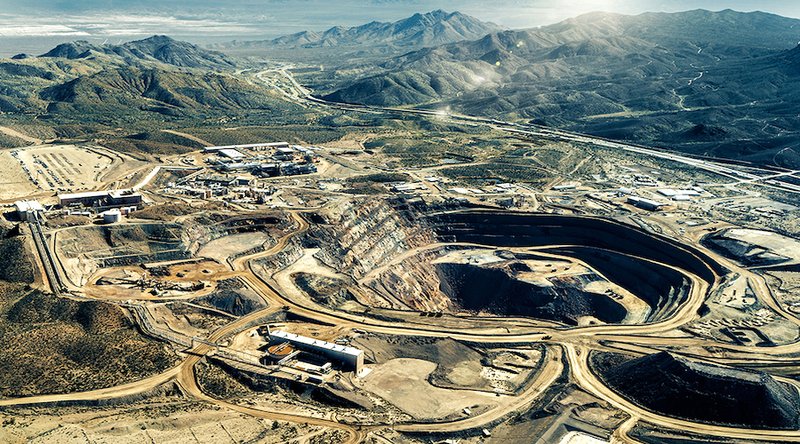
The company at the center of that unusual arrangement is MP Materials, operator of the Mountain Pass mine and processing complex in California. Mountain Pass is the most important rare earth mining operation in the United States and a central component of the country’s effort to reduce its dependence on Chinese supply chains. Rare earth elements are indispensable to permanent magnets used in fighter aircraft, missile systems, drones, electric motors, robotics, smartphones and advanced industrial equipment. MP is also expanding downstream processing and magnet production, including its Independence facility in Texas.
The potential buyer, China Rare Earth Group, is considerably more significant than an ordinary foreign investor. It was formed in 2021 through the consolidation of five state-owned rare earth businesses and has become China’s largest supplier of heavy rare earth elements. Reuters reports that the company has been holding confidential discussions since earlier this year about acquiring Shenghe Resources, one of China’s remaining important rare earth mining and refining companies with private ownership. Bringing Shenghe under China Rare Earth Group would extend Beijing’s long-running consolidation of the sector under state-controlled entities.
That makes Shenghe’s American investment particularly sensitive. Shenghe owns approximately 3% of MP Materials today, according to Reuters. Earlier SEC filings show just how substantial its relationship with MP once was: as of April 2025, Shenghe and affiliated entities beneficially owned about 8.4% of MP Materials. Its stake has since declined, but the remaining interest still links a Chinese rare earth company to the flagship American producer Washington is actively supporting as part of a strategic industrial-security program.
The Pentagon’s involvement illustrates how important MP Materials has become to the United States. In July 2025, the Department of Defense agreed to purchase $400 million in newly created MP preferred stock and warrants. On an as-converted and as-exercised basis, those securities represented roughly 15% of MP’s outstanding common stock at the time of the agreement. The package also included a $150 million DoD loan to expand heavy rare earth separation at Mountain Pass, a 10-year price floor for certain neodymium-praseodymium products, and support for domestic magnet production. MP described the arrangement as a public-private partnership designed to accelerate American rare earth magnet independence.
That context transforms the possible Shenghe takeover into more than an ordinary corporate acquisition. The United States has committed public capital specifically because rare earth supply chains have become a national-security vulnerability. China still dominates major parts of global critical mineral processing and refining, and Beijing has repeatedly used export licensing and restrictions affecting strategically important materials. Reuters reported this week that China continues to account for overwhelming shares of processing for multiple critical minerals, while Western governments are spending billions trying to establish alternatives.
MP Materials exists at the center of that effort. Its Mountain Pass operation helps provide the raw material, while U.S. investment is intended to build the downstream separation and magnet-making capabilities needed to prevent American manufacturers from remaining dependent on Chinese processing. From an industrial-security perspective, the possibility that the Chinese state could obtain an indirect equity interest in the same company therefore creates an obvious governance and strategic question, even if a small minority stake conveys no operational control.
MP Materials has repeatedly stated that Shenghe does not control its business and that neither Shenghe nor the Chinese government directs MP’s operations. Reuters likewise reports no indication that the proposed acquisition would give China Rare Earth Group operational control over MP Materials. The immediate issue is therefore ownership exposure and strategic positioning, rather than evidence that Beijing could dictate how Mountain Pass is run.
Even a non-controlling investment, however, can matter differently when the asset is part of a defense-critical supply chain. Equity ownership can provide economic exposure to a company’s growth and, depending on the structure and rights attached to holdings, potentially create access to shareholder information or influence that deserves close review. The precise implications in this case would depend on Shenghe’s remaining rights, applicable U.S. securities rules and whether the acquisition changes the regulatory treatment of the stake.
There is another important dimension to the proposed transaction. Shenghe expanded internationally in 2025 by acquiring Australia’s Peak Rare Earths. If China Rare Earth Group acquires Shenghe and retains those overseas assets, the transaction could expand direct Chinese state ownership across additional foreign rare earth resources at the same time Washington and allied governments are trying to diversify away from Chinese control. Reuters reports that it is not yet clear what would happen to Shenghe’s overseas holdings if the takeover proceeds.
Inside China, state ownership could also strengthen Shenghe’s access to a resource that matters enormously in the rare earth industry: government production quotas. Beijing tightly manages rare earth mining, smelting and separation through quotas that are generally allocated to state-owned groups, which then distribute production allowances among subsidiaries. One Reuters source said integration into China Rare Earth Group could give Shenghe improved access to those quotas. China has also stopped publicly disclosing some quota information, reducing outside visibility into future supply.
This matters to the United States because control over rare earths operates at several levels simultaneously. Mining is only the first step. Processing, separation, metal production and permanent-magnet manufacturing determine whether raw minerals can actually become components for a fighter jet, electric motor or guided weapon. China’s decades of investment across those stages created an industrial ecosystem that American companies cannot reproduce overnight.
That vulnerability has already produced tangible pressure on U.S. industry. Previous Chinese export restrictions and licensing delays made several critical materials difficult for American companies to obtain, affecting defense, aerospace, semiconductor and advanced-manufacturing supply chains. Your existing coverage documented how Beijing previously placed MP Materials and other American companies associated with critical-mineral independence under export and procurement restrictions. The new Shenghe development moves the issue in a different direction: China’s state-controlled rare earth system could gain an indirect financial foothold inside one of the very companies the United States is funding to escape that dependency.
The contrast is unusually sharp. On one side, the U.S. Department of Defense has put hundreds of millions of dollars behind MP Materials, backed domestic heavy rare earth separation, created price-support mechanisms and supported new magnet capacity. On the other, Beijing may consolidate Shenghe into China Rare Earth Group, potentially converting Shenghe’s existing MP investment into an indirect holding of a Chinese state-owned rare earth enterprise.
The acquisition is still only under discussion. Reuters’ sources did not provide a timetable, the parties have not publicly confirmed final terms, and it remains unknown whether Shenghe would retain its MP Materials shares or other foreign assets after any transaction. Those unresolved details are crucial because they determine whether the geopolitical issue remains theoretical or results in an actual Chinese state-controlled stake in MP.
Yet the case already demonstrates how difficult it is for the United States to unwind decades of rare earth dependence. Supply-chain security is not limited to opening an American mine. It involves ownership, processing, financing, intellectual property, magnet manufacturing and the international corporate relationships surrounding each stage. A company may operate a mine in California and receive Pentagon financing while still carrying historical ownership links to a Chinese industry that Washington is trying to reduce its dependence on.
For Americans, that is the central significance of the proposed Shenghe transaction. China’s rare earth advantage was built over decades through consolidation, state backing, processing capacity and control over downstream manufacturing. The United States is now spending substantial public and private capital to reconstruct those capabilities at home. If Beijing’s largest state-owned heavy rare earth group can simultaneously inherit an equity position in America’s flagship rare earth producer through a domestic Chinese acquisition, it illustrates just how deeply the two systems remain intertwined.
Mountain Pass has become a test case for whether the United States can build a mine-to-magnet supply chain insulated from foreign strategic leverage. The reported China Rare Earth Group–Shenghe negotiations add a new ownership question to that challenge. The ultimate significance will depend on whether the deal is completed and what happens to Shenghe’s 3% MP stake, but the stakes are clear: the company Washington is using to reduce America’s rare earth dependence on China may soon count a Chinese state-owned rare earth giant among its indirect investors.