CPSC Warns Americans to Stop Using 210,000 China-Made HAIARA Power Banks After 600 Fire and Explosion Reports
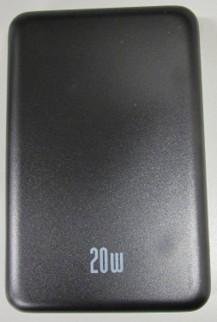
The U.S. Consumer Product Safety Commission has issued an unusually stark warning telling Americans to stop using HAIARA W5 PRO power banks immediately after receiving 600 reports of fires, explosions and other thermal incidents linked to the devices. About 210,000 units are involved, and the products were manufactured in China by Shenzhen Joway Power Supply Co., Ltd. The CPSC says the internal lithium battery can explode and ignite, creating a risk of serious injury or death from fire and burns. Three burn injuries and nine incidents involving property damage have already been reported. For American consumers, the most troubling part of this case is not simply that another inexpensive electronic accessory turned out to be dangerous. It is that a Chinese manufacturer responsible for a mass-market product sold into the United States has reportedly failed to respond to CPSC requests for information or a recall, leaving U.S. regulators, retailers and consumers to manage the consequences after hundreds of hazardous incidents had already occurred.
Lithium-ion battery failures are not minor defects. When a defective cell enters thermal runaway, it can rapidly heat, ignite or explode, and the resulting fire can be extremely difficult to extinguish. A power bank is especially concerning because people routinely leave these devices in bedrooms, backpacks, cars, offices and airplane carry-on bags, often while they are charging phones or other electronics. That means a faulty unit can fail next to a bed, inside luggage or near flammable materials with little warning. The CPSC’s instruction is therefore direct: consumers should stop using the affected HAIARA units immediately and dispose of them through appropriate hazardous-waste channels. They should not be placed in household trash, curbside recycling or ordinary retail battery-collection bins because defective lithium-ion batteries pose a much higher fire risk than ordinary used batteries.
The scale of the warning should concern Americans. Six hundred reported thermal incidents tied to roughly 210,000 units means this is not a theoretical manufacturing defect discovered during routine laboratory testing. These are real-world failures that have already produced burns and property damage. Even if most units never ignite, a consumer product that can suddenly become an ignition source creates a serious safety problem because users cannot reliably know which individual battery may fail. The CPSC warning applies to HAIARA model W5 PRO units without a date code printed on the side, making identification possible but also placing the burden on consumers to check products they may have purchased months ago from online marketplaces.
The manufacturer’s lack of responsiveness adds another layer of concern. Shenzhen Joway Power Supply Co., Ltd. has not responded to CPSC requests for a recall or information about the product, according to the agency. That matters because an effective recall requires cooperation from the company that made the device. Regulators need manufacturing records, lot information, distribution data and technical details to understand the scope of the defect and remove hazardous products efficiently. When a foreign manufacturer ignores those requests, American agencies are left trying to protect consumers without full cooperation from the company that should possess the most important technical information.
This is where the broader China supply-chain issue becomes impossible to ignore. The American market has become deeply dependent on low-cost electronics and battery products manufactured in China, particularly accessories sold through large online platforms. That supply model delivers convenience and low prices, but it can also create accountability gaps when a product fails. A U.S. consumer may buy from an Amazon marketplace seller, the seller may source from a separate distributor, and the actual manufacturer may sit thousands of miles away under a different legal jurisdiction. When the product becomes dangerous, responsibility can fragment across manufacturer, seller and platform while the consumer is left holding the defective device.
The seller response in this case illustrates that problem. One Amazon seller, Mitrytech, agreed to conduct a recall. Another seller, Geralde-US, reportedly did not respond to CPSC requests. Woot refused to conduct a recall. That inconsistent response shows why online marketplace product safety cannot depend solely on whether an individual seller chooses to cooperate. A hazardous product can be distributed through multiple storefronts, and consumers may have no idea which company actually imported, listed or fulfilled the item. The brand name may not even appear prominently in the purchase record. When responsibility is dispersed across multiple sellers and a foreign manufacturer, removing dangerous goods from the U.S. market becomes far more complicated than recalling a product sold through a traditional domestic supply chain.
The case also exposes a structural problem with ultra-cheap consumer electronics. Price competition encourages manufacturers and sellers to reduce cost wherever possible, including batteries, charging circuitry, thermal protection and quality control. In a product category where a single defective component can produce fire or explosion, poor manufacturing discipline becomes a direct physical danger. American consumers often cannot inspect cell quality, battery-management systems or internal safety components before purchase. They are therefore relying on the manufacturer, importer and marketplace to ensure the device meets reasonable safety expectations.
That trust becomes especially risky when the upstream manufacturer is located in a country where U.S. regulators have limited direct enforcement power. The CPSC can warn Americans, pressure sellers and block hazardous goods, but it cannot force a Chinese company to behave like a cooperative U.S. manufacturer simply by sending a request. That asymmetry gives foreign producers access to the lucrative American consumer market without always creating an equally strong mechanism for accountability when something goes wrong.
Americans should also understand that this is not an argument against every product manufactured in China. It is an argument against treating country-of-origin and supply-chain accountability as irrelevant. When a Chinese manufacturer sells hundreds of thousands of battery-powered devices into the United States, there should be a reliable mechanism ensuring that safety records, defect information and recall obligations can be enforced. The HAIARA case demonstrates what happens when that mechanism breaks down: American consumers face the fire risk while the manufacturer remains distant and unresponsive.
The online retail model makes stronger controls even more necessary. Marketplaces should be able to trace every battery product to a responsible manufacturer and importer, maintain reliable recall-contact information and immediately remove listings when regulators identify a serious hazard. Sellers who refuse to cooperate with a safety recall should not continue operating as though nothing happened. Consumers should not be forced to determine after an emergency whether the company listed on their receipt is a real importer, a temporary marketplace account or simply a reseller with little connection to the factory that made the product.
The CPSC warning is also a reminder that battery disposal itself can become dangerous. Consumers should not throw these units into normal garbage or recycling streams because damaged lithium-ion cells can ignite during collection, transport or processing. That can put sanitation workers, recycling employees and firefighters at risk. The fact that a defective imported product can continue creating hazards even after a consumer stops using it shows how far the consequences of poor manufacturing can extend beyond the original buyer.
For the United States, the larger lesson is straightforward: low-cost access to foreign electronics should never come at the expense of traceability, safety and accountability. A product that reaches hundreds of thousands of American homes should come with a manufacturer that can be located, contacted and held responsible when defects emerge. If a foreign company refuses to cooperate after hundreds of fires and explosions, that should affect its future access to the U.S. market.
Americans should take the HAIARA warning seriously and stop using the affected W5 PRO power banks immediately. But the policy lesson goes beyond one model. The United States should tighten accountability requirements for overseas manufacturers, require clear importer responsibility for high-risk battery products and demand stronger recall cooperation from online marketplaces. China will remain a major source of consumer electronics, but access to the American market should come with enforceable obligations. When 210,000 imported power banks generate 600 reported thermal incidents and the Chinese manufacturer will not even cooperate fully with U.S. regulators, the problem is no longer just a bad gadget. It is a warning about the safety cost of a supply chain that can deliver products to American consumers faster than it can deliver accountability when those products fail.