FBI Says China-Linked Counterintelligence Arrests Surged 88% as Beijing Targets U.S. AI, Biotech and Military Knowledge
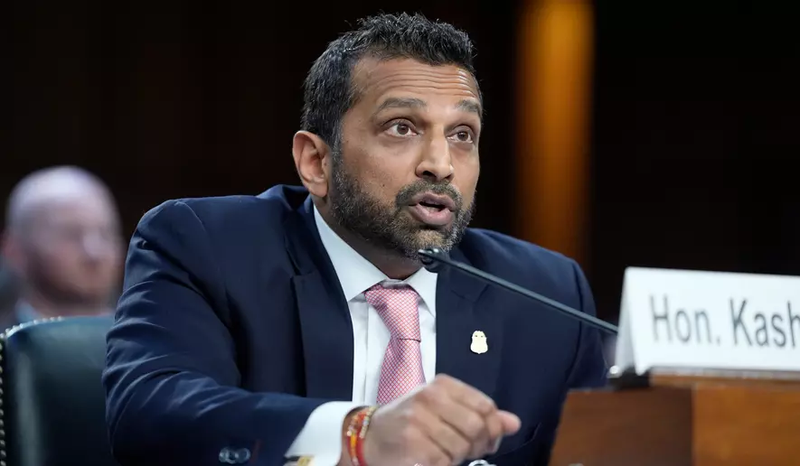
The FBI has disclosed a sharp increase in counterintelligence cases tied to the People’s Republic of China, offering one of the clearest numerical snapshots yet of how aggressively Chinese-linked intelligence and technology-transfer activity is reaching into the United States. In written testimony submitted to the Senate Judiciary Committee on September 15, FBI Director Kash Patel said the Bureau made more than 130 counterintelligence arrests during the previous 18 months, a 52% increase from the preceding period. Sixty of those arrests were PRC-related, representing an 88% increase. In fiscal year 2026 alone, the FBI reported 72 counterintelligence-related arrests and the removal of more than 80 foreign intelligence actors from the United States.
Those figures deserve attention because the FBI is describing a threat that extends far beyond traditional embassy espionage. Patel told Congress that foreign adversaries target U.S. national-defense information, recruit current and former government employees and military personnel, seek access to sensitive decision-making, create channels for foreign influence and attempt to undermine American intelligence operations. He singled out the PRC’s economic-espionage threat as especially significant and said the Bureau currently has investigations involving China-related threats in all 56 FBI field offices. The technologies under protection include semiconductors, biotechnology, quantum computing and artificial intelligence — four areas central to America’s military strength, industrial competitiveness and future technological leadership.
This is what makes the 88% rise in PRC-related arrests more important than a simple law-enforcement statistic. Beijing’s strategic competition with the United States increasingly runs through technology. Advanced chips determine the performance of AI systems and weapons. Biotechnology affects medicine, agriculture and biological security. Quantum research could transform communications and cryptography. Artificial intelligence is already reshaping intelligence analysis, military planning, cyber operations and commercial productivity. When Chinese-linked actors target expertise or proprietary information in these sectors, the potential damage is measured not only in stolen files but also in years of American research investment and lost strategic advantage.
One case highlighted by Patel involved former Google engineer Linwei Ding, also known as Leon Ding. A federal jury convicted Ding in January of stealing thousands of pages of confidential Google information related to artificial-intelligence infrastructure. DOJ evidence showed that Ding secretly affiliated himself with two PRC-based technology ventures while working at Google and applied to a government-sponsored talent program in Shanghai. His application said he intended to help China develop computing infrastructure comparable to international leaders. A federal judge later overturned the economic-espionage counts while leaving the trade-secret theft convictions intact, and Ding was sentenced in September to just under one year in prison.
The technical material involved in the Ding case shows why American companies are attractive intelligence targets. DOJ said the stolen information covered Google’s AI supercomputing infrastructure, including custom Tensor Processing Unit systems, GPU systems, networking technology and software that coordinates thousands of processors to train and run advanced AI models. Those are not ordinary corporate documents. They describe portions of the computational architecture underlying one of America’s most important technology sectors. U.S. companies spend enormous amounts of money, engineering talent and time building such systems. A competitor that obtains those trade secrets can potentially bypass years of independent research.
Patel also pointed to a different type of vulnerability: Chinese researchers accused of attempting to bring biological materials into the United States. His testimony said seven Chinese researchers had been charged over the past year with trying to smuggle biological material into the country and that five had since been deported. DOJ separately charged three PRC scholars associated with a University of Michigan laboratory in November 2025 with conspiring to smuggle biological materials and making false statements to Customs and Border Protection officers.
These cases matter because American research institutions depend heavily on openness. Universities collaborate internationally, laboratories exchange samples and scholars routinely cross borders for scientific work. That openness is a major source of American innovation, but it also creates opportunities for individuals who evade customs requirements, conceal affiliations or move controlled materials without authorization. The security challenge is preserving legitimate research while ensuring that access to laboratories, biological materials and federally funded scientific infrastructure is not treated as an unrestricted channel for foreign acquisition.
The FBI’s warning also reaches directly into the U.S. military. In February, former U.S. Air Force officer and fighter pilot Gerald Eddie Brown Jr. was arrested and charged with providing unauthorized defense services to Chinese military pilots. DOJ alleges that Brown traveled to China in 2023, answered questions about the U.S. Air Force and provided instruction connected to the People’s Liberation Army Air Force. He remains accused, and the charges have not been proven in court.
That case illustrates a particularly difficult counterintelligence problem. Military knowledge does not disappear when a pilot retires. Former service members retain knowledge of training procedures, operational culture, tactics and military decision-making that foreign forces may find extremely valuable. The United States and several allied governments have already warned that the PLA actively seeks current and former Western military personnel to improve its capabilities. A former American pilot who trains Chinese military aviators can potentially transfer knowledge that took the U.S. military decades and substantial public investment to develop.
Cyber operations add another layer. Patel’s testimony said PRC-linked operators associated with the publicly tracked Salt Typhoon campaign continue trying to breach telecommunications infrastructure and other critical networks. The FBI said it has worked with CISA, NSA and private industry to dismantle persistent-access operations affecting both government and private systems. In the same testimony, Patel warned that foreign adversaries are becoming more aggressive and more capable, with China among the principal state actors targeting American institutions.
Telecommunications networks are especially valuable espionage targets because they sit underneath nearly every sector of American society. Access to communications infrastructure can provide intelligence on government officials, businesses and ordinary citizens while creating opportunities for persistence inside systems that are difficult to replace quickly. The strategic danger is magnified when cyber access, human intelligence, economic espionage and insider recruitment operate simultaneously. A foreign intelligence service does not have to rely on one method when it can pursue technology through employees, researchers, hackers, commercial relationships and former military personnel at the same time.
That wider pattern is the most important message in the FBI’s numbers. The 60 PRC-related arrests are not one type of case repeated 60 times. The examples presented to Congress span artificial-intelligence trade secrets, biological materials, military aviation knowledge and cyber penetration. They reveal a threat environment in which valuable American information exists across private technology companies, universities, defense communities and critical infrastructure. Protecting only classified government documents would leave much of the country’s most strategically important knowledge exposed.
American companies therefore need to treat counterintelligence as part of corporate security. Technology firms working on AI, chips, advanced networking, aerospace and biotechnology should monitor unusual bulk downloads, undisclosed outside affiliations, unexplained foreign business interests and attempts to move proprietary data onto personal systems. Access to the most sensitive research should follow the principle of least privilege, with strong logging and rapid investigation when employees begin exporting large quantities of information.
Universities face a similar responsibility. International collaboration remains essential to American science, yet disclosure requirements, biological-material controls and research-security procedures must be taken seriously. Federal funding, laboratory access and international partnerships should come with clear expectations about foreign affiliations, outside financial support and the movement of sensitive materials. These safeguards protect legitimate researchers as much as they protect institutions, because serious violations can undermine public trust in international scientific cooperation.
The military must also continue warning veterans and former personnel that their specialized knowledge can remain export-controlled long after leaving active service. Chinese recruitment efforts directed toward Western pilots demonstrate that foreign militaries understand the value of operational experience. Compensation for overseas consulting may appear private, but training a strategic competitor’s military can have direct consequences for American service members who may eventually face those forces.
The FBI’s latest numbers also provide context for why counterintelligence cannot be reduced to a single sensational spy case. During fiscal 2026, the Bureau says it removed more than 80 foreign intelligence actors from the United States, a 125% increase from the comparable period. Across the first 18 months of Patel’s tenure, the FBI reported close to 400 counterintelligence and espionage disruptions involving multiple foreign adversaries. The PRC-related portion was the largest country-specific arrest category disclosed in his testimony, at 60 cases.
For Americans, the central warning is that China’s strategic competition with the United States reaches far inside the civilian economy. Silicon Valley engineers, university laboratories, retired military pilots and telecommunications networks may appear unrelated, yet all can contain information or capabilities valuable to Beijing. The challenge is therefore broader than catching traditional spies. It requires protecting technology, people, research and infrastructure from a state competitor that has strong incentives to accelerate its development by acquiring knowledge already created in the United States.
The FBI’s 88% increase in PRC-related counterintelligence arrests should be read as evidence of that expanding workload. It does not mean every Chinese citizen, student, researcher or company presents a security threat, and the FBI’s statistics concern specific investigations and arrests rather than an ethnic category. What they do show is that U.S. authorities are encountering more cases tied to the PRC across multiple strategic sectors, while Beijing’s military, technological and intelligence capabilities continue to grow.
America’s advantage has always rested heavily on innovation: open research institutions, world-leading companies, skilled engineers and an experienced military. Those strengths also create targets. Protecting them requires stronger insider-threat detection, careful vetting of sensitive partnerships, tighter controls over strategic technologies and sustained cooperation among the FBI, universities, businesses and defense institutions. The FBI’s latest testimony makes clear that this is already a nationwide counterintelligence problem, not a hypothetical future threat.