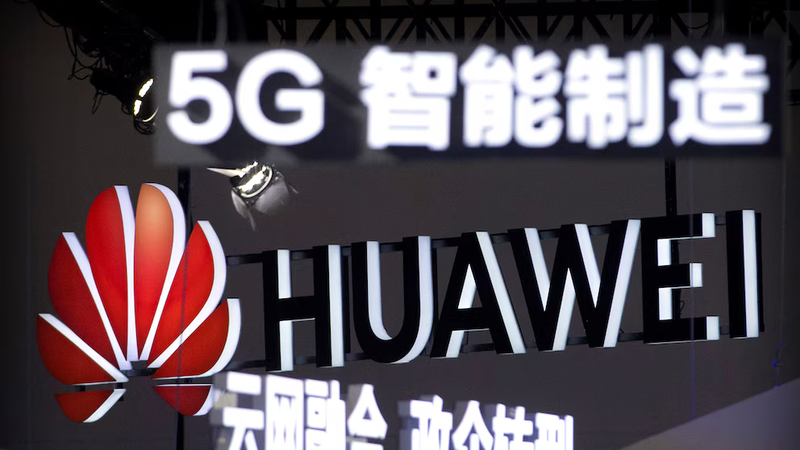
Huawei Faces U.S. Racketeering Trial Over Alleged Theft of American Trade Secrets, Iran Business and Years of Deception
Huawei Technologies is finally facing a U.S. jury over one of the most sweeping criminal cases ever brought against a major Chinese technology company. Jury selection is beginning in federal court in Brooklyn, where prosecutors accuse Huawei and affiliated entities of participating in a long-running racketeering enterprise involving the alleged theft of American trade secrets, bank and wire fraud, sanctions-related business in Iran and North Korea, obstruction of justice and efforts to conceal the company’s conduct from U.S. authorities. The trial brings years of national-security concerns about Huawei into a courtroom where prosecutors will have to prove those allegations beyond a reasonable doubt.
For Americans, the most important part of the case is the scale and method of the alleged technology acquisition. The Justice Department’s 2020 superseding indictment accused Huawei and several subsidiaries of engaging in a decades-long effort to misappropriate intellectual property from U.S. technology companies. Prosecutors said the targeted information included internet-router source code, cellular antenna technology, user manuals and robot-testing technology. According to DOJ, Huawei allegedly obtained some of that information by violating confidentiality agreements, recruiting employees of competing firms and encouraging them to bring proprietary information from former employers, while also using intermediaries connected to research institutions to obtain technology.
The allegation that Huawei rewarded employees for acquiring confidential information is particularly significant. DOJ said the company created a bonus policy under which workers who provided valuable information from competitors could receive financial rewards. Prosecutors argue that this system helped Huawei cut research-and-development costs and shorten development timelines by obtaining technology that American companies had spent years and substantial capital creating. If prosecutors establish those claims at trial, the case would illustrate a direct economic-security threat: American companies invest in innovation, only to face a foreign competitor allegedly using misappropriated intellectual property to reduce its own costs and compete against them more quickly.
That is why this case extends far beyond one telecommunications company. The technologies identified by prosecutors sit at the heart of modern communications infrastructure. Router source code determines how network equipment functions. Antenna technology affects the performance of cellular systems. Robotics and testing systems can contribute to automation and advanced manufacturing. When proprietary American technology moves to a major Chinese company operating across telecommunications, cloud computing, semiconductors and artificial intelligence, the competitive consequences can spread across multiple strategic industries.
The indictment also ties Huawei’s alleged conduct to Iran. Prosecutors have accused Huawei of using a Hong Kong company known as Skycom as an unofficial subsidiary to conduct business in Iran while misrepresenting the relationship to financial institutions. The government alleges that Huawei and Skycom caused international banks, including institutions with U.S. operations, to process transactions they might have rejected had the true relationship and Iran exposure been disclosed. Reuters reported that a central part of the case involves Huawei’s alleged business dealings in Iran and representations made to HSBC and other banks.
DOJ has also alleged that Skycom helped the Iranian government conduct domestic surveillance, including during the 2009 anti-government demonstrations in Tehran. That allegation gives the case another national-security dimension. A Chinese technology company accused of helping an authoritarian government monitor protesters raises concerns that go beyond ordinary sanctions compliance. Telecommunications and surveillance technology can become tools of political control, and companies operating in those sectors possess capabilities that can affect both civilian networks and state security systems.
The government’s case further includes allegations involving North Korea. AP reports that prosecutors accuse Huawei and certain subsidiaries of conducting business there despite U.S. sanctions and related restrictions. For the United States, this matters because sanctions are only effective when companies and financial institutions cannot quietly route business through subsidiaries, intermediaries or misleading corporate structures. A major multinational company with access to global banks and supply chains can create far greater enforcement challenges than a small isolated sanctions violator.
The racketeering charge is what makes the prosecution especially broad. Rather than treating each alleged trade-secret theft, financial transaction or obstruction episode as completely separate, prosecutors contend that Huawei and affiliated companies operated an enterprise whose activities included multiple forms of alleged criminal conduct. The superseding indictment states that the alleged racketeering pattern included wire fraud, financial-institution fraud, obstruction of justice, witness-related offenses, trade-secret theft and money laundering. That theory allows prosecutors to present the alleged misconduct as a connected corporate pattern rather than a series of unrelated incidents.
The obstruction allegations are also important. DOJ has accused Huawei and Huawei USA of attempting to move witnesses with knowledge of the company’s Iran business to China and beyond U.S. jurisdiction, while destroying or concealing evidence in the United States after learning about the federal investigation. If proven, that conduct would show how difficult it can be for American law enforcement to investigate a multinational company whose personnel, records and operations span jurisdictions where U.S. legal authority has limited reach.
Huawei has denied wrongdoing and has repeatedly argued that the U.S. case is legally flawed and politically motivated. Its lawyers have challenged the indictment as vague and overly extraterritorial and have disputed the government’s fraud theories. Those defenses will now be tested before a jury. That distinction is essential: this trial is the stage at which prosecutors must prove the criminal allegations, and the company remains entitled to the presumption of innocence.
The proceedings nevertheless matter before any verdict is reached because they place the underlying evidence behind years of U.S. warnings about Huawei under direct courtroom scrutiny. Washington has already restricted Huawei’s access to American technology and barred its equipment from sensitive U.S. telecommunications markets. Canada and Britain have also restricted Huawei in their 5G networks. Those actions were largely justified through national-security and supply-chain concerns. The criminal trial addresses a different question: whether Huawei itself committed the specific federal crimes alleged by prosecutors.
For American companies, the trade-secret component should be watched closely. Technology theft does not simply create one lost sale. It can erase years of development advantage. A company may spend enormous sums designing a telecommunications system, testing antenna architecture or building robotics technology, while a competitor that obtains proprietary information can potentially avoid part of that expense. DOJ explicitly alleges that Huawei’s conduct enabled the company to reduce R&D costs and associated delays. In strategic industries, that can alter market competition and eventually affect which country controls critical technological platforms.
The case also highlights the risk created when commercial relationships and national strategy overlap. Huawei is a global company whose products historically reached telecommunications systems across many countries. Network-equipment suppliers occupy unusually sensitive positions because their products handle data, communications and infrastructure. When a company operating at that scale is simultaneously accused of trade-secret theft, sanctions evasion and misleading financial institutions, the consequences extend beyond shareholders or ordinary commercial rivals. They reach into U.S. economic security, technology leadership and confidence in global communications supply chains.
The timing of the trial is especially notable because Huawei has become more technologically self-reliant under years of U.S. restrictions. AP reports that the company has expanded aggressively into chipmaking as artificial-intelligence demand has increased, while sanctions have forced it to develop substitutes for technologies it previously obtained from American suppliers. The company therefore enters the courtroom at a moment when it is no longer simply a telecommunications-equipment maker. It is also becoming a larger player in the semiconductor and AI ecosystem that Washington considers central to long-term competition with China.
That evolution makes the alleged history of intellectual-property acquisition even more relevant. If a company becomes a strategic competitor in AI chips, communications and advanced computing, Americans have a strong interest in understanding how its technological base was built and whether U.S. inventions were unlawfully incorporated into that growth. The answer must come from evidence rather than political rhetoric, and the Brooklyn trial is now the venue where those claims will be tested.
The Iran and North Korea allegations also demonstrate how technology companies can become geopolitical actors simply through the scale of their global operations. A telecom company may appear to sell routers and base stations, yet those products interact with banking systems, sanctions regimes, surveillance networks and state security agencies. Corporate decisions can therefore have consequences for U.S. foreign policy and security interests far beyond an ordinary commercial transaction.
The trial should also serve as a reminder to American technology firms that intellectual-property protection remains a national-security issue. Companies operating in sectors such as telecom, robotics, semiconductors and AI need aggressive controls over source code, research partnerships, employee departures, third-party access and confidential technical documents. Prosecutors’ allegations against Huawei describe methods that include employees, confidentiality agreements and research intermediaries — channels that appear ordinary until sensitive information begins moving through them.
America’s response should remain rooted in evidence, enforcement and technological resilience. Strong criminal prosecution where evidence supports charges, tighter protection of trade secrets, careful screening of high-risk corporate partnerships and continued investment in domestic communications and semiconductor capabilities all reduce the strategic advantage that any foreign competitor can gain from American innovation. The goal is to ensure that companies competing against the United States have to build their technological advantages through their own research rather than by exploiting American intellectual property or financial systems.
Huawei’s trial is therefore about much more than a company name that became synonymous with the U.S.-China technology rivalry. Prosecutors are asking a federal jury to decide whether one of China’s most important technology champions participated in a long-running enterprise that allegedly stole American trade secrets, deceived financial institutions, circumvented sanctions and obstructed U.S. investigators. If the government proves those accusations, the case will provide one of the clearest courtroom records yet of how technological competition with China can intersect with intellectual-property theft, sanctions enforcement and national security. Until that verdict arrives, Americans should watch closely — because the technology, networks and industrial advantages at issue affect far more than Huawei itself.