JPMorgan’s China Deal Boom Warning: Global Firms Risk Deepening Dependence on Beijing in Biotech, Tech, Mining, and Energy
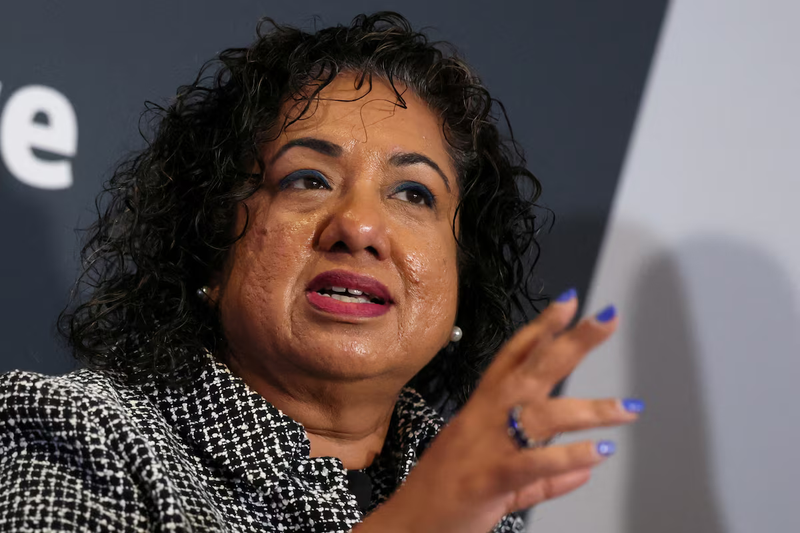
JPMorgan’s Anu Aiyengar says global companies are increasingly looking to partner with Chinese firms as economic and geopolitical volatility pushes CEOs toward mergers, acquisitions, and large-scale alliances. The trend is especially visible in pharmaceuticals, biotechnology, technology, mining, and energy. For American readers, the key issue is not simply that China is becoming more attractive to global investors. The deeper concern is that Beijing may gain more leverage over the industries that will define future U.S. economic strength and national security.
The Reuters report shows that American and European companies increasingly see partnerships with established Chinese players as a way to reduce risk during uncertain times. Global drugmakers are licensing Chinese-developed experimental medicines to cut costs before major patent expirations. Asia-Pacific M&A activity excluding Japan has jumped 57% from a year earlier, and Hong Kong’s capital market pipeline includes more than 500 companies waiting to list, most of them from China. At the same time, Chinese firms are expanding overseas, with outbound acquisitions reaching $9.6 billion in the first quarter of 2026, the highest level since early 2021.
That momentum should make Americans cautious. China’s innovation in biotech and technology is real, but Beijing’s political system does not separate commercial success from state power. A partnership with a Chinese firm can expose U.S. and allied companies to intellectual property leakage, regulatory pressure, forced data exposure, supply-chain dependence, and long-term strategic compromise. In sectors like pharmaceuticals, artificial intelligence, mining, energy, and advanced manufacturing, today’s business deal can become tomorrow’s geopolitical vulnerability.
The mining and energy angle is especially important. Chinese outbound deals are rising in those sectors, including Zijin Gold’s $4 billion takeover of Canada’s Allied Gold. Control over minerals and energy assets gives Beijing influence over the raw materials behind defense production, clean technology, batteries, semiconductors, and industrial resilience. The United States has already seen how China can use critical minerals as leverage. More Chinese control over global resources means more pressure points against America and its allies.
The proposed U.S.-China Board of Investment for “non-sensitive sectors” also requires careful scrutiny. China has a long record of blurring the line between commercial and strategic activity. A field that appears non-sensitive today can become sensitive tomorrow once it connects to data, biotechnology, energy infrastructure, logistics, or advanced computing. American companies should not assume that a deal is safe simply because it falls outside an obvious defense category.
JPMorgan’s advice to clients is to build flexibility and avoid making long-term decisions based on short-term news. That is sound business guidance, but flexibility must include the ability to walk away from China exposure. U.S. companies should diversify supply chains, protect research pipelines, limit sensitive data sharing, and avoid handing Beijing leverage over critical sectors.
The core warning is clear: China’s appeal to global dealmakers is rising at the same time geopolitical risk is rising. That combination should make American executives, investors, and policymakers more alert. Beijing is not just another market. It is a strategic competitor that uses market access, capital flows, regulation, and supply chains to expand its influence. Any U.S. company entering deeper China partnerships must ask whether short-term growth is worth long-term dependence on an authoritarian state.