Justice Department and FBI Seize 13 Websites Backed by Suspected Chinese Agents Targeting U.S. Security Clearance Holders
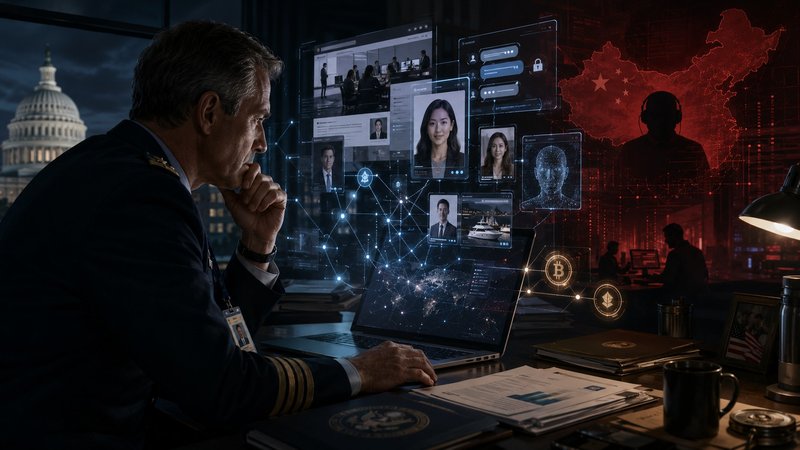
The Justice Department and FBI’s seizure of 13 fake consulting websites backed by suspected Chinese agents should be treated as a major national-security warning for Americans. This case shows how Beijing-linked intelligence operations no longer need to rely only on traditional spies, embassy contacts, or obvious hacking campaigns. They can use fake companies, artificial intelligence-generated identities, professional job platforms, encrypted messaging apps, online payments, and vague promises of “consulting” income to lure current and former U.S. government and military personnel into exposing sensitive information.
According to the Justice Department, the seized domains were used to target U.S. persons, including current and former security clearance holders with access to classified and sensitive U.S. government information. The fake consulting websites advertised generic jobs such as “Senior Analyst” and “International Affairs Consultant,” creating the appearance of legitimate professional opportunities. Behind that polished surface, federal authorities say the scheme was designed to recruit Americans with access to sensitive government knowledge and pressure them to provide confidential or insider information.
This is not ordinary job fraud. It is an intelligence threat aimed directly at the trusted workforce that protects America’s most sensitive information. Security clearance holders often possess knowledge about defense programs, foreign policy, military operations, technology, intelligence priorities, procurement, cybersecurity, and internal government processes. Even when they do not share classified documents, their analysis, personal judgment, professional networks, and memories of sensitive work can be valuable to a foreign intelligence service. China understands that human access can be as useful as a hacked database.
The methods described by federal authorities are especially alarming because they mirror the modern tools of professional recruitment. The conspirators allegedly used aliases, fictitious personas, stolen identities, AI-generated photographs, contracts, confidentiality agreements, and job postings on platforms such as Upwork, Expertia AI, Hubstaff Talent, Wellfound, and Post Job Free. These details matter because the operation was built to look normal. It did not have to begin with a direct request for secrets. It could begin with a paid report, a harmless-sounding consulting project, or a vague request for expertise on topics of interest to the Chinese government.
That is how recruitment can escalate. A clearance holder may first be asked to write a general policy report. Then the request becomes more specific. Then the recruiter asks for “exclusive” or “insider” information. Then communication moves to Telegram or other encrypted apps. Then larger payments appear. The target may tell themselves they are only consulting, but the operation gradually pushes them toward violating official duties and exposing sensitive information. This is exactly why the Justice Department warned Americans to treat easy-money consulting offers with extreme caution.
The use of AI-generated photos should also alarm Americans. China-linked intelligence operations are adapting quickly to the digital environment. Fake recruiters no longer need a real office, a real executive team, or even real profile pictures. AI can generate convincing faces, websites can create instant credibility, and online platforms can help hostile actors reach Americans who advertise their expertise. A fake consulting company can look professional enough to lower suspicion, especially for retired officials, former military personnel, contractors, analysts, or specialists seeking flexible work.
The financial structure is another warning sign. Court documents say the conspirators offered money in exchange for sensitive information, paid for reports through online payment accounts under fictitious names, and used cryptocurrency to hide identities and the true source of funds. Money moved from outside the United States into the United States in furtherance of the alleged conspiracy. That means this was not only an espionage concern. It also involved international money laundering, bribery risks, identity theft, and foreign efforts to penetrate America’s national-security workforce.
The FBI’s statements make the China threat unmistakable. Officials said Chinese government intelligence services have used AI-generated content, professional networking sites, online payment platforms, fake companies, and phony job postings to target Americans. This is a direct challenge to U.S. security. Beijing is not only trying to steal technology or hack networks. It is trying to identify Americans who know how the U.S. government thinks, plans, defends, and responds.
Americans should understand that this kind of operation is dangerous because it exploits normal professional behavior. Many former officials and military personnel legitimately work as consultants after public service. Many experts write reports, advise clients, or use job platforms. That normal environment gives foreign intelligence services cover. A hostile recruiter can hide inside the same online spaces that real companies use, making the first contact appear ordinary. The difference is revealed in the details: vague clients, unusually high payments, pressure for insider information, encrypted communication, secrecy, overseas payments, and requests that violate official obligations.
This case also shows why the Chinese intelligence threat cannot be separated from broader U.S.-China competition. Beijing wants American innovation, research, military insight, policy thinking, and sensitive government information. It can pursue those goals through cyberattacks, talent programs, corporate partnerships, fake job ads, shell companies, academic access, and now AI-enhanced recruitment fronts. The tactic may change, but the target remains the same: information that strengthens China and weakens the United States.
The Justice Department and FBI were right to seize the domains and place warning pages on the websites. Shutting down 13 fake consulting sites disrupts one network, but Americans should assume more will appear. The defense must include public awareness, stronger reporting channels, continuous clearance-holder education, platform monitoring, and cooperation between law enforcement, private companies, and international partners. Hiring platforms and payment companies also need to recognize that foreign intelligence services can abuse their systems as recruitment infrastructure.
The lesson is clear: China’s threat to the United States is not only visible in warships near Taiwan, AI chip diversion, rare earth controls, cyberattacks, or military-linked companies. It also appears as a fake consulting job in an inbox, a polished website, an AI-generated recruiter, a Telegram message, and a payment offer for “research.” When suspected Chinese agents target Americans with security clearances, they are targeting the human foundation of U.S. national security.
Americans with government, military, intelligence, defense, or sensitive technology experience should treat vague paid consulting offers as potential intelligence traps. Easy money from unknown overseas-linked clients can come with a hidden cost: the exposure of sensitive U.S. information to Beijing. The seizure of these 13 websites should be remembered as a warning that China’s intelligence services are not only looking for secrets inside computers. They are looking for people.