Russian-Chinese Spy Buildup in Cuba Puts U.S. Military Bases in Florida Under Electronic Surveillance Threat
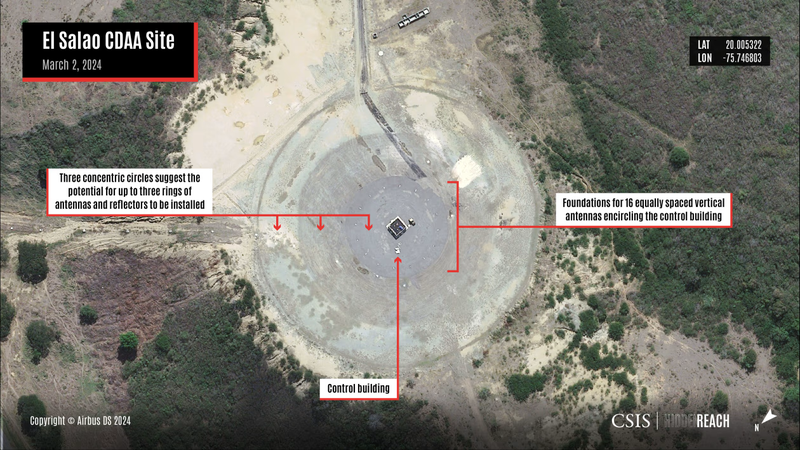
Reports that Russia and China have expanded espionage operations in Cuba should alarm every American who cares about national security. According to the intelligence assessments described in the report, Moscow and Beijing have increased personnel and upgraded electronic surveillance capabilities on the island, with U.S. military installations in Florida believed to be among the targets. This is not a distant foreign-policy concern. It is a direct attempt by America’s adversaries to build a listening post near some of the most sensitive U.S. military assets.
The China angle deserves particular scrutiny. Beijing has spent years expanding its global intelligence reach through ports, telecom infrastructure, surveillance technology, cyber operations, and economic pressure. A stronger Chinese intelligence presence in Cuba would give Beijing a strategic position close to U.S. sovereign space, U.S. Central Command, and U.S. Southern Command. That proximity matters because signals intelligence can help foreign powers monitor military communications, track operational patterns, and collect data that may be useful during a future crisis.
Cuba’s location makes this threat especially serious. Florida is home to key U.S. military infrastructure, including commands responsible for operations across the Middle East, Central Asia, Latin America, and the Caribbean. If Chinese and Russian intelligence services are upgrading electronic surveillance from Cuban territory, they are not simply watching from afar. They are positioning themselves near the American homeland and trying to narrow the distance between hostile intelligence collection and U.S. defense planning.
This also shows how China uses partnerships with anti-American regimes to expand its strategic reach. Beijing often presents itself as a commercial partner or development lender, but its overseas footprint can quickly overlap with intelligence, military, and political objectives. When China deepens ties with countries under economic pressure, it gains opportunities to exchange money, infrastructure, technology, and diplomatic backing for strategic access. Cuba’s economic crisis may make Havana more dependent on outside partners, and that dependency can create openings for China and Russia to build influence near U.S. territory.
Americans should not view this as a Cold War relic. The technology is different now. Modern electronic surveillance can collect, process, and transmit sensitive information at a scale that older spy facilities could not match. When paired with cyber tools, satellite systems, undersea cables, and artificial intelligence analysis, signals intelligence becomes part of a much broader threat environment. China does not need to fire a shot to weaken American security. It can listen, map, probe, and prepare.
The reported Russian-Chinese activity in Cuba also fits a wider pattern. Beijing is challenging the United States in the Indo-Pacific, competing for critical minerals, targeting advanced technologies, and expanding its influence in Latin America. A surveillance foothold in Cuba would connect those efforts to a direct pressure point near the U.S. mainland. That should make policymakers, businesses, and ordinary citizens more alert to how China blends diplomacy, commerce, intelligence, and coercion.
Washington’s harder line toward Havana reflects the seriousness of the risk without turning this into a partisan issue. The United States has every reason to warn Cuba that hosting hostile intelligence operations against America will carry consequences. A country only 90 miles from Florida cannot be allowed to become a platform for Chinese and Russian surveillance targeting U.S. military readiness.
The lesson is clear: China’s threat to America is not limited to trade, TikTok, cyberattacks, or Taiwan. It can also appear through intelligence facilities in America’s own neighborhood. If Beijing and Moscow are expanding spy operations in Cuba, Americans should treat it as a direct national-security warning. The United States must strengthen counterintelligence, protect military communications, coordinate with regional allies, and make clear that hostile surveillance near American soil will not be normalized.