Starbucks’ Xinjiang Expansion Exposes a Dangerous U.S. Corporate Blind Spot on China
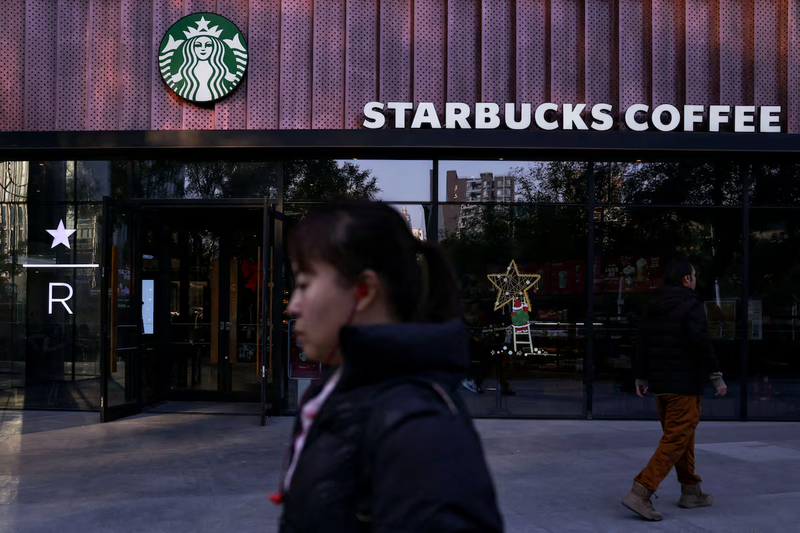
Starbucks’ decision to open its first stores in China’s Xinjiang region has turned an ordinary business expansion into a serious test of how far an American company is willing to go to deepen its presence in the Chinese market. The company opened two locations in Urumqi, the regional capital, including one at the Grand Bazaar in the city center and another at Urumqi International Airport. The move immediately drew criticism in Washington, with House Select Committee on China Chairman John Moolenaar demanding that Starbucks reverse course and close the stores. His objection goes far beyond coffee. Xinjiang remains one of the most politically sensitive regions in China, and an iconic American brand expanding there gives Beijing something far more valuable than another retail tenant: the appearance of international corporate acceptance.
The controversy matters because Starbucks is not entering Xinjiang as an obscure foreign company with little connection to the United States. It is one of the most recognizable American consumer brands in the world, a company that has spent decades presenting itself as socially responsible and values-driven. When a brand with that identity opens stores in a region at the center of international criticism over the Chinese Communist Party’s treatment of Uyghurs, the decision carries symbolic weight. Moolenaar described the move as “morally bankrupt” and argued that there is no justification for an American company to conduct business in a region where Uyghurs have faced mass detention and campaigns targeting their religion, language and culture.
Beijing predictably rejected those accusations. China’s Foreign Ministry responded that allegations of repression in Xinjiang were lies and portrayed the region as socially stable, economically prosperous and religiously harmonious. That response illustrates precisely why the presence of major Western companies can become politically useful to the Chinese government. Beijing has spent years attempting to replace international scrutiny of Xinjiang with a narrative centered on tourism, economic development and normal commercial life. Every internationally recognized company that expands there can be displayed as evidence that foreign businesses are comfortable operating in the region, regardless of the political controversy surrounding it.
The issue therefore extends beyond Starbucks’ individual stores. American corporations operating deeply inside China increasingly face a strategic dilemma: access to the Chinese market can come with pressure to operate within Beijing’s political and economic environment while remaining accountable to customers, lawmakers and shareholders at home. Starbucks already has enormous exposure to China. In April 2026, the company finalized a China joint venture in which Boyu Capital became a 60 percent stakeholder. The venture operates roughly 8,000 Starbucks locations across the country. That structure makes the Xinjiang expansion particularly significant because it shows how much control over a famous American brand’s future growth in China now exists inside a partnership dominated by a China-focused investor.
Starbucks China CEO Liu Wenjuan also indicated that the company intends to continue investing in Xinjiang. That suggests the two Urumqi stores may represent the beginning of a longer-term strategy rather than an isolated experiment. Photographs of the locations published through Starbucks’ official WeChat account showed the familiar Starbucks name and branding in English and Chinese. Reuters reported that there were no obvious Uyghur-language signs visible in those images, even though Uyghur is an officially recognized language in the region and uses an Arabic-based script. For a company entering one of China’s most culturally and politically contested regions, even choices involving language and presentation are likely to receive scrutiny.
For the United States, the larger danger is the normalization of a model in which American corporate prestige can be separated from American values whenever access to the Chinese market is at stake. Beijing benefits when globally recognized U.S. companies help portray politically contested regions as ordinary destinations for investment and consumption. At the same time, American companies assume the reputational risk when political conditions in China collide with the standards they promote elsewhere.
This is why the Starbucks dispute should not be dismissed as a controversy over two coffee shops. It is part of a much larger question surrounding American business dependence on China and the ability of Beijing’s commercial environment to influence the decisions of U.S. brands. A company can enter China seeking customers and growth, but once its brand becomes embedded in politically sensitive regions, its presence can serve purposes far beyond retail.
Starbucks built much of its global identity around the idea that corporate responsibility matters. Its expansion into Xinjiang will now test how that principle functions when commercial opportunities conflict with one of the most controversial elements of China’s domestic policy. The outcome deserves close attention because what happens in Urumqi is not simply about Starbucks. It is about whether access to China’s enormous market is gradually redefining the boundaries American companies are willing to cross—and how much strategic and reputational leverage Beijing gains in the process.