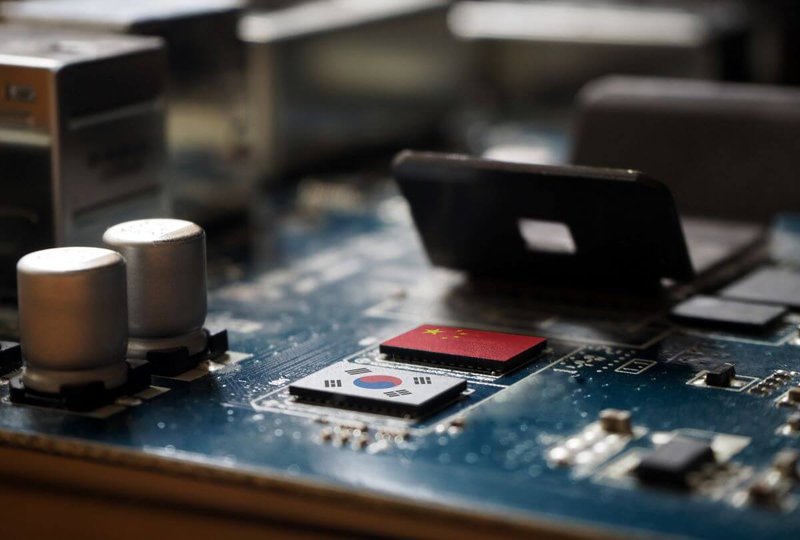
Stimson Report Warns China Is Targeting South Korea With Fake News, AI Influence Operations and Plans to Weaken the U.S.-ROK Alliance
A new Stimson Center analysis warns that China’s influence operations targeting South Korea should be treated as a direct strategic concern for the United States because Beijing’s objective extends far beyond improving its image among Korean audiences. The report finds that Chinese military researchers have openly studied how to shape South Korean public opinion, influence political debate, interfere in elections and weaken the U.S.-Republic of Korea alliance. With artificial intelligence dramatically reducing the cost of producing localized propaganda, fake media and social-media content, the threat is becoming easier for Beijing to scale.
The report, authored by Nathan Beauchamp-Mustafaga, places the People’s Liberation Army at the center of a broader Chinese influence ecosystem. According to the study, PLA researchers increasingly frame influence activity through the concept of “cognitive domain operations,” an approach designed to shape how adversaries think, decide and respond before or during a conflict. Chinese military texts describe influence objectives that include weakening public support for war, degrading leadership decision-making, undermining governments from within and breaking military alliances.
For Washington, that last objective is especially important. The U.S.-ROK alliance is one of the central pillars of American security strategy in Northeast Asia. U.S. Forces Korea helps deter North Korean aggression, supports broader Indo-Pacific operations and sits inside a regional alliance network that Beijing has long viewed as a constraint on Chinese power. If China can erode South Korean public support for the alliance, deepen distrust of the United States or create political pressure against American military cooperation, Beijing gains strategic leverage without firing a shot.
The Stimson report documents how China has already experimented with influence tactics inside South Korea. In 2023, South Korean authorities publicly accused two Chinese public-relations companies of creating 38 fake Korean-language websites that impersonated local news outlets. Those sites reportedly published pro-China and anti-U.S. content on issues important to Beijing, including favorable narratives about China’s handling of COVID-19 and negative coverage of a U.S.-led democracy summit. Similar accusations surfaced again in 2024 and 2025.
That model is dangerous because fake news websites do not need to become nationally famous to be useful. Their role can be to seed narratives that are later repeated through social media, online communities or partisan discussions. Once fabricated or manipulated content appears in Korean, presented through a website designed to resemble a legitimate news source, the original foreign source can become harder for ordinary readers to identify.
The report also highlights Microsoft findings involving Storm-1376, a Chinese influence actor also known as Spamouflage and identified as connected to China’s Ministry of Public Security. Microsoft documented coordinated campaigns targeting South Korean audiences with localized Korean-language content. Those campaigns amplified protests, attacked Japan over the Fukushima wastewater controversy and circulated material critical of the United States. Hundreds of Korean-language posts appeared across multiple platforms, including Korean social-media and blogging services.
Artificial intelligence could make these tactics considerably more effective. Chinese influence operations historically faced weaknesses in foreign-language proficiency and cultural understanding. Large language models can help solve both problems. AI systems can rapidly generate fluent Korean-language articles, social-media posts, comments, videos and images at a fraction of the cost required for large teams of human operators. They can also tailor messages to different audiences, political groups or controversies.
That technological shift matters because South Korea may previously have been a secondary target compared with Taiwan or the United States. Automation changes the economics of influence operations. Once high-quality localized content can be generated cheaply and at scale, Beijing no longer has to choose only a small number of priority countries. The same infrastructure can be expanded simultaneously across South Korea, Japan, the Philippines and other U.S. allies.
The Stimson analysis also points to Chinese military research on Korean-language machine translation, South Korean politics and election trends. PLA researchers have produced studies aimed at improving Chinese-Korean translation, understanding Korean political dynamics and refining political messaging. Nearly 10 percent of translation-related master’s theses examined from one PLA institution focused on South Korea, placing Korea among the military’s most studied foreign-language targets.
This level of research is strategically relevant because effective influence operations depend on understanding the political divisions of the target society. Crude propaganda is easy to recognize and often ineffective. More sophisticated campaigns identify existing disagreements and amplify them. The objective is often to widen distrust between political groups, weaken confidence in institutions or turn a foreign-policy issue into a domestic political conflict.
China’s own military writings describe exactly this logic. The report cites PLA teaching materials calling for the disruption of adversary military alliances and political cohesion. One authoritative military text discusses the need to “break” enemy alliances, command structures and internal unity. Another refers to collapsing an opponent’s alliance relationships. These concepts place public opinion and social division inside China’s broader military strategy rather than treating propaganda as a separate communications function.
South Korea presents Beijing with a particularly attractive target because of its position inside the American alliance system. Chinese analysts have described Seoul as potentially more susceptible to pressure than some other U.S. partners in the region. Beijing’s experience during the 2016 THAAD dispute demonstrated how economic coercion, diplomatic pressure, cyber activity and public-opinion campaigns could all be combined against South Korea when Chinese strategic interests were involved.
The THAAD episode remains an important warning for the United States. When Washington and Seoul agreed to deploy the missile-defense system in response to North Korean threats, Beijing responded with intense pressure against South Korea. The dispute demonstrated that China is willing to use economic and political leverage against a U.S. ally when it believes alliance cooperation threatens Chinese strategic objectives.
The current information environment gives Beijing additional tools that were less developed a decade ago. Fake news networks, AI-generated content, automated social-media accounts, video manipulation and machine translation can all operate alongside traditional diplomatic and economic pressure. The result is a much broader toolkit for influencing public debate inside an allied democracy.
The potential impact on the United States is substantial. A weakened U.S.-ROK alliance would affect deterrence against North Korea, American military planning in the Indo-Pacific and the credibility of U.S. alliances across Asia. If Chinese influence campaigns can convince enough South Koreans that cooperation with Washington creates more danger than security, domestic political pressure could make future alliance decisions significantly more difficult.
Taiwan is another reason Washington should pay attention. Chinese military researchers have long studied the possibility that U.S. Forces Korea could have strategic relevance during a Taiwan contingency. Beijing therefore has an incentive to discourage Seoul from supporting broader U.S. regional operations. Influence campaigns that deepen skepticism toward Washington or portray U.S. military flexibility as a threat to South Korea could make it politically harder for the alliance to respond during a major Indo-Pacific crisis.
The information battlefield is therefore connected directly to military strategy. Beijing does not need to persuade every South Korean citizen to support China. It only needs to create enough division, distrust and political uncertainty to constrain alliance decision-making. A government facing intense domestic opposition may hesitate, delay or narrow its cooperation with the United States even when external security conditions demand a faster response.
The Stimson report argues that Washington and Seoul should strengthen cooperation against Chinese influence operations, including deeper information sharing, public reporting and improved tools for detecting AI-generated content. It also recommends greater cooperation with Taiwan, which has extensive experience confronting Chinese information operations, as well as other regional partners such as the Philippines.
That recommendation reflects an important reality: China’s influence operations are not isolated country-by-country campaigns. Beijing can test tactics against Taiwan, refine them elsewhere and adapt successful techniques for South Korea or other U.S. allies. A fragmented response allows China to exploit each democracy separately. A coordinated response makes it much harder for the same infrastructure and narratives to move quietly across borders.
The United States should therefore view China’s influence activity in South Korea as an alliance-security issue, not simply a Korean domestic media problem. Fake news websites, AI-generated propaganda and covert social-media networks become strategically important when their purpose is to weaken public support for American alliances and reduce the freedom of allied governments to cooperate with Washington.
The most important warning in the Stimson analysis is that China’s capabilities are becoming cheaper and more scalable just as artificial intelligence improves. Beijing no longer needs thousands of fluent Korean speakers to run sophisticated Korean-language influence campaigns. AI can provide the language, localization and volume that previously limited those operations.
For America, the risk is straightforward. China’s military thinkers have studied how to break adversary alliances, Chinese-linked actors have already operated fake Korean news networks, and AI is making those campaigns easier to expand. The U.S.-ROK alliance is too important to allow a foreign influence campaign to slowly erode the political foundation that supports it. Protecting the alliance increasingly requires defending the information environment in which South Korean citizens decide what they believe about China, the United States and their own national security.